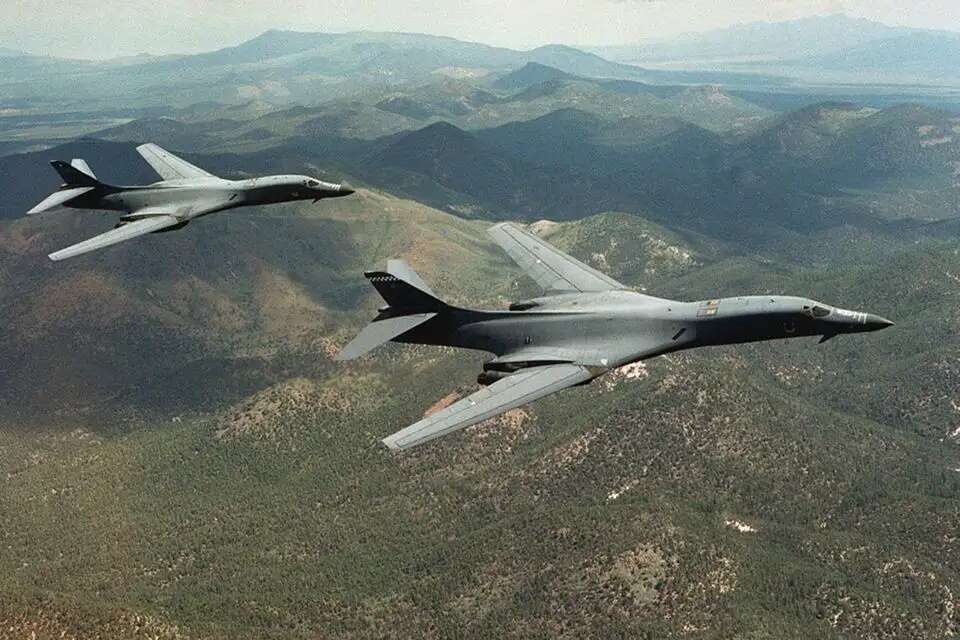
The B-1B Lancer heavy strategic bomber has returned to action over Iran. According to a report by Axios on Thursday morning, this marks the first use of the aircraft since the ceasefire took effect in early April. The report also confirms accounts circulated in recent days that strategic bombers had taken off from bases in Britain.
Known as the "Bone" in the US Air Force, the aircraft is one of the most powerful conventional weapons in the US military's arsenal.
Capable of carrying up to 34 tons of ordnance
The US Air Force defines the B-1B as a long-range, multirole heavy bomber. It can carry the largest conventional weapons payload in the Air Force inventory, up to 75,000 pounds, or approximately 34 metric tons.
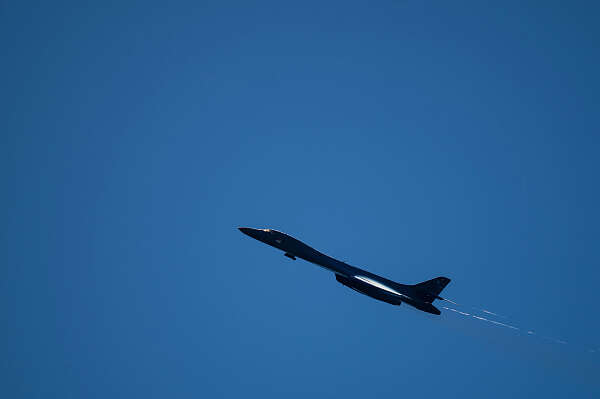
The aircraft is equipped with variable-sweep wings, a blended wing-body design and four afterburning turbofan engines. Its maximum speed exceeds 900 mph (approximately 1,450 kph), reaching Mach 1.2 at sea level. Its intercontinental range allows it to take off from bases in the United States or from Diego Garcia in the Indian Ocean and strike anywhere in the Middle East without making an intermediate landing.
The bomber was originally designed during the Cold War to penetrate Soviet air defenses at low altitude and extremely high speed. It was initially intended to serve as a nuclear bomber, but its nuclear role was removed in 1994 and it was fully converted to conventional missions.
Today, it can deploy a range of precision-guided weapons, including 2,000-pound GPS-guided Joint Direct Attack Munitions, long-range Joint Air-to-Surface Standoff Missiles and bunker-busting bombs. Its systems include advanced radar capable of terrain following and tracking moving targets. Despite the aircraft's enormous size, radar-absorbent materials make it more difficult to detect than older bombers such as the B-52. It is important to stress, however, that unlike the B-2, the B-1B is not classified as a stealth bomber.
Combat debut against Saddam Hussein and deployment in Operation Roaring Lion
The B-1 entered operational service with the US Air Force in 1986, but made its combat debut in 1998 during Operation Desert Fox in Iraq, where it successfully destroyed targets belonging to Saddam Hussein's regime.
During Operation Allied Force in Kosovo in 1999, six B-1 bombers dropped more than 20% of all munitions used in the campaign while flying fewer than 2% of the sorties. In Afghanistan, during the opening phase of Operation Enduring Freedom, eight aircraft dropped nearly 40% of the total weight of munitions released by coalition forces, including 67% of all JDAM bombs.
The aircraft is used primarily for missions requiring the delivery of large quantities of precision-guided munitions over long distances, sometimes after departing directly from bases in the United States or from forward bases. It is particularly suited to missions requiring an extended presence over the combat zone, strikes against hardened or fortified targets, command centers, missile and unmanned aerial vehicle facilities, and maritime targets.
B-1B bombers took part alongside B-2 and B-52 bombers in Operation Roaring Lion, known by the US as Operation Epic Fury, which began in late February. According to US Central Command, the B-1Bs flew missions directly from the United States and returned there while carrying the largest conventional weapons payload in the US Air Force arsenal.
Targets struck by the bombers included Islamic Revolutionary Guard Corps command centers, air defense systems, ballistic missile sites and UAV facilities.
«اصفهان منطقه اصفهانک و پشت کشوری ساعت ۰۲:۰۹ بامداد سهشنبه ۱۱ فروردین» pic.twitter.com/vzjjM0O3yU
— مملکته (@mamlekate) March 31, 2026
"Taking the gloves off" against Tehran
The B-1 was designed to destroy fortified targets. Its deployment may indicate that the United States has identified critical infrastructure, underground missile facilities known as "missile cities," and possibly sites linked to Iran's nuclear program.
Such targets would differ from the exposed, aboveground sites attacked over the past two weeks, including Revolutionary Guard bases, cruise missile storage facilities and UAV manufacturing plants. While fighter jets such as the F-15 and F-35 can carry out surgical strikes, deploying a heavy bomber may indicate that the United States is prepared to shift toward overwhelming offensive force.
Axios' report on Thursday may itself be intended as a signal to Tehran that the United States is ready to operate at high intensity, similar to the most intense days of Operation Epic Fury, and inflict massive damage should the escalation continue.
The message echoes one delivered Wednesday by US President Donald Trump and the White House press secretary, who simultaneously shared an article headlined, "Trump ordered the gates of hell opened on Iran."
Another dimension is the demonstration of air superiority. The bomber can operate beyond the range of Iran's conventional air defenses by launching cruise missiles, or penetrate those defenses using electronic warfare and speed.
The B-1 is not a stealth bomber. However, most Iranian air defense systems were destroyed during the operation, meaning its deployment sends a message to the Iranians that they no longer possess an effective means of defending themselves against the long reach of the US Air Force.