The recent crisis in Ceuta produced an understandable reaction in Israel. After nearly three years in which Pedro Sánchez has led one of the democratic West's most hostile governments toward Israel, some Israelis understandably felt little sympathy when Spain faced a serious challenge to its own border.
But emotion is not strategy. Israelis should remember two distinctions: Sánchez is not Spain. And Morocco is not the Abraham Accords.
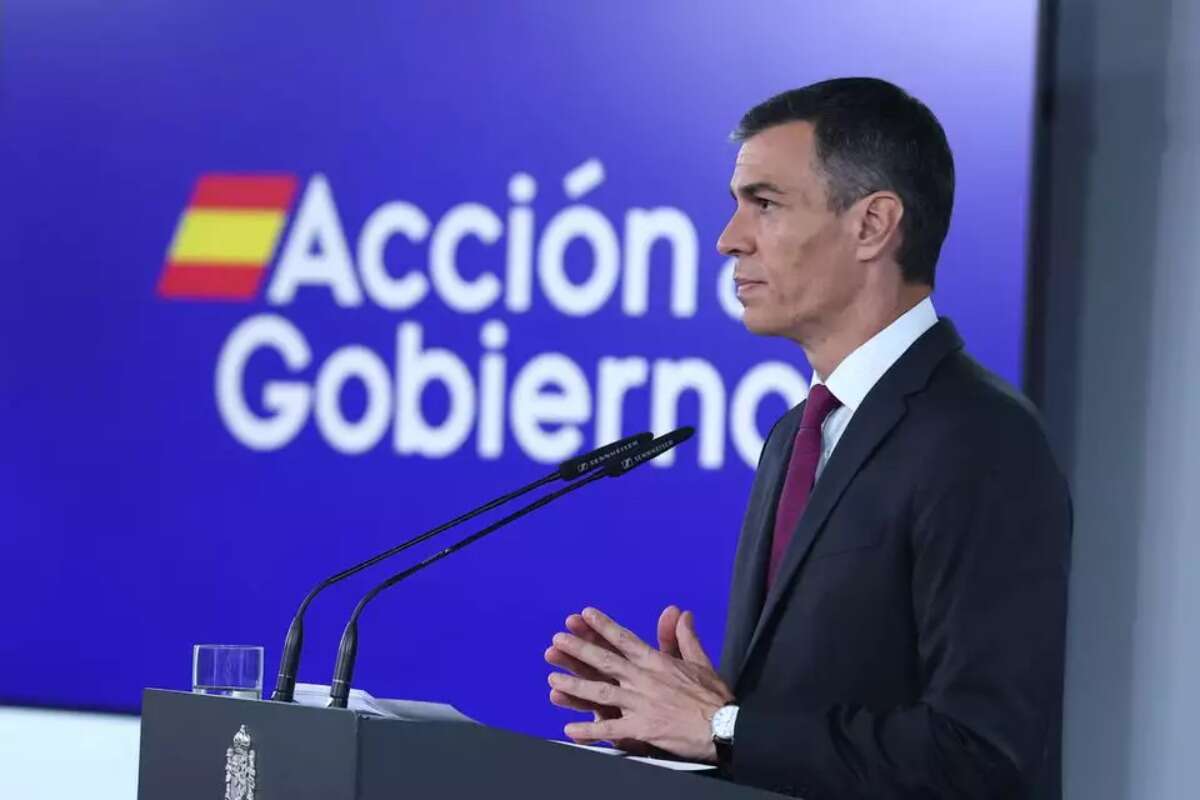
Spain is a constitutional democracy of almost 50 million people. Sánchez's hostility toward Israel has been vigorously challenged by the opposition and civil society. Governments change and elections matter.
Morocco presents almost the opposite picture: relations with Israel are warm at the top — particularly when Rabat speaks in English to Western and Israeli audiences — while Moroccan society is overwhelmingly hostile to normalization and the government's own rhetoric toward Israel is considerably less friendly than many Israelis realize.
Partnership without illusions
Israel should value its relationship with Morocco. The Abraham Accords were an extraordinary strategic achievement. Defense, intelligence, technology and commercial cooperation have expanded dramatically. Hundreds of thousands of Israelis have Moroccan roots — many ultimately Sephardic roots in Spain — and King Mohammed VI has taken important steps to preserve Morocco's Jewish heritage.
But normalization is fundamentally strategic. Morocco strengthened its relationship with Washington, secured American recognition of Moroccan sovereignty over Western Sahara, gained access to Israeli defense technology and intelligence cooperation, and strengthened its position against Algeria.
There is nothing objectionable about this, as states pursue their interests. Morocco normalized because normalization serves Moroccan interests — not because Morocco underwent a conversion to Zionism, philo-Semitism or unconditional friendship with Israel. Israelis understand this from Egypt and Jordan: valuable security cooperation can coexist with hostile societies and anti-Israel rhetoric.
And Rabat's rhetoric deserves attention. King Mohammed VI described the Gaza war as "blatant Israeli aggression" and spoke of "grave violations" of international and humanitarian law. Foreign Minister Nasser Bourita has denounced attacks against schools, hospitals, women and children, restrictions on humanitarian aid and hunger among Palestinians.

Morocco condemns Israeli settlements in the West Bank as illegal and demands a Palestinian state on the 1967 lines with East Jerusalem as its capital. In July 2026, its Foreign Ministry condemned "illegal and provocative Israeli measures" in Jerusalem and, together with Jordan, denounced Israeli visits to the Temple Mount, accusing Israel of "systematic violations."
Consider the vocabulary: aggression, occupation, grave violations, illegal settlements, starvation, forced displacement, attacks on women and children. These are not slogans from demonstrators in Casablanca. They are positions expressed by the Moroccan state.
The political contrast with Spain matters. Sánchez's anti-Israel policies are challenged by an opposition that could replace him with a considerably friendlier government. In Morocco, no meaningful opposition challenges the government's anti-Israel rhetoric; Islamist and anti-normalization forces are, if anything, more hostile. The absolutist monarchy may itself be the only guarantor of normalization.
Nor is Moroccan society particularly reassuring. Arab Barometer measured support for normalization with Israel at approximately 13% after October 7. Nearly nine out of ten Moroccans therefore opposed it.
The Jewish demographic paradox
Morocco once contained approximately 250,000 Jews. Today, among 39 million inhabitants, perhaps 2,000-3,000 remain. Mohammed VI deserves credit for restoring synagogues, cemeteries and Jewish historical sites. But preserving Jewish heritage is not the same as sustaining flourishing Jewish life.
Despite Sánchez's hostility toward Israel, approximately 50,000 Jews live in Spain, which continues attracting Jewish newcomers, including from Hispanic America — roughly twenty times Morocco's Jewish population.
This contrast is extraordinary in Ceuta and Melilla. With only around 180,000 inhabitants combined, their centuries-old Jewish communities together are of roughly the same order of magnitude as the entire remaining Jewish population of Morocco.
This does not mean Jews are necessarily unsafe in contemporary Morocco, nor does it diminish the king's positive initiatives, but we should puncture this romanticism. Coexistence should be measured not only by how beautifully a country restores the monuments of its Jewish past, but by whether Jews still choose to build their future there.
Ceuta and Spain after Sánchez
Israelis should also resist celebrating Spain's difficulties in Ceuta because they despise Sánchez.
Ceuta was obviously nothing comparable to October 7. October 7 was a terrorist massacre. Ceuta was not. But Israelis should recognize a method of hybrid pressure: using mass civilian movement to overwhelm a neighbor's border defenses and create an acute security crisis. Among the Spanish citizens exposed are members of Ceuta's historic Jewish community.

Nor should Sánchez be mistaken for Spain's future. Unlike several Western European countries, Spain's immigration is not predominantly Muslim. Much comes from Hispanic America, offering Israel an important long-term demographic and cultural opportunity.
Moroccans are Spain's largest immigrant community from a Muslim-majority country, and individuals of Moroccan origin played central roles in both the 2004 Madrid bombings and the 2017 Barcelona and Cambrils attacks. This obviously does not implicate the overwhelmingly law-abiding Moroccan community, but those experiences shape Spanish perceptions of Islamist radicalization.
Spain, therefore, has no demographic inevitability pushing it toward permanent hostility to Israel. While Morocco is warm at the top but deeply hostile underneath, Spain today is hostile at the top but potentially much more promising underneath.
Israel should deepen cooperation with Morocco wherever interests coincide, but without romanticizing the relationship. It should confront Sánchez vigorously without confusing his government with Spain or alienating a society that will outlast him. Israelis already apply that realism to Egypt and Jordan. Morocco should be no different. Cooperate with Morocco without romanticizing it, while confronting Sánchez without confusing him with Spain.
Angel Mas is the President of ACOM Spain, The most prominent pro Israel public diplomacy organization in Spain and the Spanish speaking world.