For about two years, Tal Kuperstein had one goal — to see his son Bar, who was kidnapped from the Nova festival compound in Re'im on October 7 by Hamas, return from captivity. Now, after that dream has come true, he has set a new target for himself: to dance at his son Dvir's wedding this coming October. For most parents, this is taken for granted. For Kuperstein, it is a dream that, just a few short months ago, he did not even dare to set for himself.
Around six years ago, Kuperstein suffered a severe stroke. For years, doctors estimated that he had exhausted his rehabilitation potential. The Israeli public, who followed his struggle for Bar's return, knew him as someone who had difficulty speaking and relied on a wheelchair. For a man in his condition, the very thought of dancing seemed out of the realm of possibility until recently. However, he shares that in recent months there has been a turning point in his condition, one that has made this goal more realistic than ever — and it is all thanks to Israeli technology, alongside a great deal of perseverance and willpower.
"Before I started the treatment, I barely spoke at all," he tells the Israel HaYom editorial team. "Today I speak, and people understand me much better. I feel that my memory and cognitive abilities have improved, and I have more strength in my arm and leg."
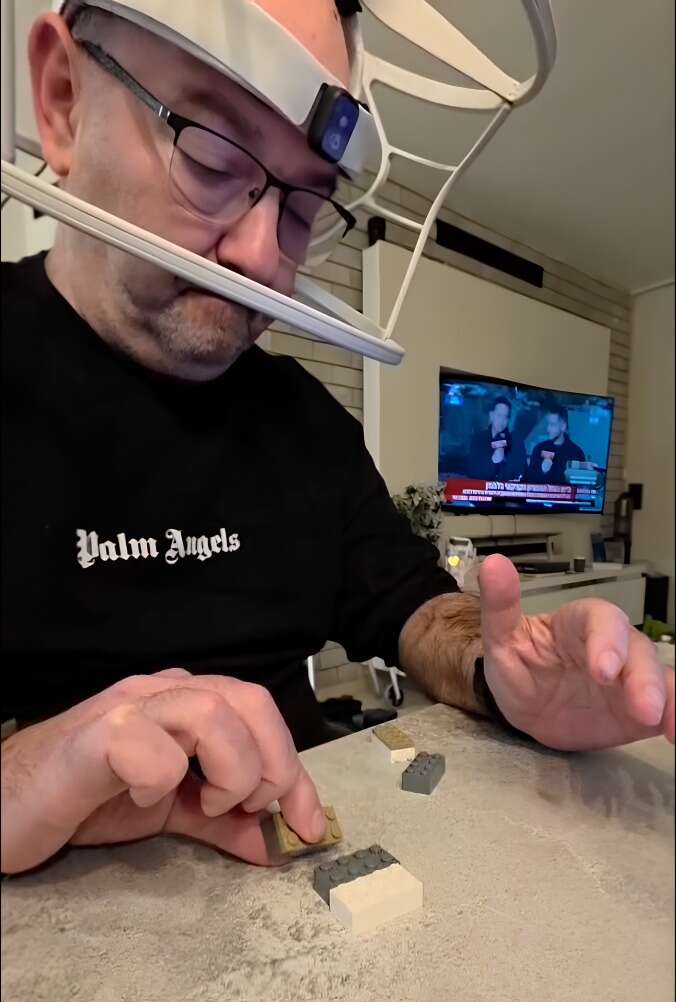
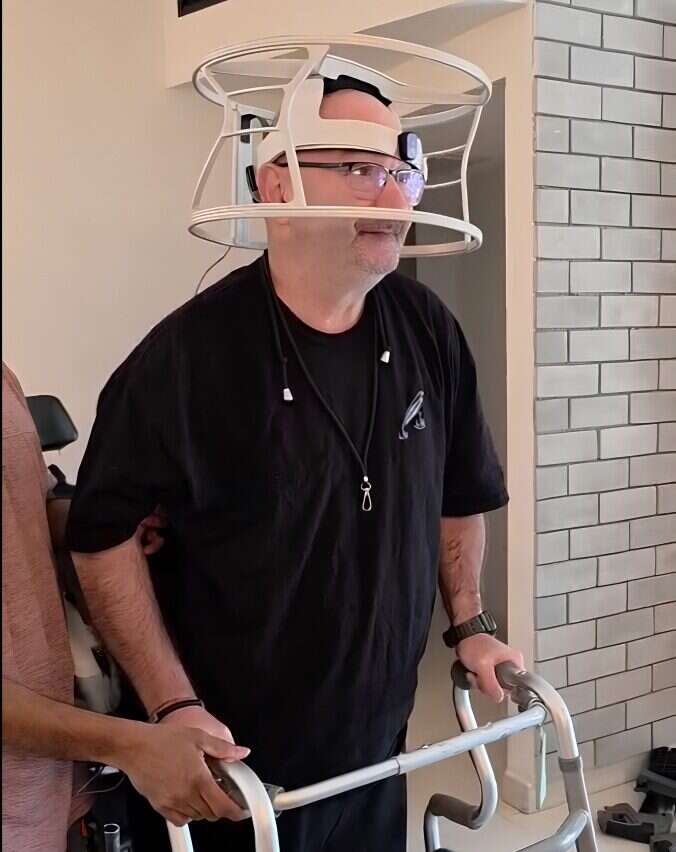
Since late January, Kuperstein has been undergoing daily treatment at home using a therapeutic helmet developed by the Israeli company BRAIN.Q. "I do the treatment with the helmet every day. I don't miss a session," he says. Behind Kuperstein's story stands BRAIN.Q's attempt to change the way the world recovery the brain after a stroke.
Teaching the brain to relearn
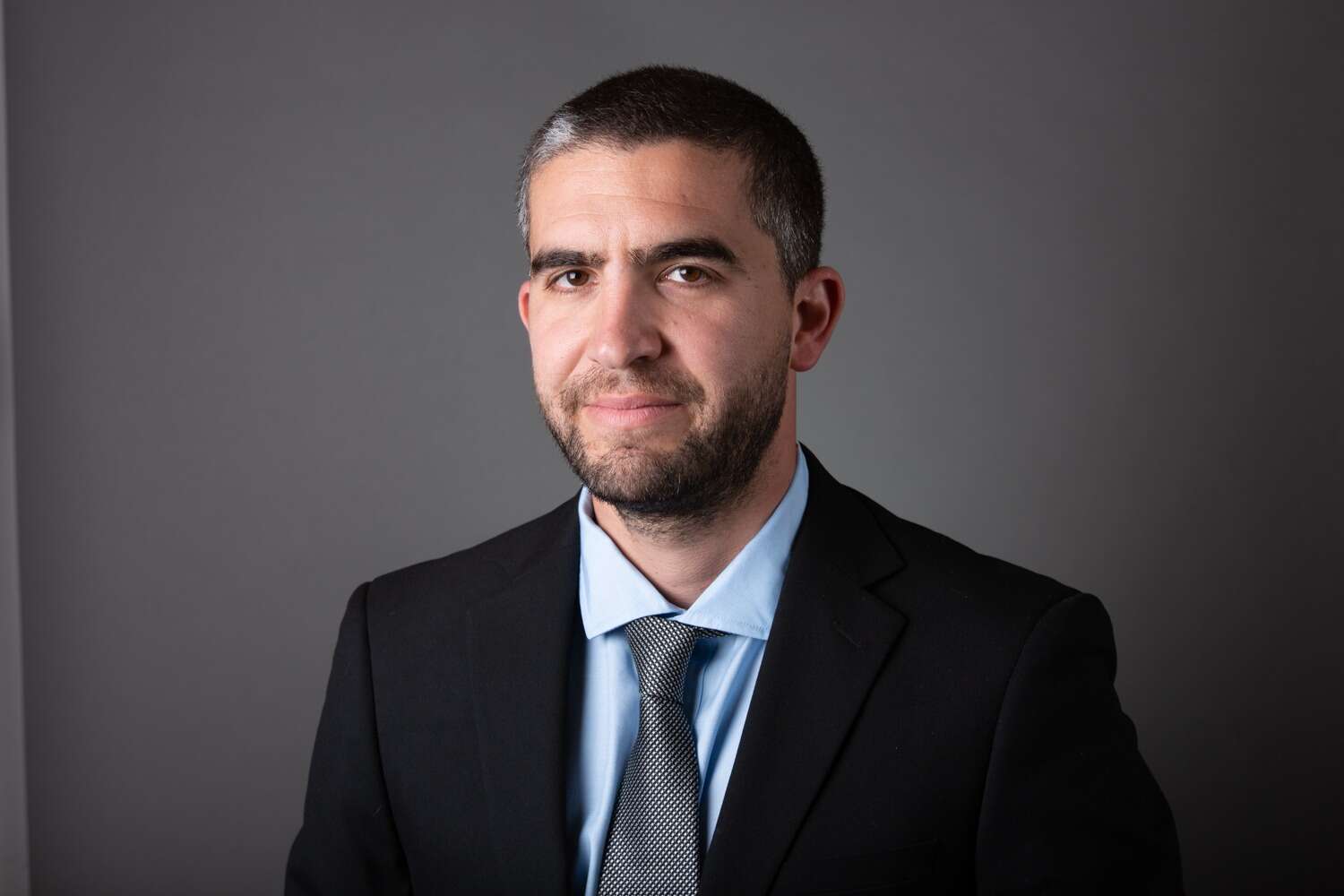
"People think the biggest challenge is saving lives after a stroke," says Yotam Drechsler, CEO and co-founder of BRAIN.Q. "To a large extent, that problem has already been solved. Most patients survive. The new challenge is that the brain after a stroke is no longer the one they had. The question is how to teach it to relearn."
This is exactly where the company is trying to redefine the field. Instead of viewing a stroke primarily as damage to the muscles or movement, it treats it as damage to the brain's learning system. "The brain is still there," Drechsler explains. "To use an analogy from the world of artificial intelligence, the hardware still exists, but the learning model has been damaged. Our job is to retrain it."
The therapy developed by BRAIN.Q is AI powered neuromodulation — influencing the activity of neural networks in the brain using a weak electromagnetic field at low frequencies and intensities, which the patient does not feel. The goal of the stimulation is not to "activate" muscles or cause movement, but rather to create better conditions in the brain for learning and for the reorganization of neural networks damaged by the stroke.
According to the company, the electromagnetic field is tailored to the activity patterns of a healthy brain, aiming to encourage processes of neuroplasticity — the brain's ability to form new connections and relearn after an injury. "The helmet is like fertilizer for a potted plant," Drechsler explains. "It doesn't make the plant grow on its own, but it creates the conditions that allow it to grow better. Afterwards, you still have to do the work — to practice."
Alongside the brain stimulation, the patient performs a series of motor and cognitive exercises every day. This is where artificial intelligence comes into the picture. BRAIN.Q's AI system continuously analyzes the patient's performance, their pace of progress, and areas of difficulty, building a personalized training plan that updates along the way. Thus, instead of a predetermined rehabilitation plan, every day becomes another "workout" adapted to the patient's current condition. "The AI doesn't replace the physical therapist," says Drechsler. "It helps us understand how to train each brain in the most correct way. We want to maximize the brain's learning potential and then train it smartly."
The initial results are also starting to accumulate. A study published this year in the journal Stroke, based on 124 post-stroke patients, found that patients who received BRAIN.Q's therapy alongside a standard rehabilitation program were almost three times more likely to return to full functioning. "We are not in the business of movement," says Drechsler. "We are in the business of generating hope for people. In the neurological world, people can feel like they are trapped inside their own bodies. When they start to see the light at the end of the tunnel again, that is the greatest value we can give them."
Breaking the constraints of the medical device market
But the company's innovation does not end with its technology. It is also reflected in both its therapeutic approach and its business model. The medical device market typically relies on a long path of clinical trials, regulatory approvals, and reimbursement from insurance companies - a process that can take years. BRAIN.Q, which has already received approval in Europe and Israel and is currently working toward FDA approval, chose to try a different model: subscription-based home therapy.
"In Israel, we decided not to wait for all the reimbursement mechanisms to mature," says Drechsler. "There are two options: wait years until the treatment enters the insurance companies' reimbursement tracks or make it accessible today to as many patients as possible. We chose the second option."
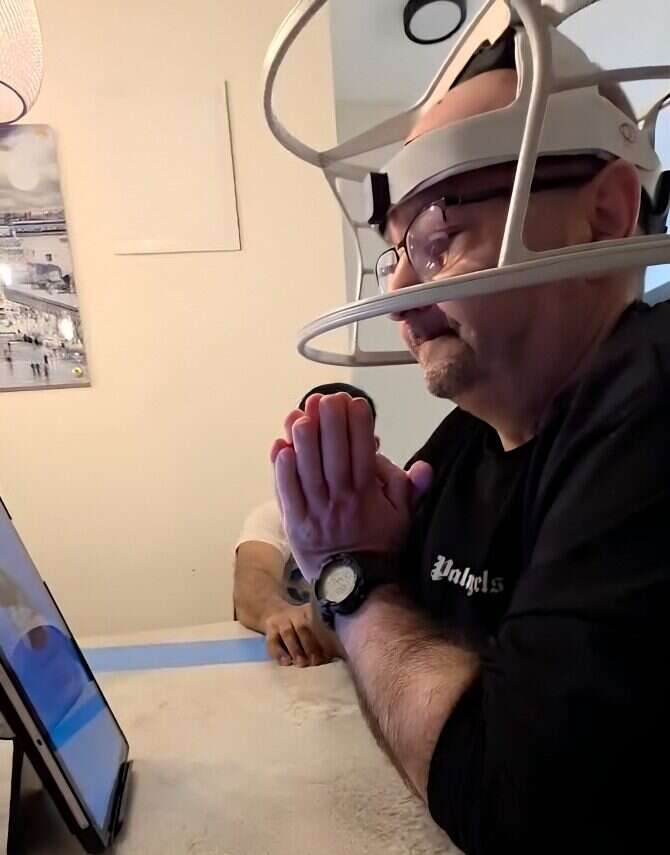
Under this model, the patient receives the entire system at home — the helmet, a cloud-connected tablet, professional accompaniment, and continuous monitoring of treatment performance. According to Drechsler, the move to the home is not just a matter of convenience. "In a clinic, it's very hard to persist. At home, people do the treatment every day. The family becomes part of the rehabilitation, and persistence increases significantly."
The company's vision extends far beyond strokes. After recently receiving European approval for an additional indication, it plans to expand the platform to treat victims of head trauma, including war casualties. "We don't see ourselves as a classic medical device company," says Drechsler. "We are a technology company building the brain health of the future."
For Kuperstein, meanwhile, the future is measured by one simple goal. "All the doctors said I had no chance," he says. "But I do the treatment every day. Don't give up. To move forward, you have to persevere."