Thursday Sep 10, 2026
NEWSLETTER
www.israelhayom.com
  • Home
  • News
    • Israel
    • Israel at War
    • Middle East
    • United States
  • Opinions
  • Jewish World
    • Archaeology
    • Antisemitism
  • Lifestyle
    • Food
    • Travel
    • Fashion
    • Culture
  • Magazine
    • Feature
    • Analysis
    • Explainer
  • In Memoriam
www.israelhayom.com
  • Home
  • News
    • Israel
    • Israel at War
    • Middle East
    • United States
  • Opinions
  • Jewish World
    • Archaeology
    • Antisemitism
  • Lifestyle
    • Food
    • Travel
    • Fashion
    • Culture
  • Magazine
    • Feature
    • Analysis
    • Explainer
  • In Memoriam
www.israelhayom.com
Home Commentary

Can Israel bomb Turkey out of Syria?

Erdogan has rolled out a red carpet to Damascus and built a web of interests too dense for airstrikes alone to unravel. It's time for a strategic rethink.

by  Shachar Kleiman
Published on  08-20-2026 05:34
Last modified: 08-22-2026 22:36
Can Israel bomb Turkey out of Syria?c

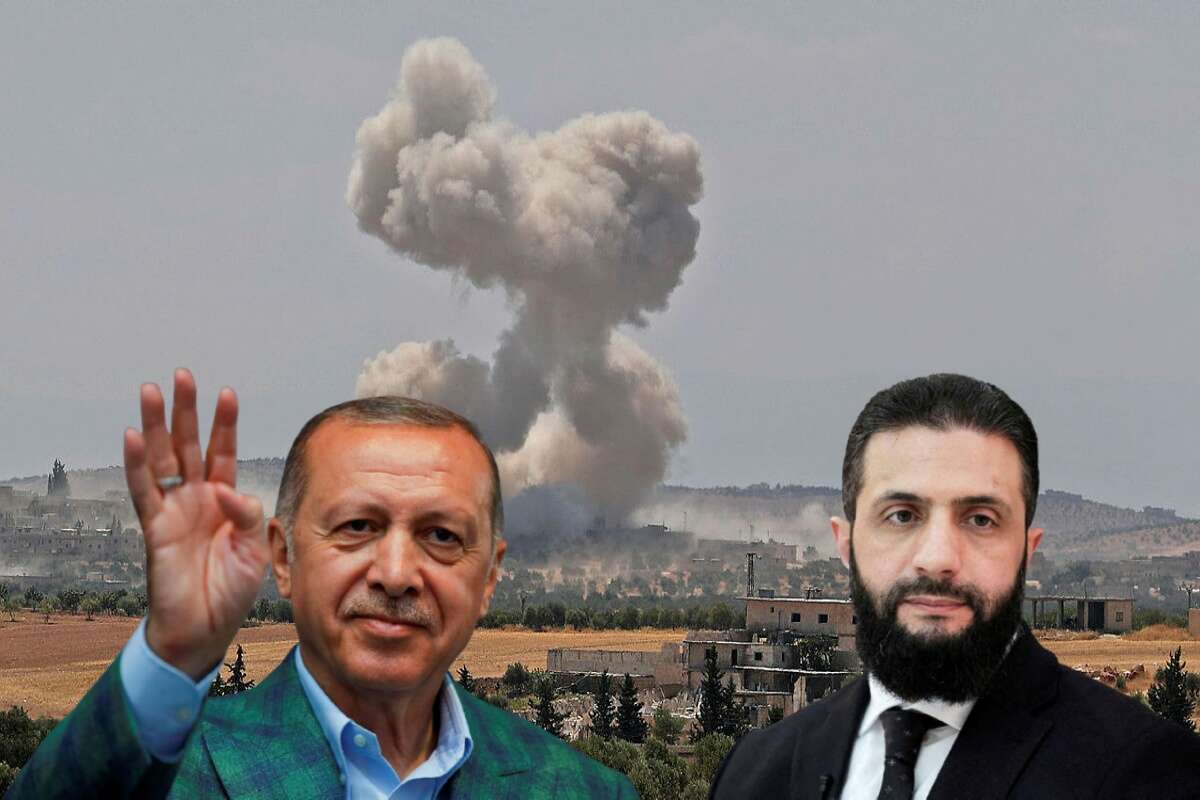
Turkish President Tayyip Erdogan; Syria’s interim President Ahmed al-Sharaa (Background: The Syrian civil war in 2019) | Photo: c

Share on FacebookShare on Twitter

As the dust settles, the strike this week on a military airfield in Syria raises a cascade of questions. The first concerns what, exactly, was disrupted. Arab reports indicate that a Turkish delegation in the area in recent days had been in discussions about establishing a joint Turkish-Syrian military base at the site – possibly as part of an effort to rebuild the Syrian Air Force, which Israel largely destroyed in December 2024.

The second question concerns what message the strike was meant to send. Israel has made clear it opposes the expansion of Turkey's footprint in Syria. But has that train already left the station? Over the past decade, Ankara has run a series of military operations across northern Syria, and the pro-Turkish Syrian militias it cultivated have not gone anywhere. Since the collapse of the Assad regime, a red carpet has been rolled out from Ankara to Damascus. In many domains, Turkey has become the patron of Ahmed al-Sharaa's government – more deeply embedded in the country than at any point before. Syrians who spoke to Israel Hayom described the situation in terms of a return to the Ottoman era (a period of Turkish imperial dominance over the Arab world, ending in 1918).
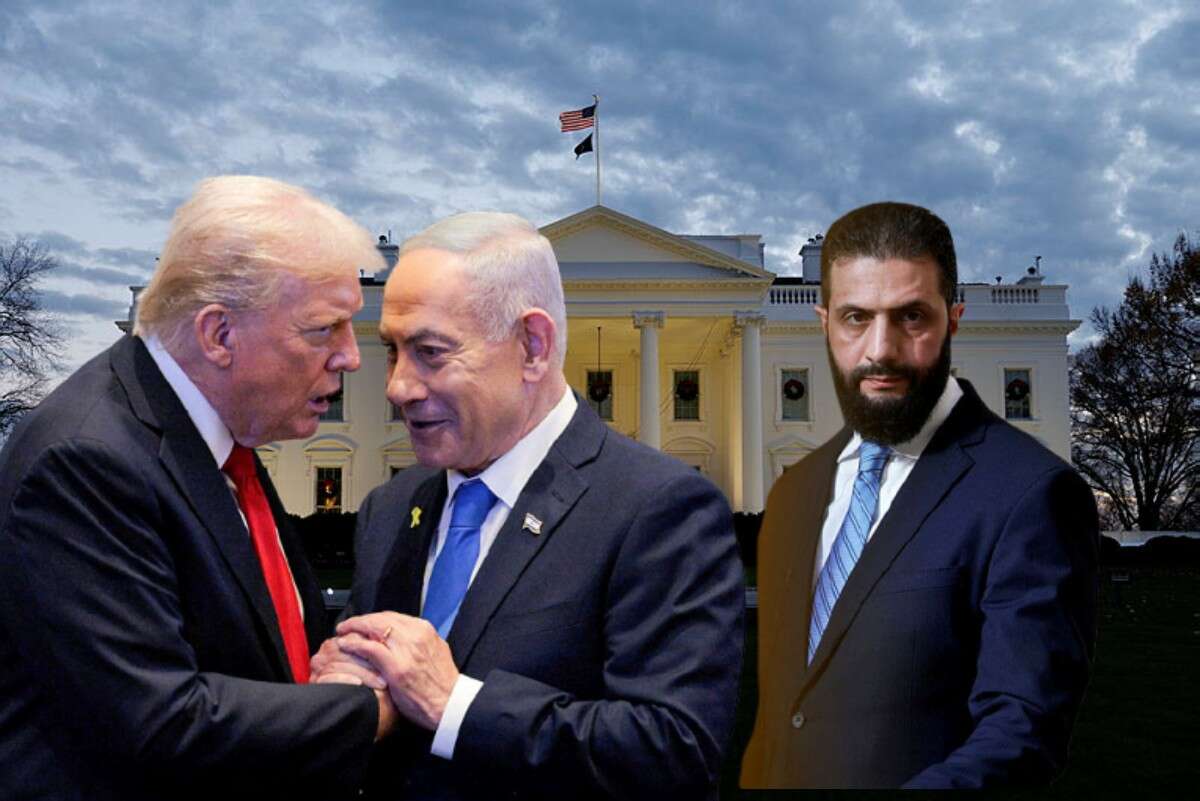
Prime Minister Benjamin Netanyahu, President Donald Trump and Syrian President Ahmad al-Sharaa (Chip Somodevilla / POOL / AFP EPA/WILL OLIVER Stephanie Lecocq/Pool via AP) Chip Somodevilla / POOL / AFPף EPA/WILL OLIVER Stephanie Lecocq/Pool via AP

The third question is whether any of this will make Erdoğan budge, even on the narrow military question. In exchange for broad security assistance to Damascus, he has already extracted a great deal. Through al-Sharaa's forces, Kurdish autonomous rule (the self-governing Kurdish region in northeastern Syria) was rolled back east of the Euphrates River, into the northeastern corner of al-Hasakah. Talks have been underway in recent months on an overland trade corridor from Arab states to Asia Minor (Anatolia, the bulk of modern Turkey) that would route entirely around Israel. And Syria is expected to serve as the long-term answer to the refugee burden weighing on the Turkish economy.

Don't drop your guard

Turkey's layered interests, then, cast real doubt on Israel's ability to contain the growth of Turkish influence through military strikes. Ankara has spent years investing in the Syrian civil war and will not easily walk away from those returns. There is another reason as well: The new Syria occupies a fundamentally different international position. Unlike the universally shunned regime of Bashar Assad, al-Sharaa has built a network of relationships and alliances that makes it impossible for "mysterious" Israeli strikes to pass unnoticed on the world stage. It is no accident that the latest alleged strike swiftly unleashed a wave of condemnations, including from Washington. Tom Barrack, the US special presidential envoy for Syria, went so far as to hold Israel responsible for what he described as "unnecessary escalation."

President Recep Tayyip Erdogan and President Ahmed al-Sharaa (REUTERS/Piroschka Van De Wouw; REUTERS/Khalil Ashawi; HAJ KADOUR / AFP)

Al-Sharaa's government and the growth of Turkish influence are genuine causes for concern. Many figures in Ankara and Damascus harbor deep hostility toward Israel, viewing it as a foreign implant that the Middle East would be better off without. Al-Sharaa himself is hardly a Zionist sympathizer; in a prior chapter of his life, he held senior positions within the al-Qaida terror organization. And yet, in recent years he has pursued a deliberate and cautious foreign policy. He appears acutely aware of Syria's present vulnerabilities and of the power imbalance with Jerusalem. For now, he shows no interest in the kind of suicidal confrontation that defined Hamas' Yahya Sinwar approach.

None of this means Israel can afford to stop watching Damascus – or lower its guard. Nor does it mean abandoning the Druze community in Sweida (a predominantly Druze city and province in southern Syria). And it certainly does not mean that a security arrangement with Damascus would serve as a magic solution to expanding Turkish influence, or dissolve every threat on the northern border. Still, at some point Israel will need to take a hard look at its strategy toward the new Syria. What made sense during the civil war is not necessarily still valid.

Tags: 08/19Ahmed al-SharaaDamascusDruzeErdoganIsraeli airstrikesSweidaSyriaTom BarrackTurkey

Related Posts

25 years later, does America still remember 9/11?REUTERS/Sean Adair

25 years later, does America still remember 9/11?

by Adi Nirman

As the Canadian Broadcasting Corporation tells editors to avoid calling it a "terror attack," popular streamers casually say America "deserved...

Sirens and explosions in the UAE following missile launches from Iran

Iran's Gulf attacks are an 'own goal'

by Shirit Avitan Cohen

The MEAD Summit in Washington is drawing participants from Middle Eastern countries, some of which have no relations with Israel....

Fear of collapse could push Iran toward a nuclear bomb

Fear of collapse could push Iran toward a nuclear bomb

by Danny Zaken

Three senior non-Israeli security officials tell Israel Hayom that, according to the intelligence assessment of agencies closely monitoring Iran, some...

Menu

Analysis 

Archaeology

Blogpost

Business & Finance

Culture

Exclusive

Explainer

Environment


Features

Health

In Brief

Jewish World

Judea and Samaria

Lifestyle

Cyber & Internet

Sports


Diplomacy 

Iran & The Gulf

Gaza Strip

Politics

Shopping

Terms of use

Privacy Policy

Submissions

Contact Us

About Us

The first issue of Israel Hayom appeared on July 30, 2007. Israel Hayom was founded on the belief that the Israeli public deserves better, more balanced and more accurate journalism. Journalism that speaks, not shouts. Journalism of a different kind. And free of charge.

All rights reserved to Israel Hayom

Hosted by sPD.co.il

  • Home
  • News
    • Israel at War
    • Israel
    • United States
    • Middle East
    • Sports
  • Opinions
  • Jewish World
    • Archaeology
    • Antisemitism
  • Lifestyle
    • Food
    • Travel
    • Fashion
    • Culture
  • Magazine
    • Feature
    • Analysis
    • Explainer
    • Environment & Wildlife
    • Health & Wellness
  • In Memoriam
  • Subscribe to Newsletter
  • Submit your opinion
  • Terms and conditions

All rights reserved to Israel Hayom

Hosted by sPD.co.il

Newsletter

[contact-form-7 id=”508379″ html_id=”isrh_form_Newsletter_en” title=”newsletter_subscribe”]

  • Home
  • News
    • Israel at War
    • Israel
    • United States
    • Middle East
    • Sports
  • Opinions
  • Jewish World
    • Archaeology
    • Antisemitism
  • Lifestyle
    • Food
    • Travel
    • Fashion
    • Culture
  • Magazine
    • Feature
    • Analysis
    • Explainer
    • Environment & Wildlife
    • Health & Wellness
  • In Memoriam
  • Subscribe to Newsletter
  • Submit your opinion
  • Terms and conditions

All rights reserved to Israel Hayom

Hosted by sPD.co.il