A new report titled "Strategic Warning 2026 Failure," released Monday by the October Council (a post-October 7 watchdog group), paints an exceptionally alarming picture regarding Israel's defense readiness.
The document – which relies on thousands of open-source publications and dozens of in-depth interviews with combat troops, field observers (female IDF soldiers monitoring border cameras), civilian security coordinators (local security chiefs in border towns), and senior defense officials – concludes unequivocally that the writing is on the wall once again.

The report outlines "seven flashing warning lights" currently visible.
The so-called security conception (the flawed security paradigm prior to the massacre) has not vanished but merely shape-shifted. Prior to October 7, 2023, Israeli policy leaned heavily on the assumption Hamas was deterred, believing the threat could be managed through military force, deterrence, economic concessions, and quiet.
Today, Hamas is no longer simply described as "deterred," yet the threat is once again being managed through diplomatic arrangements, the Yellow Line, future demilitarization, international forces, and political mechanisms that have failed to prove they can actively dismantle the terror group. As of August 2026, Hamas has not been disarmed and continues to recruit, manufacture weapons, rebuild, and re-establish its governing mechanisms.
The field observers on the Gaza border, largely female, are sounding the alarm again. Before October 7, these soldiers detected the shift in Hamas' behavior, reporting on training exercises, approaches to the security fence, and highly unusual activity, yet this intelligence was not converted into a systemic warning in time in part because their views were belittled by the higher echelons. By August 2026, fresh testimonies surfaced from field observers in the Gaza sector, describing Hamas operatives testing the military's response and noting a troubling delay in securing operational approvals.
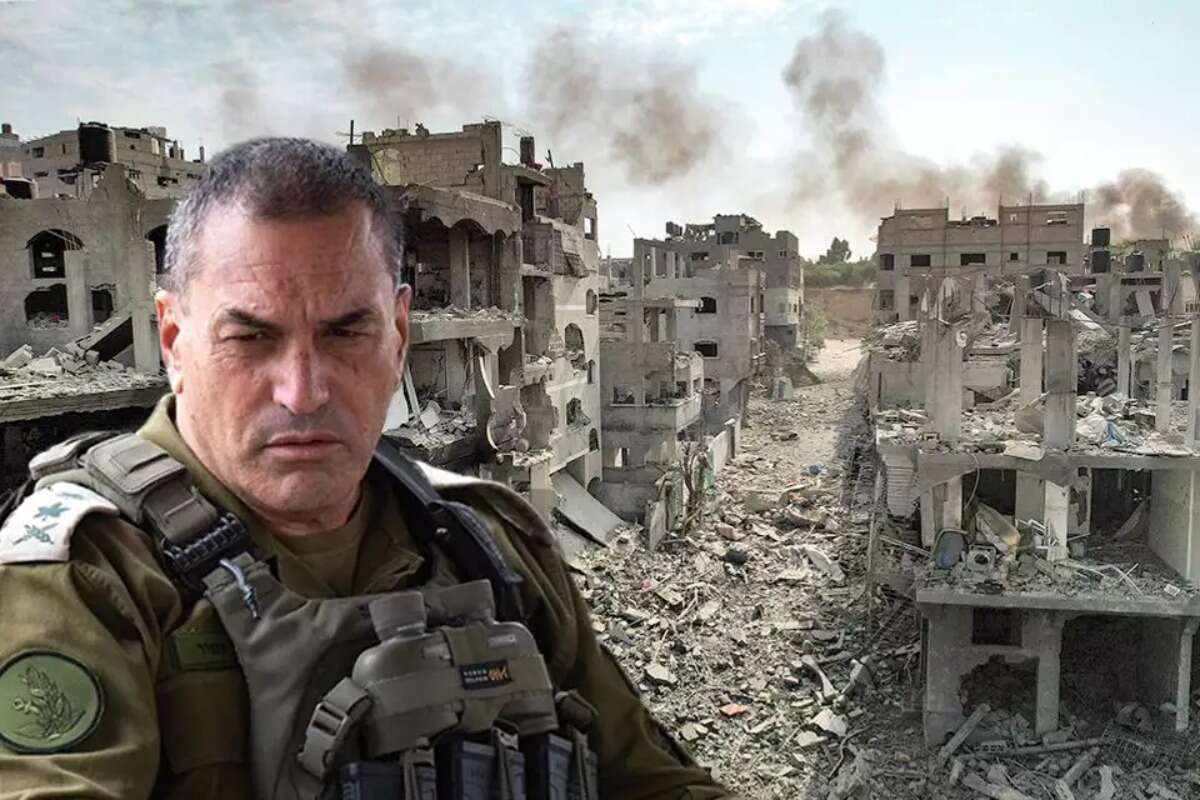
Hamas is studying the new line of defense. Over recent months, there have been documented instances of Yellow Line crossings, approaches toward troops, ground operations, the planting of explosive devices, and active intelligence gathering. An IDF report leaked in August recorded 14 violations in a single 24-hour window, 11 of which were classified as an evolving threat to military forces. Combat troops who spoke with the October Council described a palpable sense Hamas is systematically probing the borders and analyzing the military's response protocols.

Hamas took a beating but was not dismantled. Nearly three years of active combat have failed to eradicate Hamas as a military and governing entity. Published defense establishment assessments indicate the presence of tens of thousands of operatives, many of them fresh recruits. Hamas actively continues to manufacture munitions, restore infrastructure, collect funds, distribute salaries, and operate governance frameworks. Terror tunnels are still being uncovered, even as debates persist over the Gaza Strip's rehabilitation and the future execution of demilitarization.
Personnel are exhausted, and defense arrays remain under intense pressure. The military is grappling with an overwhelming and unrelenting reserve duty burden. Plans to cut the number of required service days have crumbled against harsh realities on the ground, and reservists report a shrinking order of battle alongside mounting difficulties in staffing missions. Concurrently, plans have repeatedly surfaced in recent months to scale back the reserve forces that support the defense of border communities. Following October 7, when standby squads and civilian security coordinators served as the absolute first line of defense in many areas, any reduction in available manpower demands highly rigorous scrutiny.

The barrier of fear remains firmly in place. One of the report's most disturbing findings does not appear on military maps or in intelligence briefs. Rather, it emerges directly from the dozens of conversations we conducted. Soldiers, parents, reservists, civilian security coordinators, defense officials, and political figures acknowledged the fears and gaps, yet many pleaded to remain anonymous. They fear retribution from commanders, damage to their careers, budget cuts, political fallout, or negative consequences for their children.
Before October 7, field observers and intelligence personnel who raised red flags found themselves trapped in a culture where persistence was viewed as an annoyance.
There is still no single entity that has investigated the complete picture. The IDF probed itself, the Shin Bet (the Israel Security Agency, which handles domestic threats and terrorism) investigated itself, the police examined specific crime scenes and incidents, the National Security Council (the NSC) conducted an internal review, and the State Comptroller audited various narrow topics. Yet, to date, no independent, objective body has scrutinized the entire chain of command. This includes the diplomatic echelon, the defense establishment, intelligence agencies, decision-making processes, force buildup, budgets, and inter-agency coordination. Even the Turgeman taskforce (an IDF probe committee) concluded some military investigations were woefully inadequate, while core issues were completely ignored.
The document also points a harsh accusatory finger at the highest diplomatic and military echelons. A former senior defense official anonymously quoted in the report provided a stark assessment. "Netanyahu received more than ten warnings, but it did not move him. He claimed we were exaggerating. Some of the warnings Netanyahu received were focused on the High Holidays, and the question is what the cabinet did about it."
Another senior official echoed these concerns. "The decision to focus on the Iranian arena wasted billions on projects that were delusional, while Hamas grew stronger in Gaza and did not receive the attention it deserved. Even if the prime minister's decision was legitimate, the minimum is to explain and justify it in a state commission of inquiry to know if the decision-making considerations are correct today as well."
During the report's public rollout, Sharon, the mother of the late field observer Roni Eshel who fell in the Nahal Oz operations room (the military base overrun by terrorists), read a chilling letter she received from the mother of a field observer currently serving in the Gaza sector. "The thought you sit for hours in front of the screens, see the danger, and receive threats and silencing in return simply breaks me from the inside," the mother wrote to her daughter.
"How does it make sense the commanders who are supposed to protect you and listen to you are the ones scaring you? How do they dare threaten you because you report failures? History is simply repeating itself right in front of my eyes, and this time you are there."
The suffocating atmosphere of silencing extends far beyond the field observers. The report exposes combat soldiers, officers, and senior officials are similarly terrified to speak out. A senior security official in one of the Gaza border communities detailed the internal struggle. "In recent months, I am in a struggle with the community to let us speak. It is forbidden to say a word about the shaky security situation. Total silence. The main thing is the sense of security will not be damaged and people will return home."
Representatives of the bereaved families and residents of the border region issued an uncompromising demand for the immediate establishment of an independent state commission of inquiry that will investigate the systemic failure in its absolute entirety – stretching from the diplomatic echelon down through the defense establishment.

Reut Recht Edri, whose son Ido was murdered at the Nova festival (the music festival targeted on October 7), addressed the public with a searing message. "This report was not written to scare, it was written because we are afraid of what happens when we are not afraid in time. Until 6:29 a.m. it turned out the quiet was an illusion. We already paid this price once, we will not agree to pay it again."
Nirit, the mother of the late Staff Sgt. Neta Baram who fell in Nahal Oz after repeatedly warning about the deteriorating situation months prior to the massacre, delivered a direct appeal to the prime minister. "October 7 happened on your watch. Your policy failed and you failed. Your job is to protect IDF soldiers and Israeli citizens, not your seat."