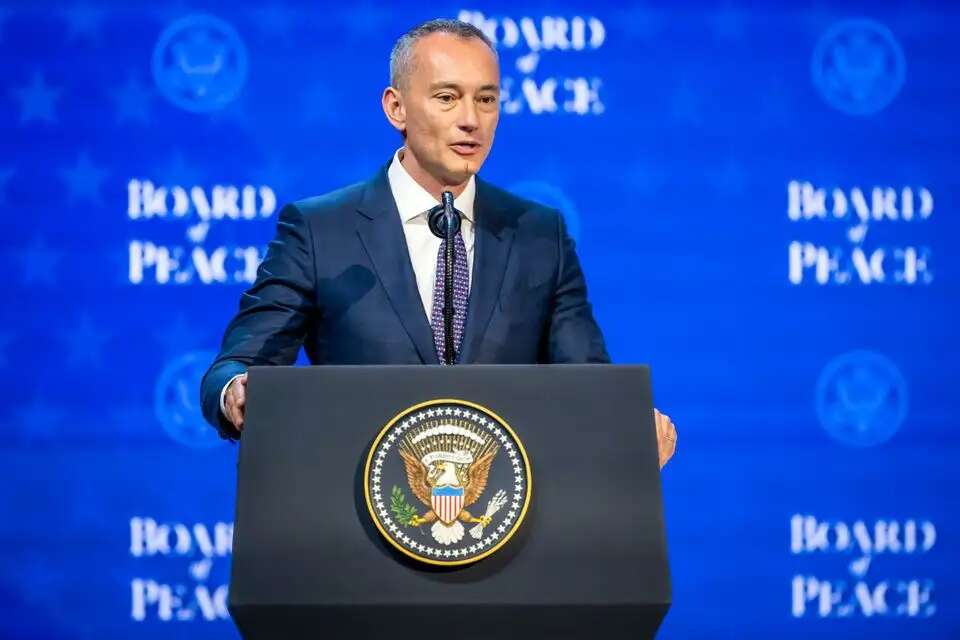
The UN Security Council briefing by Nickolay Mladenov, the Board of Peace's high representative for Gaza, offered a revealing look at what has been taking place behind the scenes in efforts to advance US President Donald Trump's peace plan. Not everything that emerged from his remarks will be comfortable for Israeli ears.
Mladenov said Israel had not been required to approve or sign the 15-point plan. The plan was agreed between the Board of Peace and Hamas, but according to Mladenov, Jerusalem had effectively agreed to move forward with its implementation. He said understandings had been reached during a meeting with Prime Minister Benjamin Netanyahu last week on the process for decommissioning the weapons of Hamas and the other terrorist organizations, as well as on establishing mechanisms to monitor and verify the process. Moreover, according to Mladenov, some of those mechanisms have already been established and are operating, including one intended to resolve problems and examine complaints submitted by the parties on the ground.
Mladenov also criticized Israel and its strikes in Gaza. "After three years of war and 20 years of military operations, I ask, will another strike on a munitions depot stop Hamas from rearming or tightening its grip on Gaza?" Mladenov told the Security Council. "It will not. It only delays the demilitarization that would happen," while obstructing the transition to civilian government.
Mladenov demanded that both Israel and Hamas comply fully with the terms of the Sharm el-Sheikh agreement. For Israel, that means maintaining a complete ceasefire and remaining along the Yellow Line rather than operating beyond it. He also explicitly called for strikes to stop unless Hamas posed an immediate threat.
This is one of the central points of disagreement between the Board of Peace and Israel. Officials in Jerusalem argue that Hamas continues to violate the ceasefire, prepare terrorist attacks and rebuild its capabilities, and that Israel is therefore acting against the organization. Mladenov, by contrast, said Israeli complaints should be submitted to the verification mechanism that has been established and dealt with through that framework. Mladenov also criticized Israel for what he said were insufficient quantities of equipment being allowed into Gaza to build shelters ahead of the winter, warning of the consequences if adequate shelter is not provided.
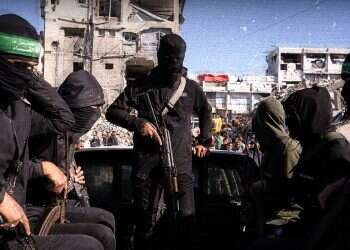
On the other side, the demands placed on Hamas are no less explicit: a complete halt to military activity and preparations for it, the removal of armed men from the streets apart from members of the civilian police, an end to attacks on Gaza residents who oppose the organization and the beginning of preparations to hand over weapons.
According to Mladenov, the agreement accepted by Hamas covers all categories of weapons without exception, leaving "no gray area." In other words, all weapons are to be handed over, from handguns to rockets, along with maps of tunnels slated for destruction.

Those remarks directly contradict statements by senior Hamas officials. Hamas spokesman Osama Hamdan said explicitly that no agreement had been reached on surrendering all weapons. According to Hamdan, the understandings concerned only placing heavy weapons under the responsibility of the Palestinian technocratic committee, with oversight by the Palestinian "resistance" organizations, meaning Hamas and Palestinian Islamic Jihad. He further insisted that no non-Palestinian body would take part in the process and that no ammunition would leave the Gaza Strip.
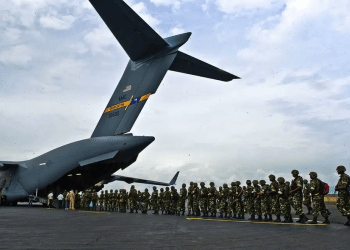
Mladenov also addressed the agreed principle that there is no fixed timetable, but rather an implementation sequence: the process will move to the next stage only after the preceding stage has been fully completed. The picture he outlined includes a complete ceasefire, an end to Hamas military activity and the creation of conditions for the deployment of the International Stabilization Force, or ISF, as well as the entry of the National Committee for the Administration of Gaza, the Palestinian technocratic body that is supposed to assume responsibility for civilian governance.
Waiting for conditions to mature for the next phase
Mladenov warned that this was the only viable solution at the current stage and that all the alternatives were far worse. If the process collapses and war resumes, he warned, there may be no framework left to return to and nothing remaining on the ground to rebuild. The bottom line is that the sides are now waiting for the conditions to mature for the transition to the next phase. In Mladenov's account, both Hamas, through its actions, and Israel, through its responses, bear responsibility for delaying progress.
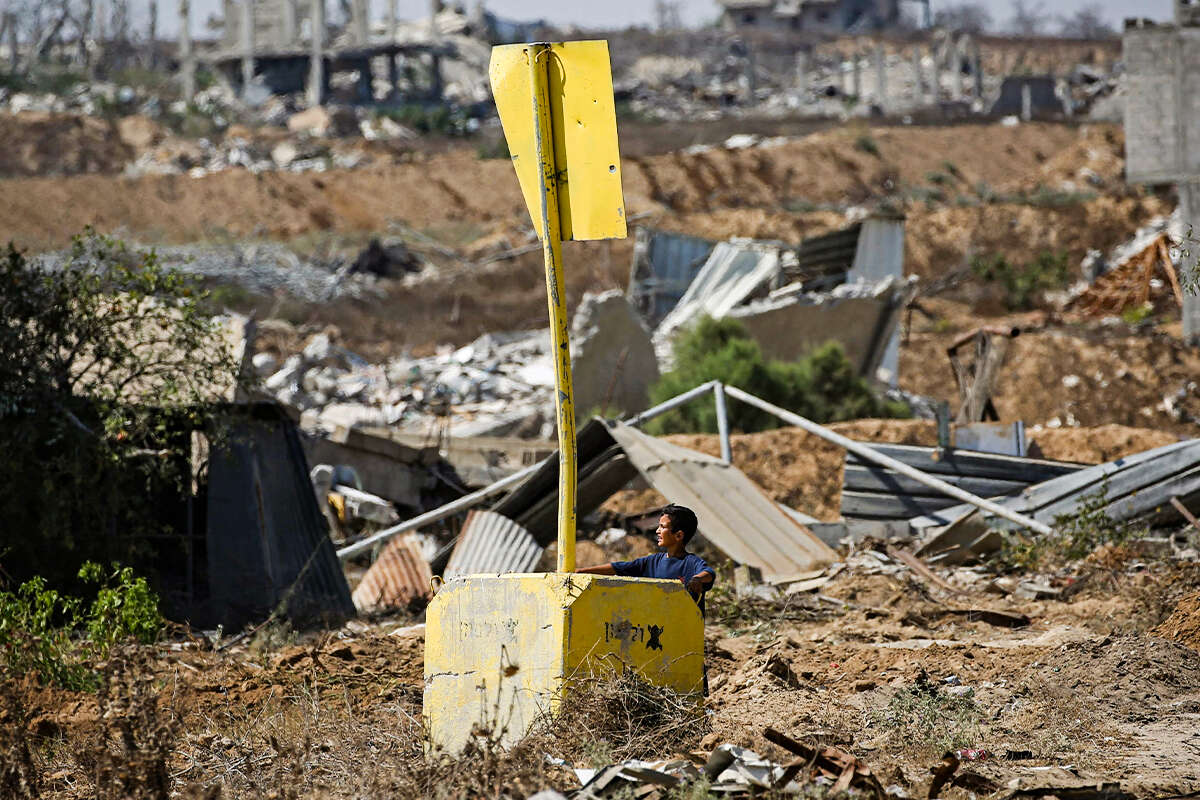
Mladenov made another noteworthy point as well. The veteran diplomat stated explicitly what much of the international community, particularly Western leaders, had for years avoided saying outright: The principal cause of Gaza's condition was two decades of rule by extremists, meaning Hamas, and the decision to prioritize armed struggle over civilian development.
At the same time, Mladenov faulted Israel for pursuing policies aimed at managing the security threat posed by Hamas without seeking a fundamental solution to the problem. There is considerable hypocrisy in that argument. A fundamental solution would have required toppling Hamas, something that could only have been achieved through a full-scale war. For years, the international community opposed almost every major Israeli military operation in Gaza. Assigning Israel responsibility on those grounds is therefore puzzling and appears intended, at least in part, to present a more balanced picture.