International and Israeli left-wing organizations that took part in the "starvation" campaign against Israel and calls to end the war are now playing a role in shaping postwar policy in Gaza under US President Donald Trump's 20-point plan, according to new research by the Israeli organization Ad Kan.
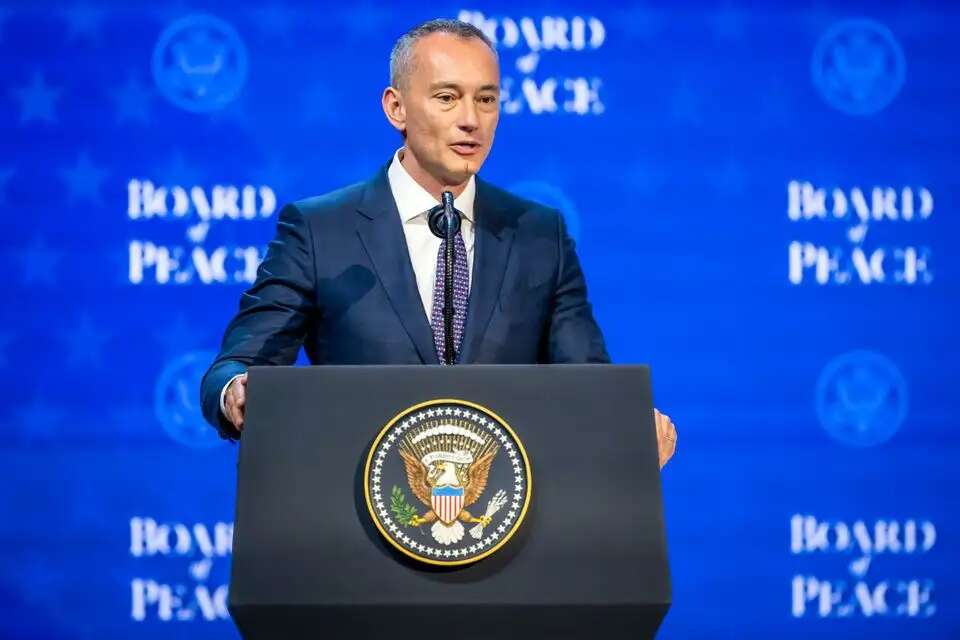
According to an activist with the umbrella organization Alliance for Middle East Peace, Point 18 of the plan, which deals with establishing dialogue between Israelis and Palestinians, was shaped and drafted with the organization's involvement. ALLMEP has maintained close ties with Nickolay Mladenov, the Board of Peace's High Representative for Gaza.
The relationship between the two was documented while Mladenov served as the UN Special Coordinator for the Middle East Peace Process, raising questions over whether the Board of Peace, which is overseeing Gaza's transitional administration under Trump's plan, is also providing access to organizations on the radical Left.
Broad network of influence
According to the research, ALLMEP does not limit its activities to promoting meetings between Israelis and Palestinians, but also operates an extensive lobbying network targeting governments in the US and Europe. The organization was involved in promoting the Nita M. Lowey Middle East Partnership for Peace Act in the US Congress, which provided $250 million for Israeli-Palestinian peacebuilding programs and economic development initiatives.
The network promoted by ALLMEP includes left-wing organizations such as Standing Together, Combatants for Peace, Ir Amim and Women Wage Peace, alongside cooperation with other organizations including B'Tselem and the New Israel Fund.
According to the research, the documented relationship between ALLMEP and Mladenov dates back to at least 2018, when Mladenov attended the organization's conference in Jerusalem. In 2020, he participated in a discussion with the organization's leadership that addressed, among other issues, the dangers they saw in applying Israeli sovereignty in Judea and Samaria.
Over the years, both sides have publicly expressed support for each other's activities. Ad Kan now argues that those ties have taken on new significance because of Mladenov's role in implementing Trump's plan, which includes the disarmament of Hamas, a gradual Israeli withdrawal and the establishment of a Palestinian administrative mechanism in the Gaza Strip.
Mladenov recently told the UN Security Council that the plan also includes a "political horizon" and a two-state solution.
That approach is reflected particularly in Point 18, the provision that senior ALLMEP figures say they helped shape. The organization openly seeks involvement in determining Gaza's future policy. From its perspective, the process is not merely a civilian effort involving demilitarization and reconstruction, but a platform for advancing the two-state concept, contrary to Israel's position.
"Political horizon"
Ad Kan CEO Avihai Shorshan said: "When you delve into the details and read the fine print, you understand that something very serious is happening here. Under the auspices of Trump's Board of Peace, [Gaza High Representative] Nickolay Mladenov has built a channel that bypasses Israel, through which radical organizations that promoted vicious campaigns against Israel during the war, such as the 'starvation campaign' and efforts to promote an arms embargo against Israel, will receive enormous budgets so they can supposedly become 'part of the solution,' and they will be the ones influencing the future Gaza Strip."
He added: "This went under the radar on both the Israeli and American sides, and we are now working with the relevant parties to change the situation and ensure that those dealing with the Gaza Strip the day after are parties that want what is best for the State of Israel, rather than those interested in establishing a terrorist state five minutes from Ashkelon."
Shorshan also referred to a May 2025 event promoting Palestinian statehood, at which he said the organization described, with near precision, what later became Point 18: "A plan calling for civil society action, 'interfaith dialogue' and activity to 'change mindsets and narratives,' the establishment of dialogue aimed at agreeing on a 'political horizon,' and the promotion of 'tolerance' and 'peaceful coexistence.'"
Those remarks are consistent with a claim by Meredith Rothbart, co-founder and CEO of the Jerusalem-based organization Amal-Tikva, that they were among those who put forward the draft that ultimately shaped the provision.
The Board of Peace said this week that its positions were clear and public and had been formulated by President Trump as part of his 20-point plan, which received the backing of the UN Security Council. ALLMEP had no role in that process, the Board said, either then or now, adding that implementation of the plan would be led by the National Committee for the Administration of Gaza.
ALLMEP issued the following statement in response to the Israel Hayom report: "ALLMEP was not involved in drafting Point 18 or in formulating the Board of Peace plan, and claims otherwise are false. Nor did any ALLMEP representative make the statements attributed to us in the article. What the article does accurately describe is ALLMEP's long-standing work to ensure Israeli and Palestinian peacebuilders have a voice with policymakers and international actors. That is not a revelation; it is our mission, and we are proud of it."