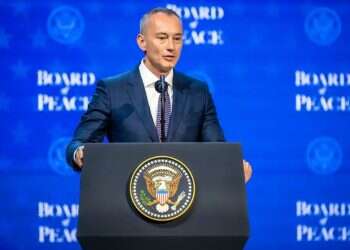
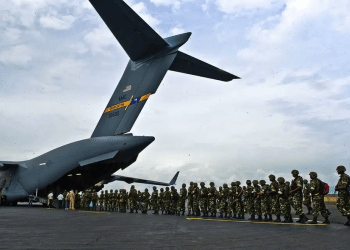
According to The Guardian, authorities in Jerusalem are actively preventing the development of a strategic military installation tied to President Donald Trump's Board of Peace in the coastal enclave of Gaza.
Awarded to Louisiana's Arkel International late this summer, the initial building deal authorized a secure facility meant to house 150 multinational troops. Those soldiers were designated to spearhead a wider peacekeeping mandate.
However, the borders remain completely closed to heavy machinery and personnel, The Guardian reported. "Israel won't open the border," an informed source explained.
Established after hostilities paused in October 2025, the global coalition depends entirely on this first phase. The planned 100 meters (328 feet) by 100 meters (328 feet) defensive perimeter, designated as a "mission support site temporary outpost", would occupy land previously managed by the defunct Gaza Humanitarian Foundation, which utilized corporate guards for aid deliveries last year.

Briefly hosting heavily armed detachments drawn from a larger 500-person Moroccan and Kosovar deployment, the garrison is viewed as the linchpin for subsequent operations. Without this foundational infrastructure, the entire recovery timeline collapses.
"You can't get in without [an international stabilization force (ISF)]. You can't rebuild," the contact emphasized to The Guardian. "There's no security. There's no deliveries of construction equipment. You can't even start putting utilities. You can't start putting in basic life-support facilities you know because without the ISF you can't go in."

Officials anticipate a potential breakthrough following the upcoming Israeli parliamentary vote on Oct. 27. Despite boycotts from several Western capitals, the polarizing organization successfully recruited 28 allied nations. Under a controversial hierarchy featuring a lifetime chairmanship for the American leader, executives like Jared Kushner and Steve Witkoff steer the agenda, previously floating plans for a $71 billion transformation of the devastated territory into a luxury metropolis.
A preliminary six-month framework requiring $2.45 billion was introduced last month. Witkoff noted, "Today we can point to real progress," according to The Guardian.