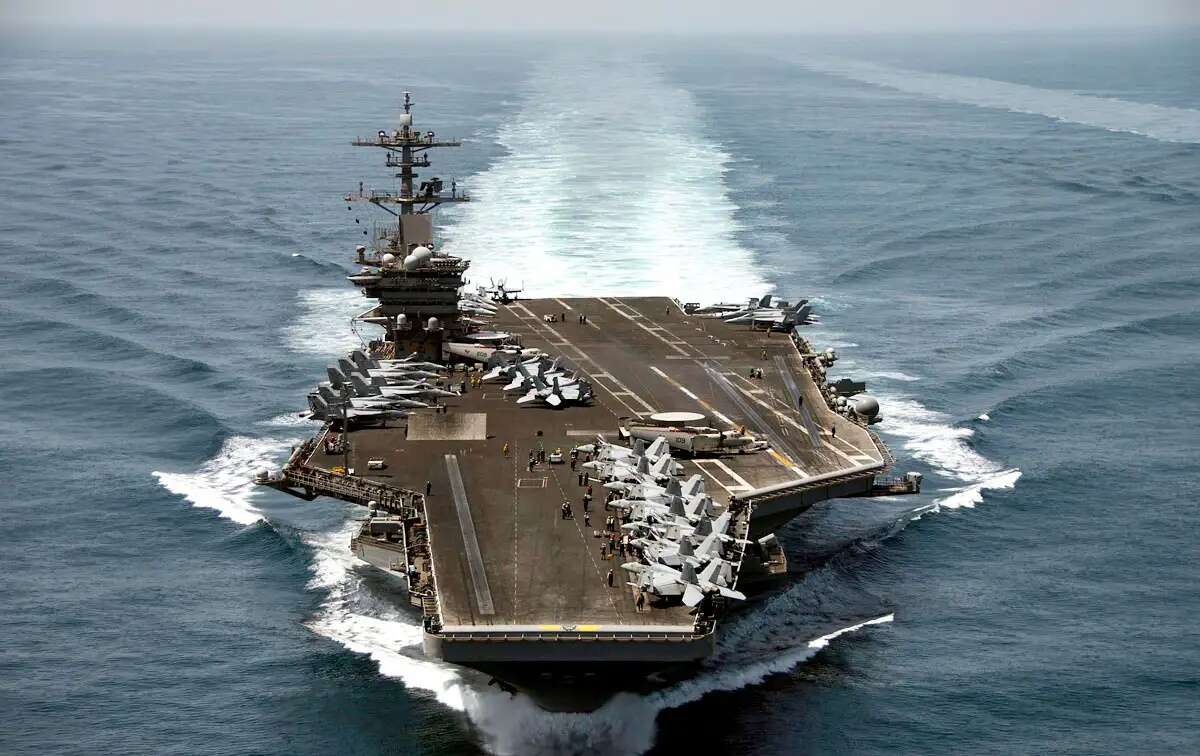
The US aircraft carrier USS Theodore Roosevelt and its roughly 5,000 crew members are expected to deploy to the Middle East in the coming weeks for at least seven months, with preparations underway for an even longer deployment, senior US Navy officials told CNN overnight Wednesday into Thursday.
The planned deployment comes as the US Navy grapples with the fallout from the USS Abraham Lincoln's prolonged deployment to the region. The carrier spent more than 250 days at sea without a port call, raising concerns about sailors' mental health. There were also reports of at least one sailor going overboard and shortages of supplies aboard the roughly 100,000-ton warship.
The Lincoln was replaced last week by the USS George Washington and is expected to make a port call in Thailand in the coming days. According to reports, the Roosevelt is expected to eventually replace the Washington. The USS George H.W. Bush is also operating in the Middle East.

Chief of Naval Operations Adm. Daryl Caudle acknowledged that the war with Iran was placing a strain on the US Navy and said the service would seek to provide sailors and their families with greater certainty about deployment lengths. He cautioned, however, that operational demands could make that difficult. "I would prefer, you know, seven-month deployments. I typically am not a big fan of extensions, and I push back hard on that. But the enemy gets a vote," Caudle said.
Alongside the military developments, US President Donald Trump said the United States' financial power would propel the country "toward a very big victory," adding that he did not believe Iranian Supreme Leader Mojtaba Khamenei was dead.
Global oil prices fell Wednesday for a third consecutive day after Iran and Oman announced an as-yet unfinished effort to establish a temporary shipping route through the Strait of Hormuz. The plan would also include an effort, the two countries said, to clear mines from parts of the waterway. An Iranian Revolutionary Guard Corps spokesperson said agreements had been reached regarding each side's share of the strait's waters and revenues, but claimed the United States was obstructing the process and causing delays.
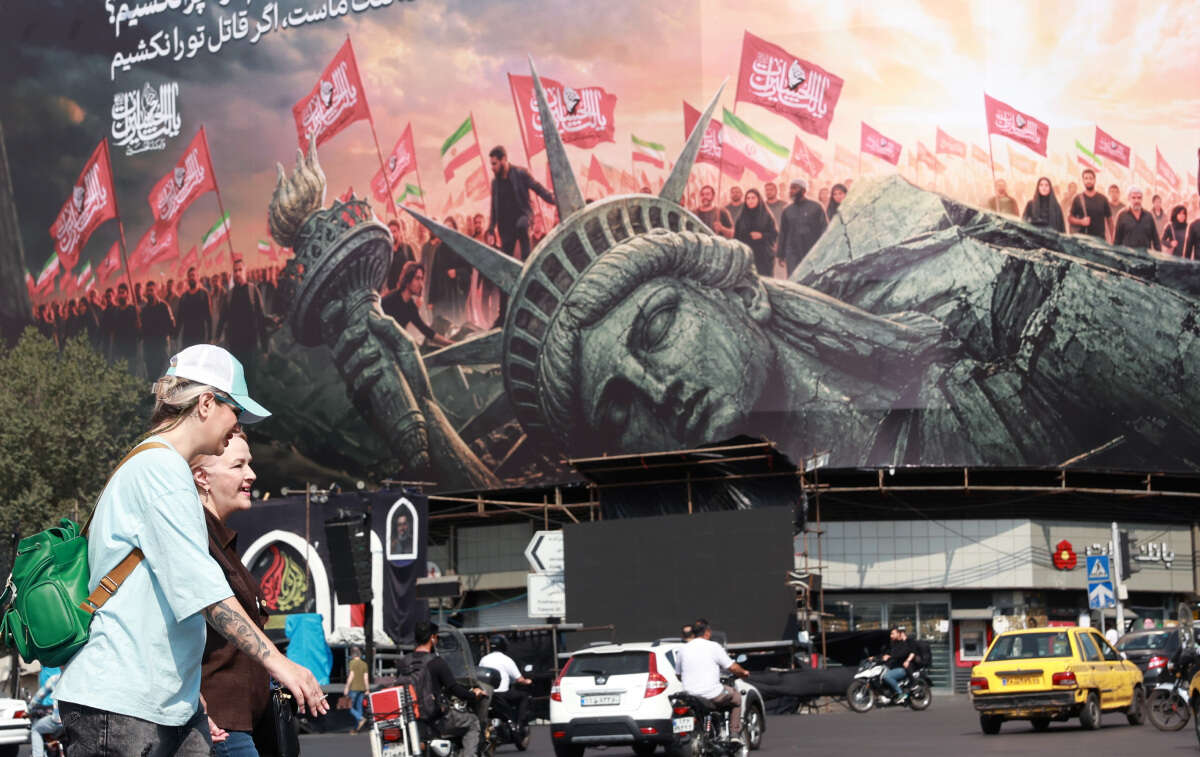
At the same time, an Iranian military commander said Tehran was expanding its defensive capabilities after large amounts of equipment were damaged during the war. Iran, he said, was "producing new systems and equipment, all of which rely entirely on Iranian knowledge and expertise."
Iranian officials also issued defiant statements Thursday morning. Brig. Gen. Iraj Masjedi, the deputy commander of the Islamic Revolutionary Guard Corps' Quds Force for coordination affairs, said defending Iran was not confined to the country's geographical borders. "The true sanctuary of the Islamic Republic of Iran is the people," Masjedi said, adding that protecting them meant safeguarding Iran's security, national interests and citizens.
He said Iranian fighters should not wait for the enemy to reach the country's borders before confronting it and that "there must be no compromise with the enemy." Those killed fighting for Iran's security and national interests, he added, had done so wherever necessary, without regard to borders.
Iranian Foreign Ministry spokesman Esmaeil Baghaei also attacked US policy toward Iran, saying it had become "pure parody." According to Baghaei, Washington was trying to create the illusion of an "anti-Iran coalition" through ties with countries such as Bahrain, which he said had virtually no meaningful economic exchanges with Iran. At the same time, he said, the United States was "stopping" Iranian sports and academic exchanges even though such exchanges had effectively been nonexistent for years. Washington, Baghaei argued, was therefore imposing sanctions again on areas that had already been sanctioned repeatedly, while trying to manufacture a "coalition" out of empty space.