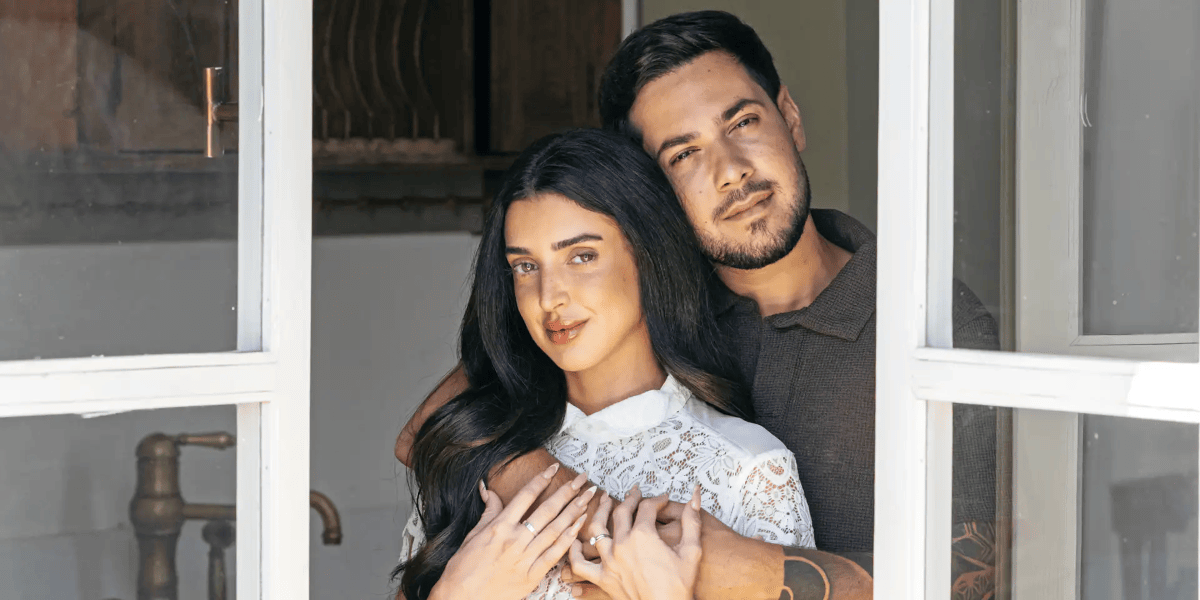
Moments before she saw her partner, former hostage Eliya Cohen, after the 505 days he was held in Hamas tunnels, one question gnawed at Ziv Abud's heart: "What if he learned to live without me?" When he finally came out to meet her, the fear turned into an embrace, and the couple chose each other for a second time, a year and four months after they were cruelly separated on the morning of the October 7 massacre.
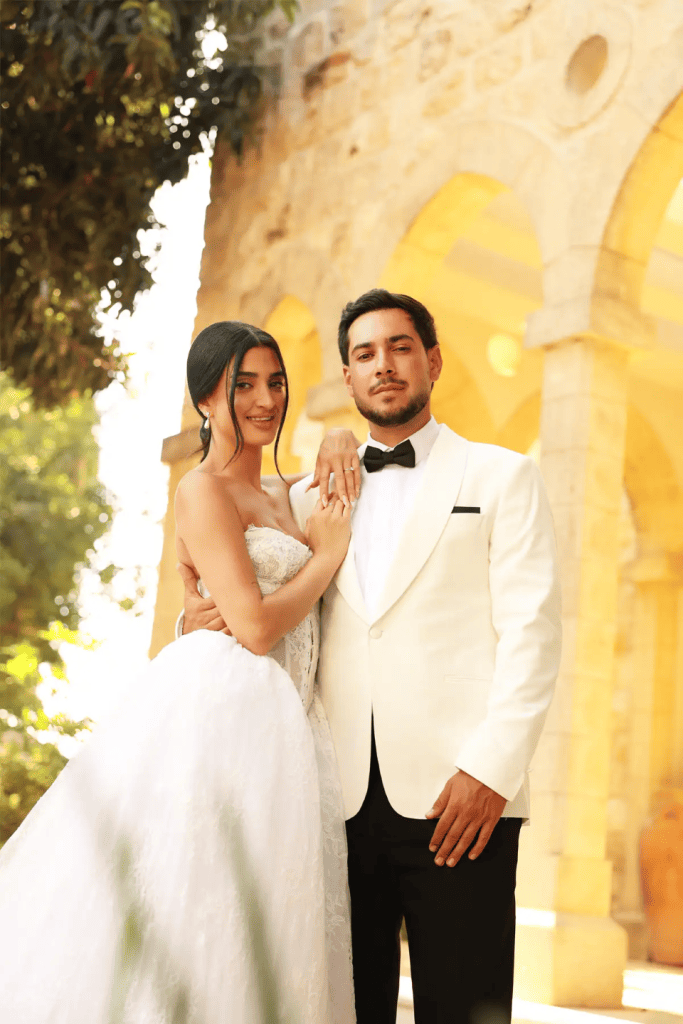
Only after the emotional reunion did the couple find time to readjust to who they had each become during the time that had passed and to get to know each other again from scratch. They learned to live together again, to love, to weather crises, to plan a shared future. About a week ago, in a moment of great triumph, they stood beneath the wedding Chuppah. Eliya, who believed throughout his captivity that Ziv had been murdered in the "death shelter" (the fortified room where dozens were killed on October 7), never imagined such a moment could even take place. Ziv, for her part, did not dare think of it even in a dream, for as long as her beloved was held apart from her.
Video: Former hostage Eliya Cohen and his wife, Nova survivor Ziv Abud Cohen in an interview with Israel Hayom. Reporter: Adi Nirman, video: Michael Vexler
We met for an interview during the final preparations they were making for the wedding, and after they finished writing their joint book, "Ayesha, Building a Home Together From the Ruins," which will be published soon. In the book (published by Yedioth Books), the two weave together the moments of the struggle Ziv waged for Eliya's release with his own memories of captivity, describing their shared journey from the moment they were reunited.
"Eliya always had a dream of writing his own book, even before he was kidnapped," Ziv explains. "He always said he'd write a book about his life; he just didn't plan for this to be the plot. And when he wrote his autobiographical book ["Mufawadat", released in 2025 by Kor'im Publishing and became a bestseller], we both knew we'd immediately write our joint book afterward."
"The first part of 'Ayesha' is entirely dedicated to Ziv's story," Eliya said. "And then comes the second part, about coming home, which holds enormous joy, but also many questions, uncertainties, and things that suddenly don't make sense. Suddenly, you have a man who didn't know if his partner was alive, and a woman whose partner was taken from her for so long, and there's a relationship. It confronts you with so many things. And add to that the trauma and so many crises. There was enormous complexity here, with a history behind it, and there are very large barriers, when each person carries their own heart through a very difficult period."
Page after page in the book, and in this interview as well, Ziv, 28, and Eliya, 29, authentically expose the complicated moments behind what appeared from the outside to be a smooth romantic story, Eliya's difficulty leaving his mother's home after dreaming so long of returning to it, moving back in together with someone who had changed out of necessity in the meantime, and even the story of the breakfast he dreamed of making her in captivity, a fava bean dish, which showed them both that they weren't returning to the moment when time had stood still, but starting again from the very beginning.
Q: Throughout your time in captivity, you had no idea whether Ziv had survived or was alive at all.
Eliya: "Look, I was there, and I was also wounded in the leg by gunfire. I saw terrorists coming into the shelter, making sure of the kill. Right before I left, they also told me that a friend's wife had been murdered, so I said, well, Ziv was there too, in the same situation, and I prepared myself for the worst. Ziv also didn't know what would happen to me; she could have thought, 'In the end, he'll come back in a bag.' Also, you know, at some stage you get used to being alone, and you move forward. A kind of moving forward."
In the book, Ziv reconstructs the moments close to Eliya's release, on February 22, 2025, when he was so close again, within her reach, and it was precisely then that the fears surfaced: "When Eli Sharabi came out, he told me, 'Eliya doesn't know you're alive.' Wait, he doesn't know I'm alive? Meaning, he had nothing to think about regarding me. And what if he sees me now and says, 'What does this have to do with anything? I erased you completely?' The moment Eliya didn't know I was alive, he surely built some kind of emotional block. I was afraid he wouldn't manage to bring that wall down. That fear didn't run my life, but it was there, so much, in my thoughts, and as time passed, it skipped stages and grew."
Countless traits disappeared
Throughout the book, the element of choice stands out sharply, almost as an antithesis to the absence of choice in captivity. I ask Ziv and Eliya how they chose each other again from the start, and only later learn who each of them had become.
Eliya: "We became completely different people. So many traits disappeared, meaning they existed before, but the trauma erased them completely. And then suddenly you have to learn to love the things all over again. Think about what it means to come out into the world after something like that and suddenly be in a relationship with someone. Suddenly, there are traits you don't love, and you say, come on, I love her, but honestly, there are things I don't love, so why do I even need this? Why do I need to fight now? A month ago, I was in a tunnel."
Q: So why anyway? Why did you choose, and why do you still choose, this relationship again?
"Only out of enormous love. There are a lot of hard things, but as I always say, you have to choose to see the good. And then, when you see the good and you check the balance, you say, wait, there's also so much that's positive here. I see in Ziv, the mother of my children, the traits I love, that she makes me laugh, that she's stubborn. And then I remember, that's also what I wanted before."
Q: Is there also gratitude for the fact that Ziv never gave up on you for a moment throughout your entire captivity?
"Of course, but that's not the main reason. If I said, 'She never stopped fighting, and that's why I need to be her partner,' that would be the biggest mistake. I always kept that separate."
Ziv: "We understood this was a new relationship and that we weren't the same people, and we had to make ourselves understand that what existed before was gone. It's gone. You're new, building everything from scratch. I think the day we stopped making the comparison between what we had then and what we have today, and when we understood we were entering a new relationship, only then were we able to understand each other more. It's really like building one house out of the ruins. Taking all these small pieces that remained and putting them back together."
Eliya: "I'll give you a full picture of what that means. Most of my friends died, most of the things I used to be involved in died, everything was dead. I have a few friends left alive, and that's the life I'm walking out into. Meaning I have almost nothing at all, and suddenly I'm stepping into life on the outside, and beyond the need to build our relationship, I have to build my own life. And on the other side, Ziv's life also changed by a thousand degrees, because suddenly she'd met so many people, discovered so many new hobbies, and everything was new. I understood I needed to build a new life for myself, and also adapt myself to her life, to learn to love the things she loves."
Q: What did she learn to love over 505 days that you didn't know she loved before?
Ziv: "Soccer."
Eliya: "That was strange," he laughed.
Ziv: "My nephew Amit, who was murdered [in the "death shelter" on Oct. 7], loved soccer. For me, it's a way to feel closest to him. These are things I suddenly found comfort in."
Q: The impression that comes through in the book is that you chose this relationship a second time before you really knew each other.
Eliya, "Absolutely."
Ziv: "You described that exactly right. What saved our relationship was that we were very, very good friends before, and when Eliya came back, it just felt natural. We were good friends first, and only afterward did we learn to love each other within all of this."
The name of the book, "Ayesha" (Arabic for "alive"), was chosen by Eliya as a kind of window into his soul. "Because Ziv is alive," he explained the meaning to anyone curious. "I learned Arabic and English together, so every time I speak English, my head thinks in Arabic," he adds.
Ziv, "I connected to it immediately."
Fixing more
From the moment she began fighting to bring her beloved home, Ziv recognized the power of the media. She gave interviews, went on a date without her beloved in a yellow, symbolic dress, and launched an awareness campaign around the world for the mission. Even after Eliya's return from captivity, the two remained exposed to the eyes of the Israeli public, which embraced them upon his return, was moved when he proposed to Ziv, and cried along with them from the story shared on social media at the wedding, a week ago, when Eliya fulfilled what he had promised in captivity, to recite the "Shema Yisrael" prayer beneath the wedding chuppah if he ever reached that moment.
I ask them about the choice to be visible to everyone, both in the book and in life itself.

Eliya: "I have the same message in this book as in the previous one, that everything is possible. In our generation today, it's very, very easy to give up on relationships. Today, almost one in three couples divorce. People don't always understand what they truly have in their hands, and they don't always fight for it, and at the smallest difficulty, they decide to break up.
"We have a very, very big message here, that if we managed to get through what we went through, and today too we have difficulties, and we understand we'll keep working hard on this relationship even at 70, then it's possible to succeed. When we learned to look at what we have, and we were ready to fight for it, we found that we're really moving forward and flourishing, and suddenly happier and enjoying things more."
Ziv: "The goal of our book is to get the ordinary person, who hasn't been through an experience as hard as what we went through, to appreciate the moments they have. If we manage to get even one person to appreciate what they have, their parents, their relationship, then we have succeeded. There's a sentence my mother used to say that is etched in my memory: 'One day you'll appreciate the phone calls where I drive you crazy.' And suddenly, in the moments when I nearly lost my life, the only thing I thought about was my mother. I learned to appreciate that I even have the option to call her. That's something Eliya didn't have during his entire captivity."
Eliya: "I always said and believed that if someone could shave off from the experience I went through, not go through it themselves but take the conclusions and the insights and appreciate more, hug more, be there more, try to fix more, then for me that's giving back."
Even before the Nova Festival at Re'im, Eliya bought a ring. Ziv heard about his intentions only while he was in captivity, with doubt over whether and when he would even return. In Hamas' tunnels, he held onto the hope of returning home and living, and despite the harsh conditions, he described small moments of satisfaction facing his captors and big dreams.
"I didn't believe there was a chance they'd keep us there, so many people who were kidnapped. The terrorists themselves thought it would end within a week. After eight months, they lost hope, because contrary to their expectations, it's not happening, Israel isn't giving up on them. I felt their frustration there, and it made me happy."
In the book, Eliya describes how he decided, upon his release, to keep planning his life, but not to fulfill those plans until all his friends in captivity returned. "As long as they were there, I hadn't really come back. Sure, I was here, I ate and drank, but I hadn't returned to life. There was Elkana, who's from my group of friends from Jerusalem, and Alon, whom I didn't know before, but I lived with for 505 days. It's not like living in Tel Aviv and meeting him downstairs at a cafe. There, I woke up with him every morning and went to sleep with him every night, and everything I went through, he went through too. It's as if we lived each other's lives.
"And I don't wish on anyone to live with these images in their head, that I go to the kitchen to make myself something to eat, and he's still there. On the one hand, you're grateful because that's everything you prayed for, but I know what my friend is going through right now. It's something I don't wish on other people to go through, so we really haven't managed to live. For me, at least, it was very hard."
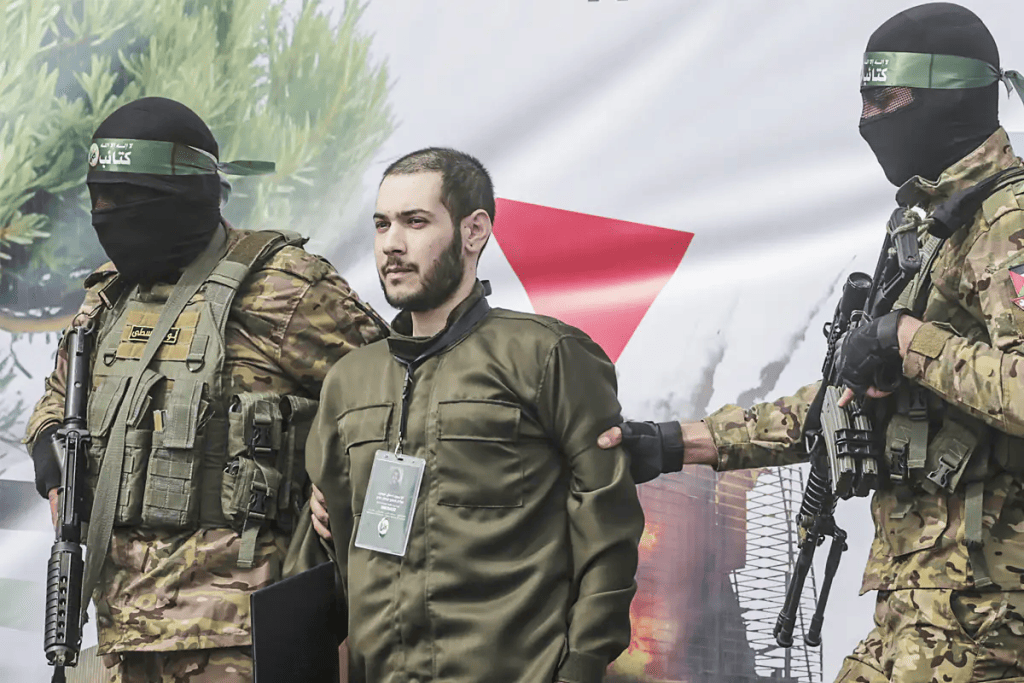
Q: Do you dream in the tunnels?
"Wow, so many dreams. About the future, about where you can improve, what you can fix, what good things you did that maybe you should keep doing. Those were the conversations I'd have with myself all the time. Let's say the dreams start out very, very big, and then they shrink down to something very small, to drink like a human being, to shower, and to eat."
Managing the exposure
Ziv, for her part, describes the waiting, the dreams, and the fears that accompanied their renewed reunion.
"Even before Eliya was released, I prepared myself for a lot of scenarios, that he'd say he needs quiet, or that he's not sure he wants a relationship right now. I fought for him to come back, and I fought for the others too, and so, until the last deal, I couldn't take my eyes off that fight. I couldn't be at ease. In general, I was super surprised by the marriage proposal. I almost fainted."
Q: There were couples who survived the party and the massacre whose personal story ended differently than yours.
Eliya, "Absolutely, and I understand why. It's not simple. Think of it this way, on the day the girl I knew and I were separated, her life changed by 180 degrees. And the same for her, the guy she knew changed 180 degrees, and he's no longer the same person. So yes, there's the hug and the love and everything, but suddenly you realize there isn't much common ground. I remember coming back, and Ziv suddenly started talking to me using words like 'triggers' and 'panic attacks.' Now, you've been in therapy for three years already, but I just got back. I told her, 'Talk to me in the language of October 6.' Insane gaps. We had to work very, very hard on that."
On their wedding day, Israel was moved along with them across social media, from the moment the two met after not seeing each other for a full week, to the moment beneath the wedding chuppah when Eliya recited "Shema Yisrael" together with the crowd, a moment that went viral within minutes.
I ask them about the loss of privacy and the price of exposure.
Eliya: "We manage the exposure, but from the day I was released, I haven't had my privacy. Ziv doesn't have her privacy either, because she gave it up in the fight to bring me home.
"As for our relationship, as I already said, we don't let people into our entire lives, only into places where we think we can make a difference. In the places where people give up instead of trying to sit down for a moment and fix things. If, thanks to the book, one couple says, 'Wow, I need to change my approach,' and it works out, then we've done something good here."
Ziv: "And there's another reason we chose to expose ourselves like this. After Eliya's release, there was so much feedback from people around us, saying: 'Wow, how good for you that he is back,' and there was something in it that bothered me. Because at the beginning, when things weren't always amazing, you say to yourself, 'Wait, is something wrong with me? Everyone looks and thinks everything's perfect,' but at the beginning, nothing was perfect. We had to work very hard to be able to make it into what it is today.
Q: Actually, more than a book about a relationship, this is a book about optimism.
Ziv, "It's a book about hope. About optimism and..."
Eliya, "Faith."
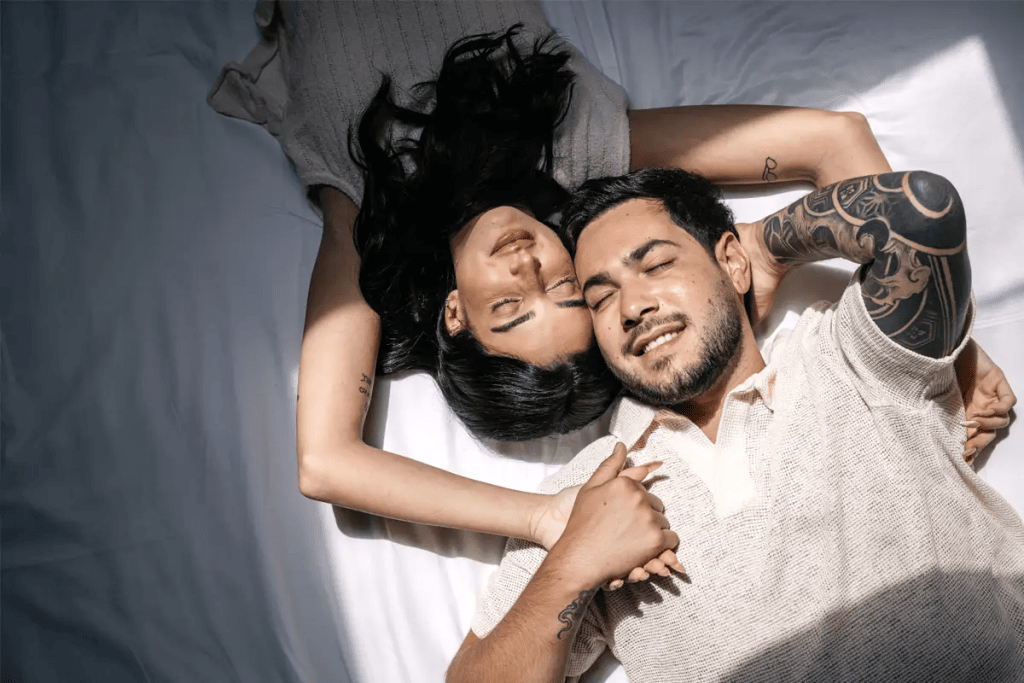
Ziv: 'Even though it's not always easy and it's a very, very long road."
Q: And maybe it's precisely because it was so hard, and you didn't give up, that something this meaningful was created here.
Ziv, "I want people not to be afraid. Sometimes people are afraid to take risks or to waste time. And it's true, you might really be wasting time, but the result in the end can be so worth it. The question is whether you're willing to take the risk. Whether you're willing to accept that, like Eliya said, to enter a process where you don't know the outcome, but there's a small chance that what you hoped for will happen."
The layers of protection came down
While Eliya made "deals" with God in the tunnels, Ziv didn't dare imagine the moment they would stand beneath the wedding chuppah. "I couldn't imagine something that felt too far away back then. When Eliya wasn't here, our lives were lived minute to minute. Especially with the psychological terror we went through with the videos Hamas would release. There's also a section in the book about our move to a new apartment, when suddenly we start to understand that we don't need to live like that anymore, minute to minute. That suddenly we can plan further ahead. Slowly, the layers of protection from that period came down."
Q: You didn't dare dream of a wedding, and in the end it happened.
"I don't think people will ever manage to understand how much this moment isn't something to take for granted. Like, I survived against all odds in the craziest situation, and Eliya survived the shelter, was kidnapped, and came back from captivity. And after all that, to survive the beginning of the relationship all over again, and then to stand beneath a wedding chuppah. People can't even imagine how crazy this is for us."
Nowhere else to go
A thousand guests gathered to celebrate with them at Havat Ronit, but the absence of nearly 70 friends murdered at the Nova festival was felt. On the way to the chuppah, clips of two of them were woven in: Amit Ben Avida, Ziv's nephew, and Yonatan Chai Azoulay, Eliya's friend.
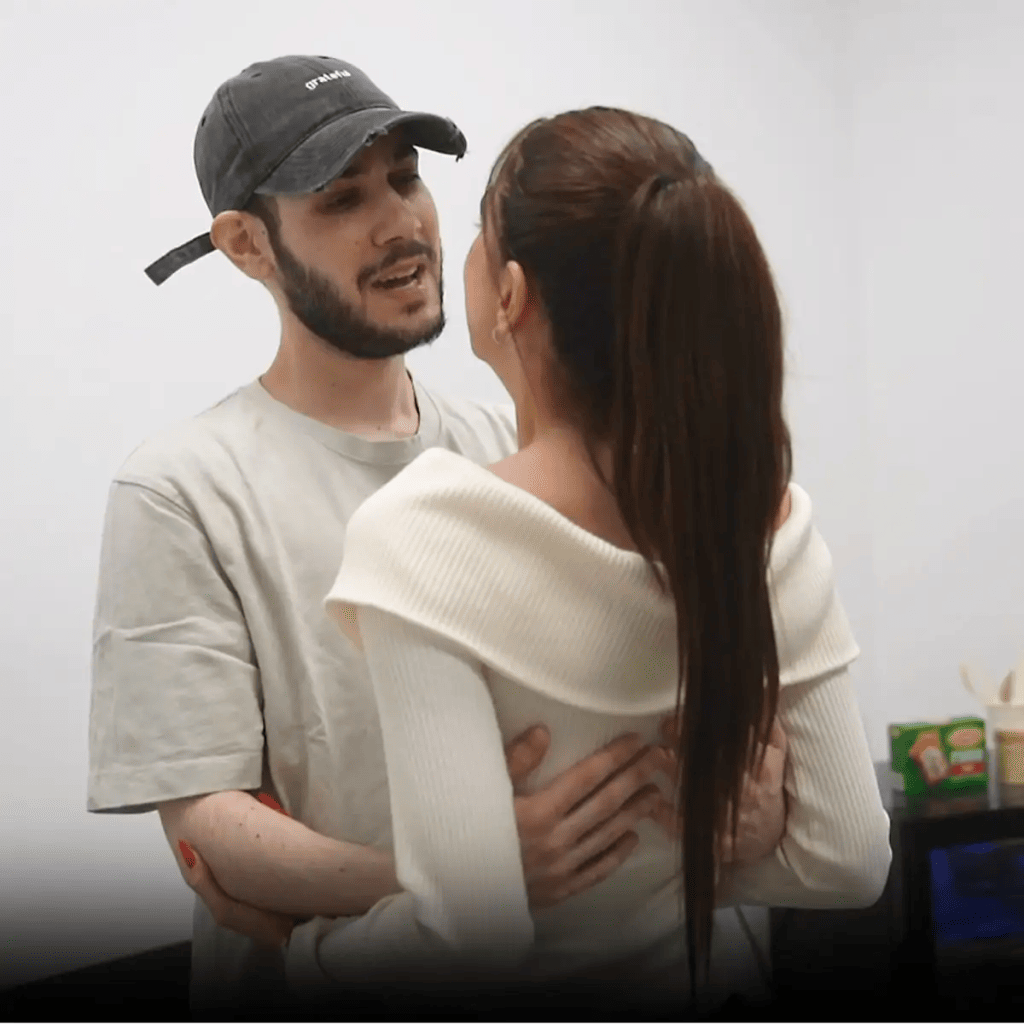
"I think people don't understand that this is our life, the joy alongside this pain," the bride says of the happiest moments of her life. "We lost friends and hostages who were close to us. This enormous joy, this crazy moment we waited for so long, came true alongside the memory.
"I told the people close to me that there were two insane moments on the wedding day: the reunion after a week with Eliya, when I was in my wedding dress, it was like seeing him again after he came home from captivity. The same embrace. The same trembling in my body. And standing under the chuppah itself, which is a moment of triumph. We did it, the feeling was sublime."
Eliya: "We felt like the whole nation felt that excitement together with us. Every night in the tunnels, when I would go to sleep and imagine my life, I wanted to get married, because that's the point where my life effectively stopped. So I promised God, 'If you give me this, I'll show everyone it's thanks to you.'"
Q: Building a home in Israel after October 7 and wanting to bring children and new life into it, is that a choice made "despite everything?"
Eliya: "This is our dream. There's no hesitation here at all. We love our country; we cherish it, every single inch. We love everyone, and this is our home. Meaning, it's pretty much a given that my children will grow up here."
Ziv: "I think it's more accurate to define it as our victory. After what they tried to do to us here, it's precisely here that we'll build our big family. I won't say there's no fear; there's no such thing. After what happened to us, you'd have to be very, very naive not to be afraid. But the more we're abroad, on delegations, the more I understand just how clear it is that we'll live here, and that our children will go to the army. They'll serve the country and defend it.
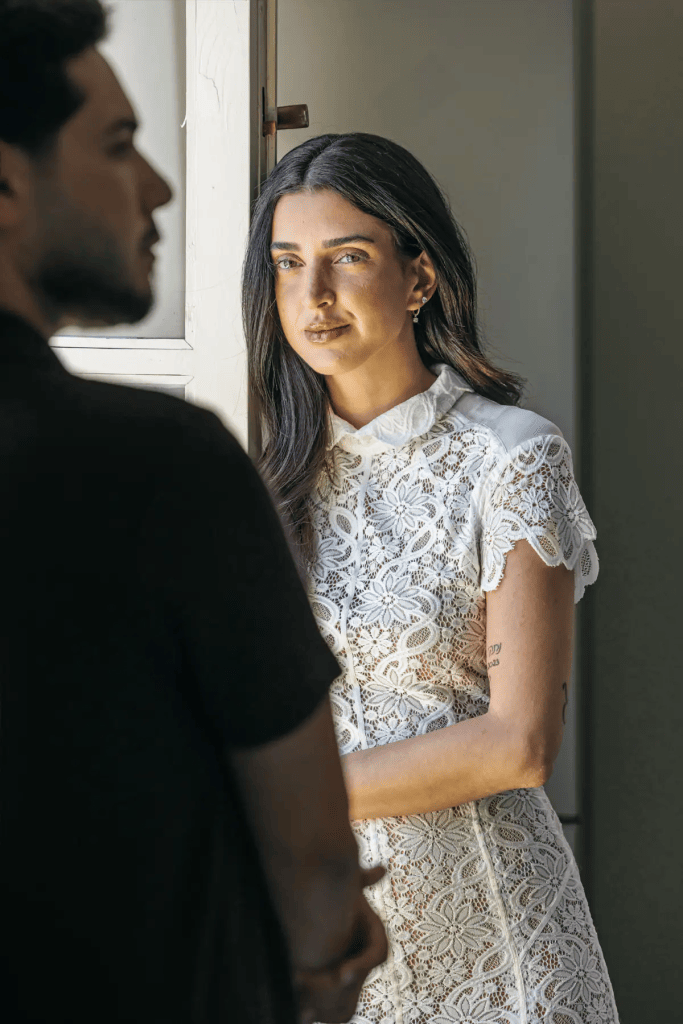
"We've met Jews all over the world who told us, 'We donate money to the country, and you're guarding our home for us.' They're not embarrassed to say that. 'You're guarding our home for us, so that if a day comes, God forbid, that something happens, we'll have somewhere to come.' So I'm willing to be the guardian of the home, precisely because of what I went through."
Eliya: "Because it's home. I asked one of the Jews we met why he works so hard and invests so much in the State of Israel. He told me, 'Brother, Israel is the best investment I've ever made in my life.' I understood something very important then, that honestly, we don't have another country. Truly, we have nowhere else to go. This is our home."