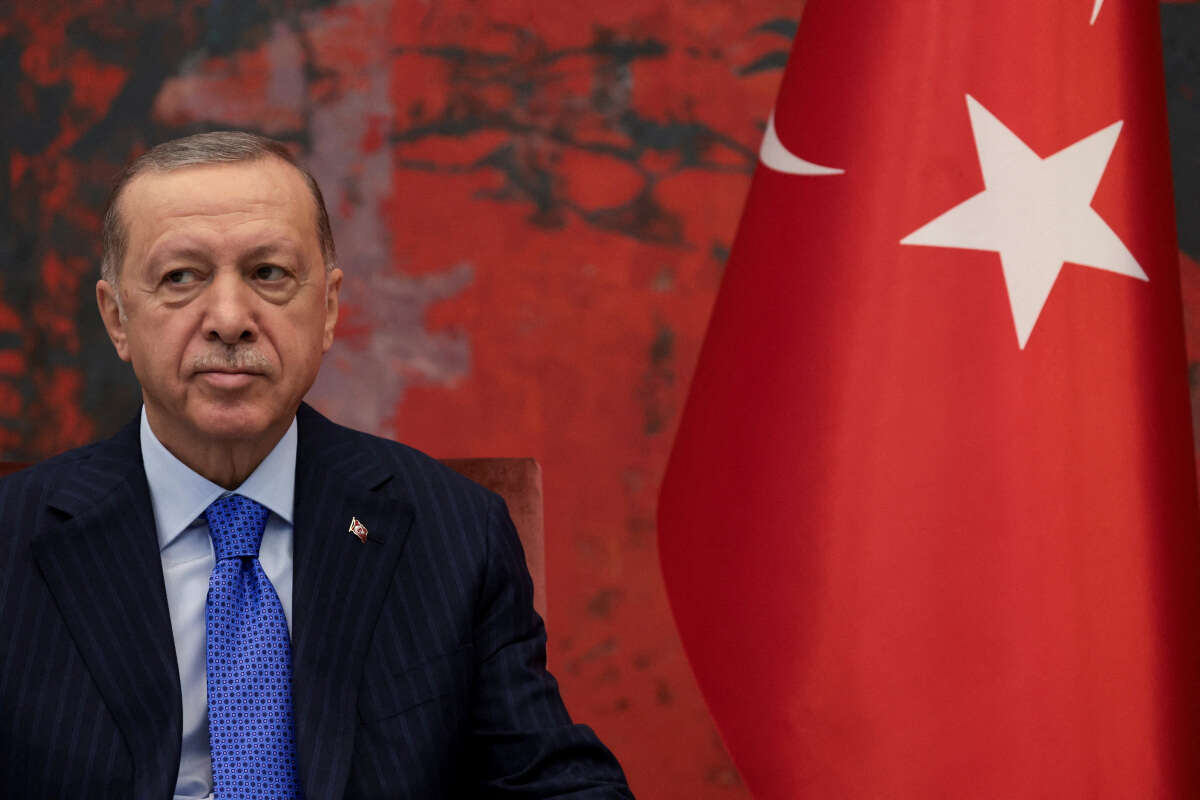
Turkish President Recep Tayyip Erdoğan responded Wednesday, for the first time, without mentioning Israel by name, to the air defense deal signed with Greece earlier this week. "What are we supposed to do? What is our responsibility? To do what needs to be done," Erdoğan said in response to a reporter's question. "Whoever interprets Turkey's calm and rational approach as weakness is making a serious mistake. Greece must abandon its wrong path."
Erdoğan made the remarks on a flight back from the Shanghai Cooperation Organization summit in Bishkek, the capital of Kyrgyzstan. Asked how Turkey would respond if Greece continued to "militarize the islands in the Aegean Sea," he said, "We tell Greece that we will move forward on the basis of good neighborliness. We have been the constructive side; however, most of the time, we have not seen a reciprocal response to our good intentions." He added, "Greece must understand something: Turkey does not covet anyone's territory, but it will not allow anyone to violate its rights."
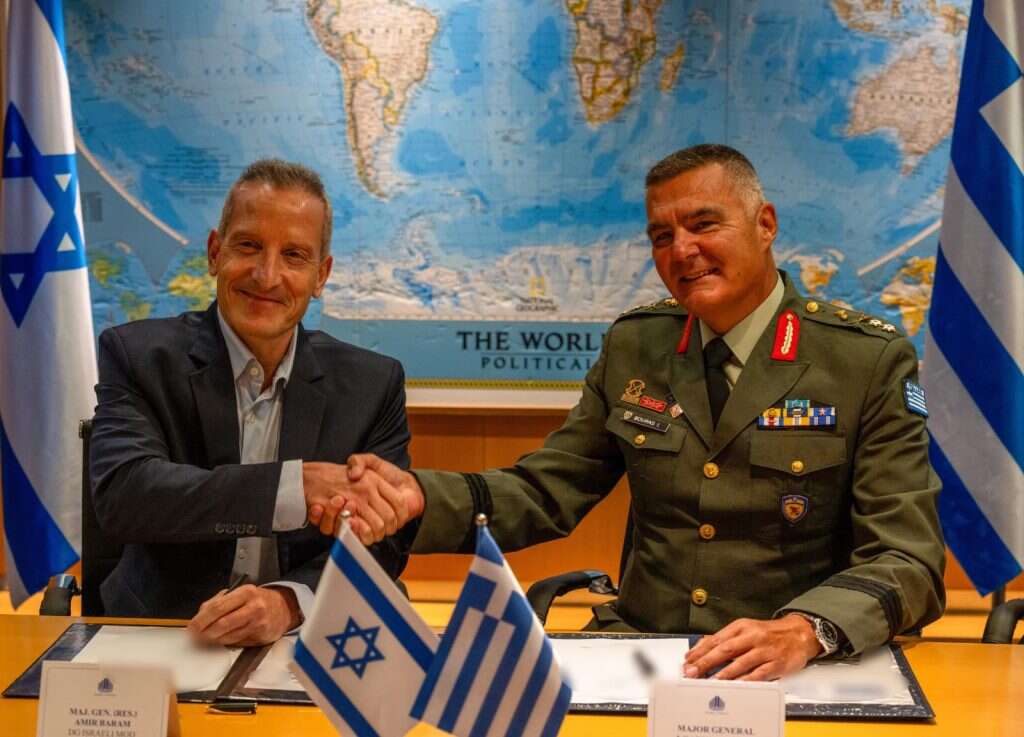
On Monday, Athens signed a deal worth approximately €3 billion (about $3.2 billion) to purchase a multi-layered air defense system from Israel, part of a doctrine Greek Defense Minister Nikos Dendias has dubbed the "Achilles' Shield." Greece plans to deploy the system first in the northeast of the country and on islands in the eastern Aegean Sea, islands that sit close to the Turkish coast.
Erdoğan added that "Ignoring and violating international treaties will benefit no one," and called on Greece "to stop the militarization of the islands whose status is demilitarized." He closed his remarks with a warning tone, "History is a very good guide for those who need to learn from it. We will continue to work for peace, security and stability in our region."
Earlier Wednesday, the Turkish newspaper Milliyet reported that Ankara had sent Athens an official note stating it would not allow any action that would change the status quo in the Aegean Sea. According to the report, which cited diplomatic sources, the note was delivered following three spatial planning programs Greece announced during August in the fields of tourism, renewable energy, and industry, and it argued that "raising maximalist claims under the guise of environmental planning is unacceptable."
Turkey has claimed for decades that the arming of the eastern Aegean islands violates the 1923 Treaty of Lausanne, which banned the establishment of naval bases and fortifications in the area, and the 1947 Treaty of Paris, which transferred the Dodecanese islands from Italy to Greece. Athens rejects the claim, arguing, among other things, that Turkey is not even a party to the Treaty of Paris, and justifies the arming of the islands as a matter of self-defense against the Turkish forces deployed opposite them.