In recent months, Prime Minister Benjamin Netanyahu was repeatedly warned of the severe consequences that could result from acts of terrorism committed by Jewish rioters in Judea and Samaria. The Israel Defense Forces warned that the accumulation of such incidents could trigger a Palestinian response and lead to a broader escalation, while on the diplomatic front, officials warned of a possible collapse in support among friendly governments and in public opinion.
Netanyahu listened and did nothing, even when US Ambassador to Israel Mike Huckabee, an exceptionally staunch supporter of Israel, publicly condemned the acts and reported them to the White House. On Monday, Netanyahu was presented with the bill in the form of severe sanctions announced by 11 Western countries. As always, Netanyahu himself will not be the one paying it. Israel will, with compound interest.
Netanyahu could have done a great deal to avert this diplomatic catastrophe. He could have ordered tougher measures against Jewish rioters. He could have coordinated more effective government action against them. He could have ordered broader protection for Palestinian civilians. He could have somewhat curbed the frenzy of establishing communities and farms, particularly those whose legality is in question. And he could have conducted a more productive dialogue with the "problematic" Western countries.
Netanyahu did none of those things. As is his habit, he chose to look the other way. It is a familiar pattern, sometimes stemming from procrastination and sometimes from a variety of other considerations, above all political ones. In this case, it is reasonable to assume that he feared the reaction of his coalition base, particularly National Security Minister Itamar Ben-Gvir and Finance Minister Bezalel Smotrich. The result is that, together with them, through his actions and especially his inaction, he has given dangerous substance to the biblical phrase "a people that dwells alone."
Did Netanyahu receive a warning?
The diplomatic developments diverted attention from a revelation that shortly before Oct. 7, Netanyahu was warned by United Arab Emirates President Sheikh Mohammed bin Zayed Al Nahyan of a major Hamas attack. Netanyahu quickly denied the report, but the public deserves more than a cursory response. Nearly three years after the greatest disaster in the country's history, Israelis deserve to know the truth.
In recent days, Netanyahu has waged a public-relations campaign centered on the claim that had he simply been awakened in the hours before Hamas' attack, the disaster could have been prevented. It is an understandable line of defense, though one without any real foundation. That is not only because Netanyahu's policy over the years had been restrained and cautious, but mainly because from the moment he was awakened, at 6:29 a.m., his contribution to the course of events was marginal at best. Now, however, it appears that the problem was not the hours before the disaster, but the days, weeks and months preceding it.
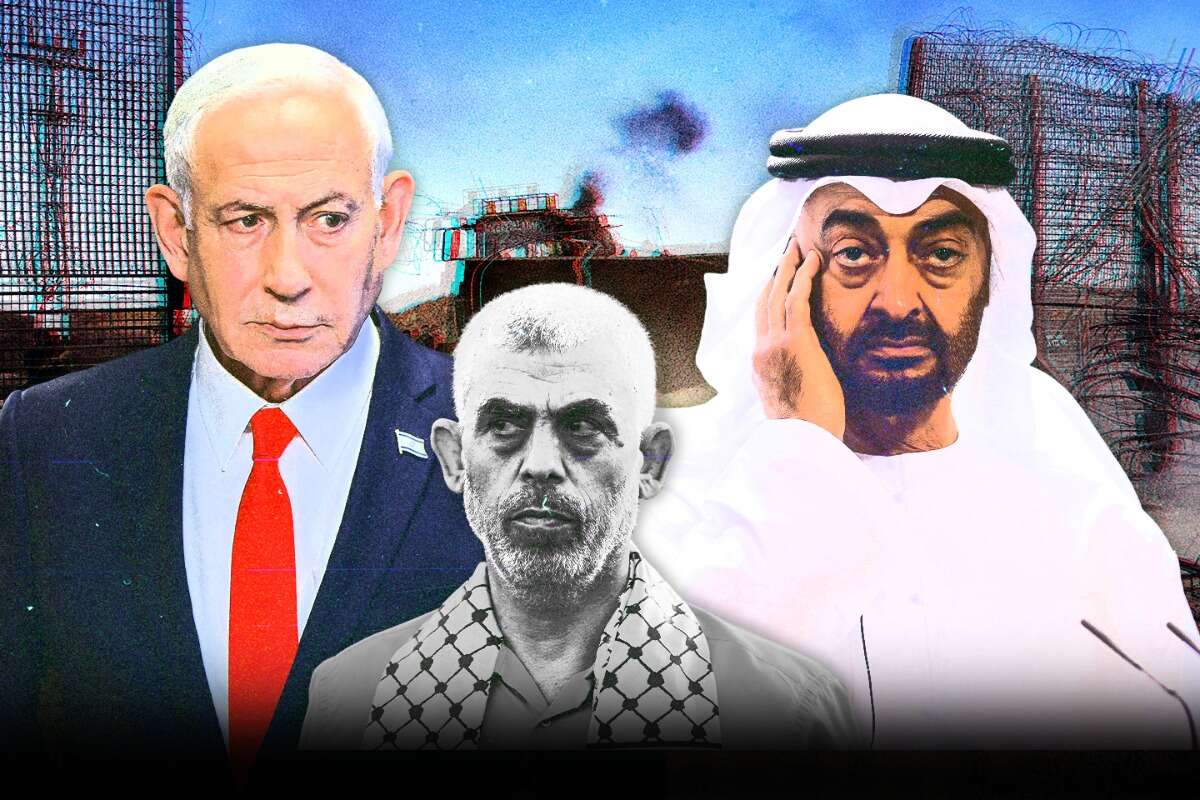
Nor was this only the warning reportedly delivered by Mohammed bin Zayed, or a similar warning that Egypt is also said to have conveyed in the days before the attack. Netanyahu ignored warning letters from the heads of Israel's defense establishment and intelligence agencies and consistently prevented the Diplomatic-Security Cabinet from discussing the threats facing Israel and the erosion of Israeli deterrence.
The report claims that bin Zayed's warning was not passed on to the heads of Israel's security establishment. There is nothing new about such compartmentalization either. Netanyahu withheld vital information from them in the submarines affair, in which a state commission of inquiry concluded in its interim findings that he had endangered national security. He also withheld information about steps he was taking ahead of the signing of the Abraham Accords, including an attempt to maneuver the Israeli Air Force commander into agreeing to the sale of advanced aircraft to the UAE. There are other examples as well.
Netanyahu argues that the country's leader has the right to decide what information to share, with whom and when. That is a problematic argument. If he does not trust the heads of the defense establishment, why should the public trust them? More importantly, he has a duty to share information about threats with the officials responsible for confronting them, particularly when the information is as alarming as the warning he is alleged to have received shortly before Oct. 7.
The fact that he refrained from doing so casts a heavy shadow over his judgment and his motives. Above all, it demands a rigorous, comprehensive and impartial investigation by a state commission of inquiry.
The fact that Netanyahu has avoided such an investigation, offering various explanations for doing so, is deeply troubling. It may suggest that he has something to hide about his actions and failures in the period leading up to the disaster.