Europe is preparing for war.
For Israeli readers, the headline now dominating newspapers and websites across the continent may come as a surprise. For those who have followed the war in Ukraine, however, it may seem like the logical next stage in the confrontation.
Even so, several questions need to be answered: What has happened now to prompt European leaders to adopt such a stark tone? What might Russian President Vladimir Putin hope to achieve by widening the conflict, and how might he do it? And why, despite all this, do European intelligence officials continue to say there is no sign of an imminent Russian invasion?
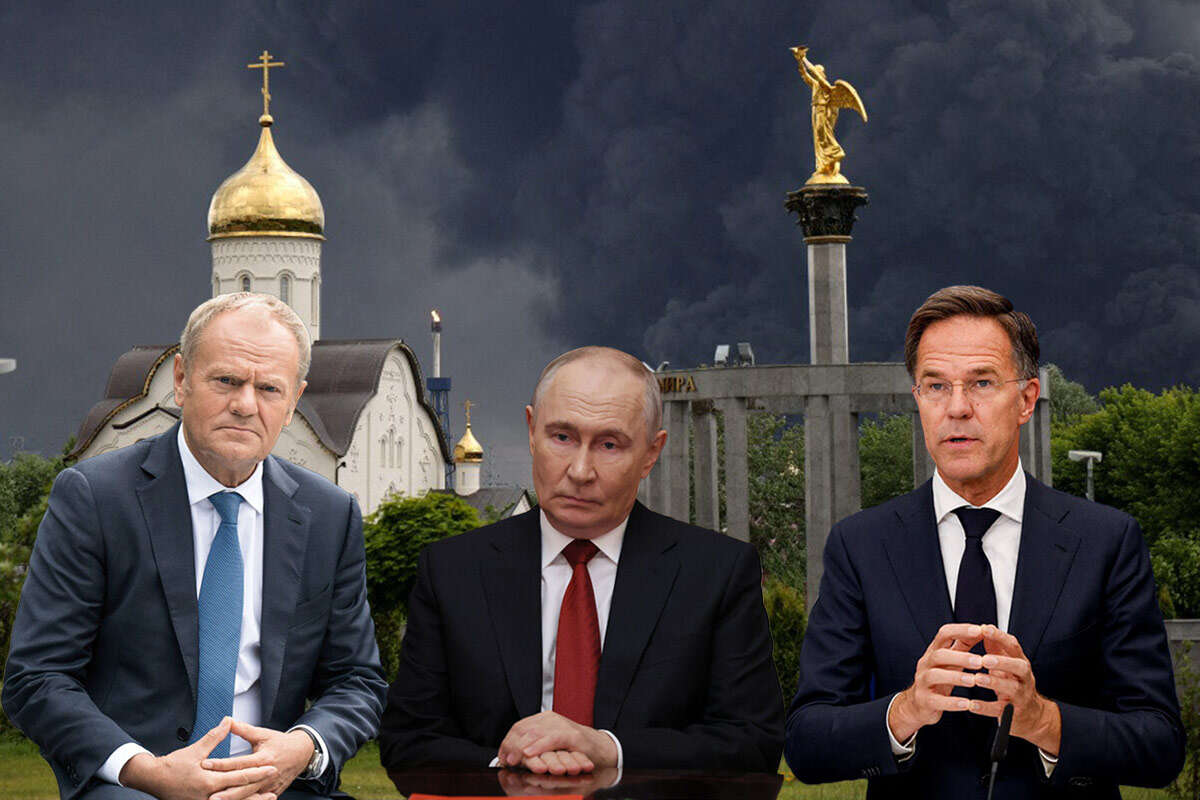
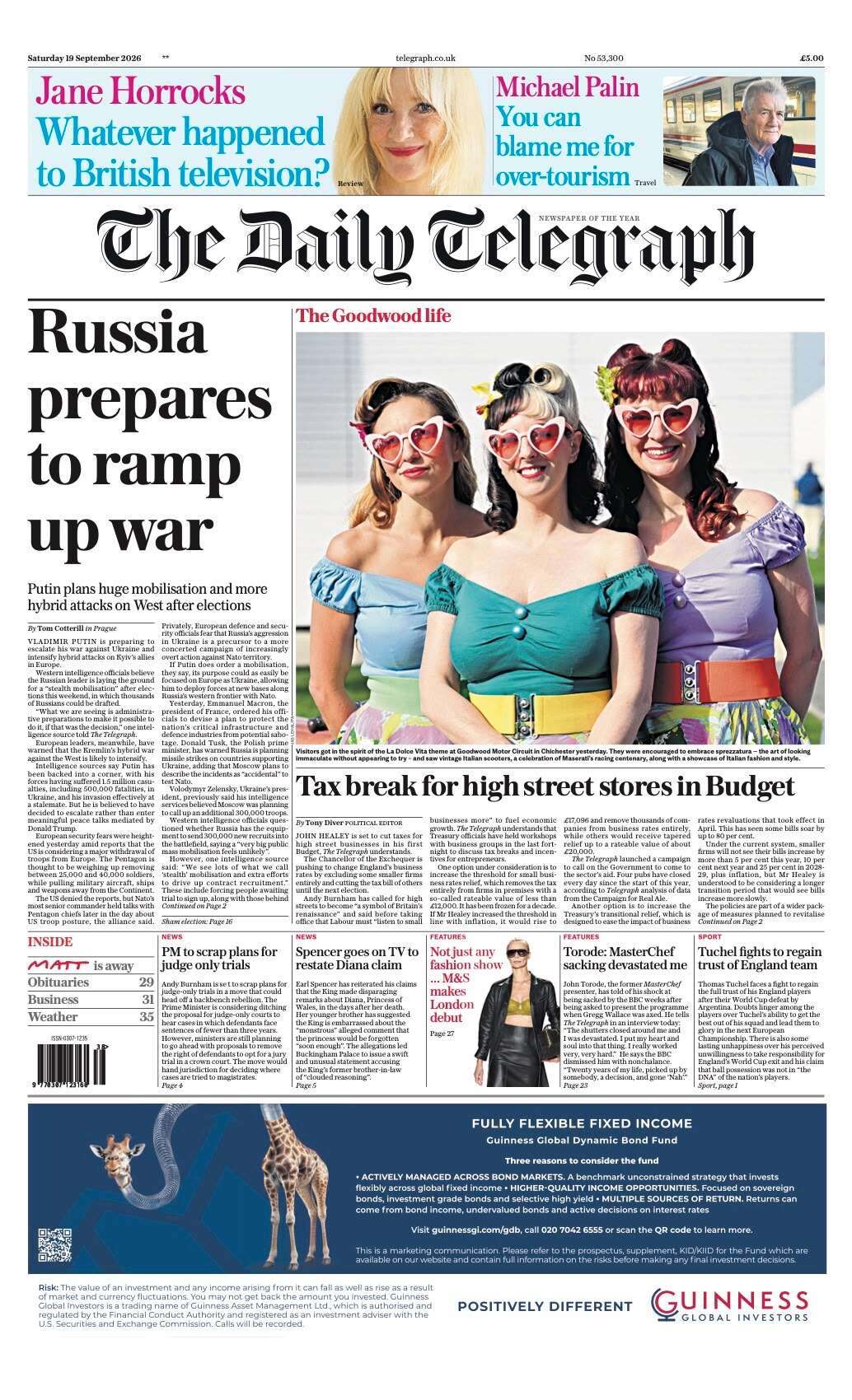
Within the space of a single week, the caution that had still characterized European countries and NATO appeared to vanish, with leaders speaking openly about the possibility of Russia attacking a member of the alliance. NATO Secretary-General Mark Rutte said Monday that Russian strikes close to alliance territory demonstrated Putin's "desperation" and his "desire to sow fear and terror."
On Wednesday, Finnish President Alexander Stubb urged his country's citizens to "prepare mentally for something to happen." On Friday, after convening French party leaders in the crisis room at the Élysée Palace, President Emmanuel Macron said, "In recent weeks, the threat, particularly the Russian hybrid threat, facing Europeans and France has intensified."
The clearest warnings came from Poland, one of NATO's most prepared countries on its eastern flank. Prime Minister Donald Tusk delivered a special address Thursday to the Sejm, Poland's lower house of parliament, on the 87th anniversary of the Soviet invasion of Poland.
"According to intelligence assessments, the Russian plan also includes hybrid strikes using drones and missiles against countries supporting Ukraine, including Poland," Tusk said.
He warned of a "real risk" that drones or missiles could enter the territory of one or more countries on NATO's eastern flank and cause damage, with Moscow then describing the incident as an accident.
At the same time, European countries are increasing defense budgets and expanding their arms industries, investments that are expected to yield their full results only toward the end of the decade. They are also preparing their populations and mobilization systems for a possible emergency.
What changed now?
One central event appears to have ignited the current wave of concern over the possibility of a Russian attack on Europe.
On Aug. 25, CIA Director John Ratcliffe flew to Moscow on an unannounced visit and remained there for only a few hours. According to reports, Ratcliffe warned Russian officials against attacking NATO members, with particular emphasis on the Baltic states, and conveyed that the US remained committed to Article 5, the alliance's collective-defense provision.
It was the first publicly known visit to Moscow by a sitting CIA director since William Burns traveled there in November 2021 and warned Putin against invading Ukraine.
The nature of Ratcliffe's trip, conducted without advance notice aboard a US government transport aircraft, led many to believe that Washington regarded the intelligence in its possession as urgent and sensitive rather than as a warning about some distant threat.
What may be pushing Putin toward escalating the war westward is the state of the conflict in Ukraine, more than four and a half years after he ordered the full-scale invasion of his neighbor in an attempt to seize Kyiv within days.
The grinding battle of attrition continues along the front. Neither side has been able to deliver a decisive blow, while the price Russia is paying is unprecedented.
According to the Washington-based Center for Strategic and International Studies, Putin's military has suffered about 1.4 million battlefield casualties since February 2022, including as many as 450,000 deaths. CSIS says no major power has suffered casualties on that scale in any war since World War II, while Russia's territorial gains have often been measured in meters per day.
The main effort to achieve a breakthrough has increasingly shifted to the air. Russia is bombarding Kyiv with ballistic missiles and waves of drones on an almost daily basis, while Ukraine is striking deep inside Russia and systematically targeting the country's oil refining industry.
The effects can now be felt inside Russia itself. Refinery output has fallen to its lowest level in more than two decades, and fuel shortages have become part of daily life. In Ukraine, meanwhile, human suffering continues to grow, with the approaching winter threatening to be the harshest yet.
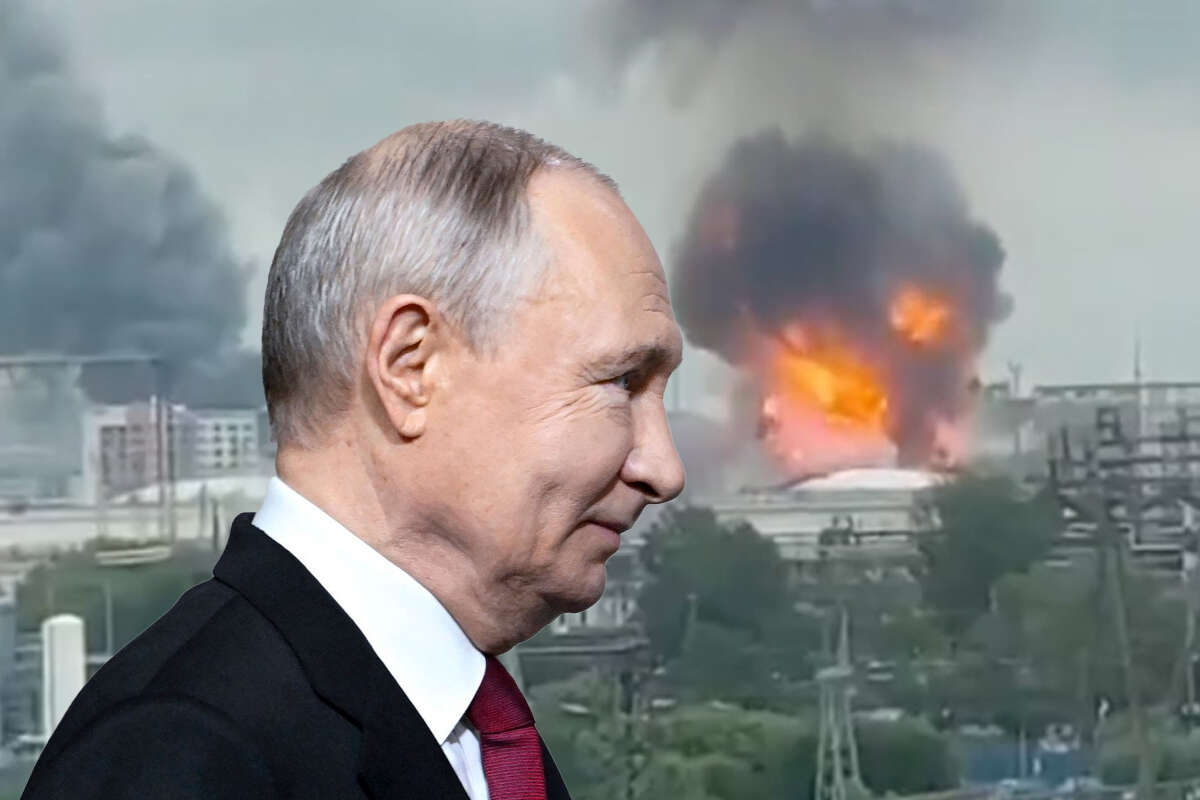
Over the summer, Ukraine also brought the war more directly into the everyday lives of Russian civilians.
Alongside oil refineries, it began attacking logistics centers belonging to Wildberries, the online retail giant sometimes described as the "Russian Amazon" and responsible for a significant share of the country's online shopping. Huge warehouses went up in flames, many Russian merchants lost their entire inventories, and the economic impact has been felt far beyond the front.
This is also the backdrop to a possibility that has hung over Russia for months: a general mobilization. Putin has consistently avoided such a step since the 2022 mobilization, which sparked panic and led to a mass exodus from the country. According to an August report in The Wall Street Journal, citing US government officials, the Kremlin has been considering another round of compulsory mobilization.
Ukrainian intelligence, meanwhile, assesses that Russia's General Staff has prepared contingency plans to mobilize several hundred thousand people over the coming year and the one after it.
The State Duma elections, which began Friday and are due to conclude Sunday, are the first parliamentary elections since the invasion of Ukraine.
The result is hardly in doubt. Putin's United Russia party is expected to retain control, the only established party openly opposed to the war has been barred from the ballot, and the remaining competition comes from Kremlin-tolerated parties.
Even so, announcing a compulsory mobilization on the eve of a nationwide vote would be deeply unpopular and could affect the result, even within Russia's heavily controlled political system. The assessment in Western capitals and Kyiv is therefore that a possible window for a broader mobilization could open after the elections.
What is Putin trying to achieve?
What might Putin hope to gain from an operation against European countries?
Article 5 of the NATO treaty requires members to treat an armed attack against one ally as an attack against them all. The primary Western concern is not a full-scale invasion but an operation limited and ambiguous enough to force the alliance to decide whether the threshold for invoking collective defense has been crossed.
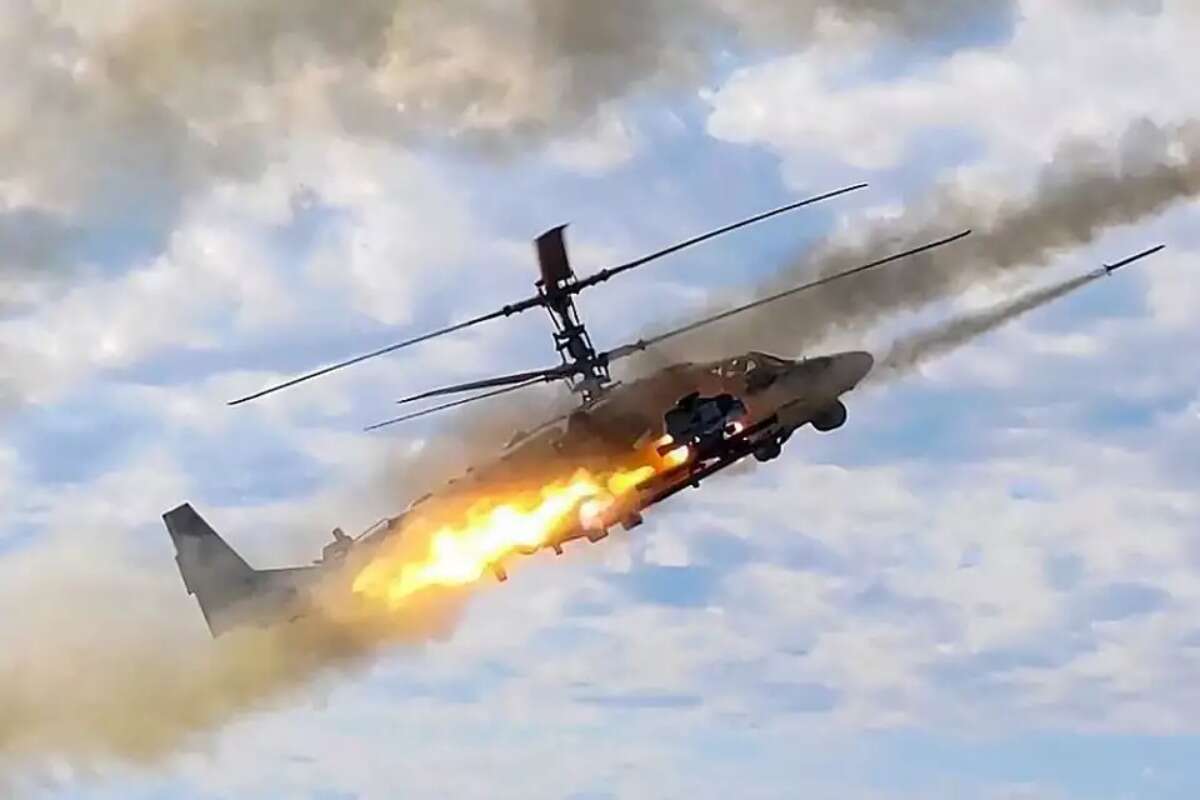
The Kremlin already portrays the war in Ukraine as a defensive struggle against NATO's eastward expansion. From Moscow's perspective, NATO itself is the real adversary. If the alliance were to respond to an attack with condemnation alone, NATO's founding treaty, and by extension the alliance itself, could be exposed as unable to deter an enemy from striking its members.
Such an operation could also reopen arguments over support for Ukraine in European countries, particularly those not facing an immediate threat from Putin's actions. That could raise the political cost of supporting Kyiv until Ukraine found itself under pressure to accept an agreement on terms more favorable to Moscow.
The hybrid war
One of the main scenarios under discussion involves a dramatic escalation of what has become known as hybrid warfare.
It is not new. Since the beginning of the war in Ukraine, Russia has been accused of waging a campaign across Europe that remains below the threshold of open military conflict: arson attacks at weapons factories, sabotage of undersea cables and pipelines in the Baltic Sea, cyberattacks, GPS disruption, disinformation campaigns and efforts to send migrants toward Poland's eastern border.
The Associated Press has reported roughly 200 incidents of sabotage and other malicious activity in Europe since the full-scale invasion that Western officials or investigators have linked or attributed to Russia.
In November 2025, an explosion struck a section of railway between Warsaw and Lublin, a route used to deliver supplies to Ukraine. Tusk described it as an "unprecedented act of sabotage," and Poland later attributed the operation to Russian intelligence.
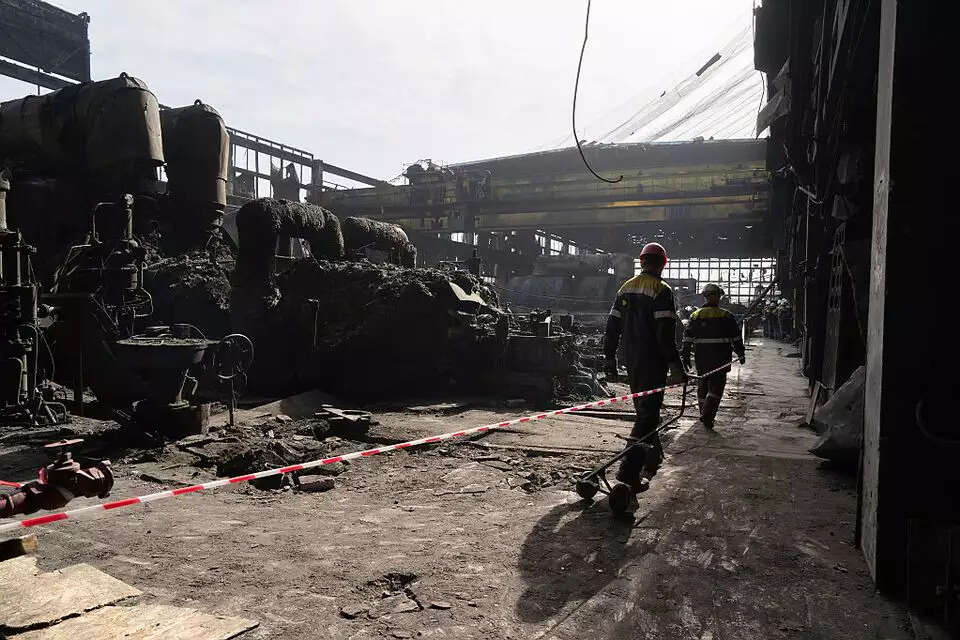
In early August, an explosives-laden drone was discovered at Germany's Leipzig/Halle Airport beside a Ukrainian cargo aircraft. In early September, Berlin said Russia was responsible.
And in the past week alone, a Russian drone struck a passenger train about 2 kilometers (1.2 miles) from the Polish border, NATO aircraft shot down a drone over Lithuania, and a Russian warship fired flares toward a Danish helicopter over the Baltic Sea. And that is only a partial list.
One scenario now being discussed in the West is therefore a continuation of the same pattern, but on a much broader and more serious scale, in a way that would directly test NATO.
It could involve an attack on a weapons factory in an alliance member state, something Russia has already threatened to do; a wave of drones crossing the border into Poland or one of the Baltic states; or an attack on a power station or port.
One possibility causing particular concern is a "false flag" operation: Russia could collect Ukrainian drones that have been shot down or captured, launch them toward NATO territory and then present the attack as a Ukrainian operation.
An operation on alliance territory
The second scenario is considerably more serious: a ground operation on NATO territory. This would not necessarily be a full-scale invasion, but rather a limited seizure of a small area designed to force NATO into a decision.
A Russian pretext for such an operation could be an alleged persecution of Russian speakers in Estonia or Latvia, followed by Russian troops without identifying insignia crossing the border. The objective itself could be largely symbolic. Russia used comparable claims about protecting Russian speakers in connection with its intervention in Crimea in 2014 and its war with Georgia in 2008.
Another possible target is the Suwałki Gap, a roughly 65-kilometer (40-mile) corridor along the Polish-Lithuanian border separating Belarus from Kaliningrad, Russia's exclave on the Baltic Sea. Such a move would go well beyond a symbolic test of the alliance because the area forms NATO's only overland link between the rest of the alliance and Estonia, Latvia and Lithuania.
How close is the situation to escalation?
Russia, as it did in 2022, is issuing categorical denials.
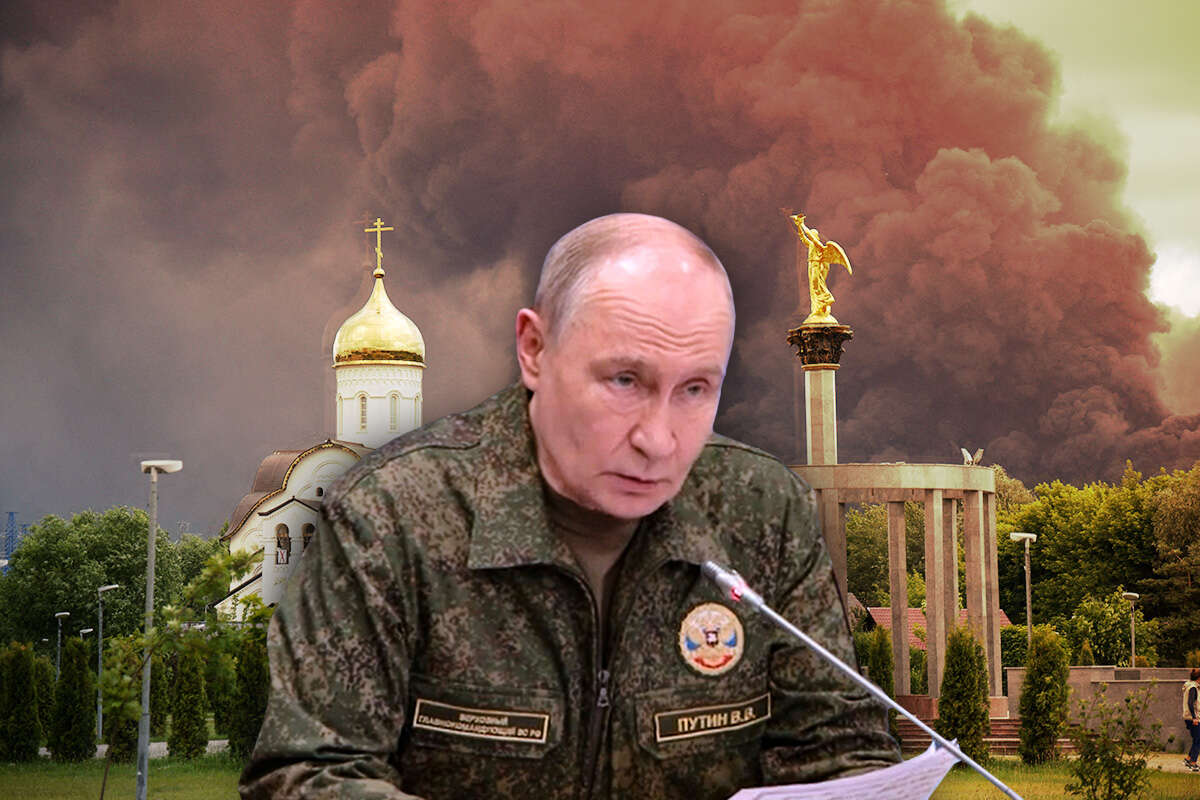
Speaking Friday at a meeting of the Military-Industrial Commission in the Kremlin, Putin said, "Russia has no aggressive intentions toward Europe or European countries. We simply have no grounds for this. We are ready for cooperation and for restoring relations with our European neighbors."
He accused European leaders of inventing a Russian threat to justify their support for Ukraine. "In order to justify their position and their excessive spending on the war in Ukraine, they are willing to use anything and everything," Putin said. "In particular, one of their main arguments is the alleged threat from Russia."
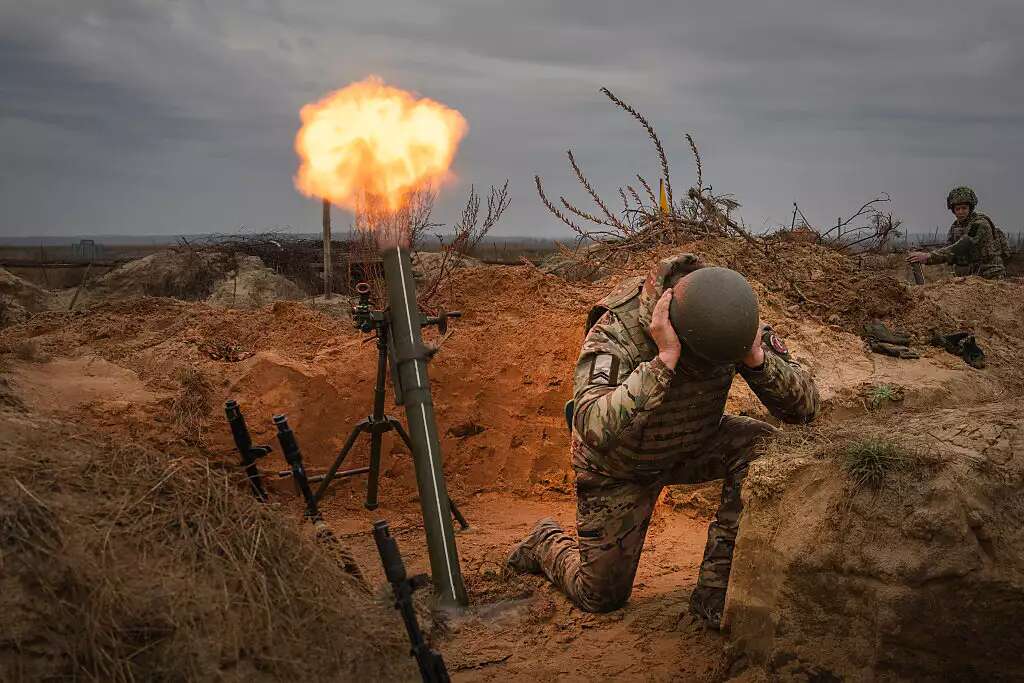
For now, there appears to be no evidence of preparations for an imminent large-scale Russian military operation comparable to the signs that emerged before the full-scale invasion of Ukraine.
At the time, hundreds of thousands of troops were massed along Ukraine's borders, blood supplies and medical equipment were moved toward the front and armored vehicles were transported by rail across Russia.
The Institute for the Study of War has said it has identified no comparable signs of preparations against the Baltic states, while cautioning that a limited operation would not necessarily require such visible preparations.
Officials in the Baltic states have also sought to reassure the public. Estonian Foreign Minister Margus Tsahkna said the Russian threat and the possibility of provocations against NATO had to be taken seriously, but that Estonia's threat assessment had not changed.
Even so, no one is entirely at ease. Throughout late 2021 and early 2022, the Kremlin repeatedly denied that Russia intended to invade Ukraine and ridiculed such warnings until almost the eve of the invasion itself. Europeans, too, have learned that a Kremlin denial does not settle the question.