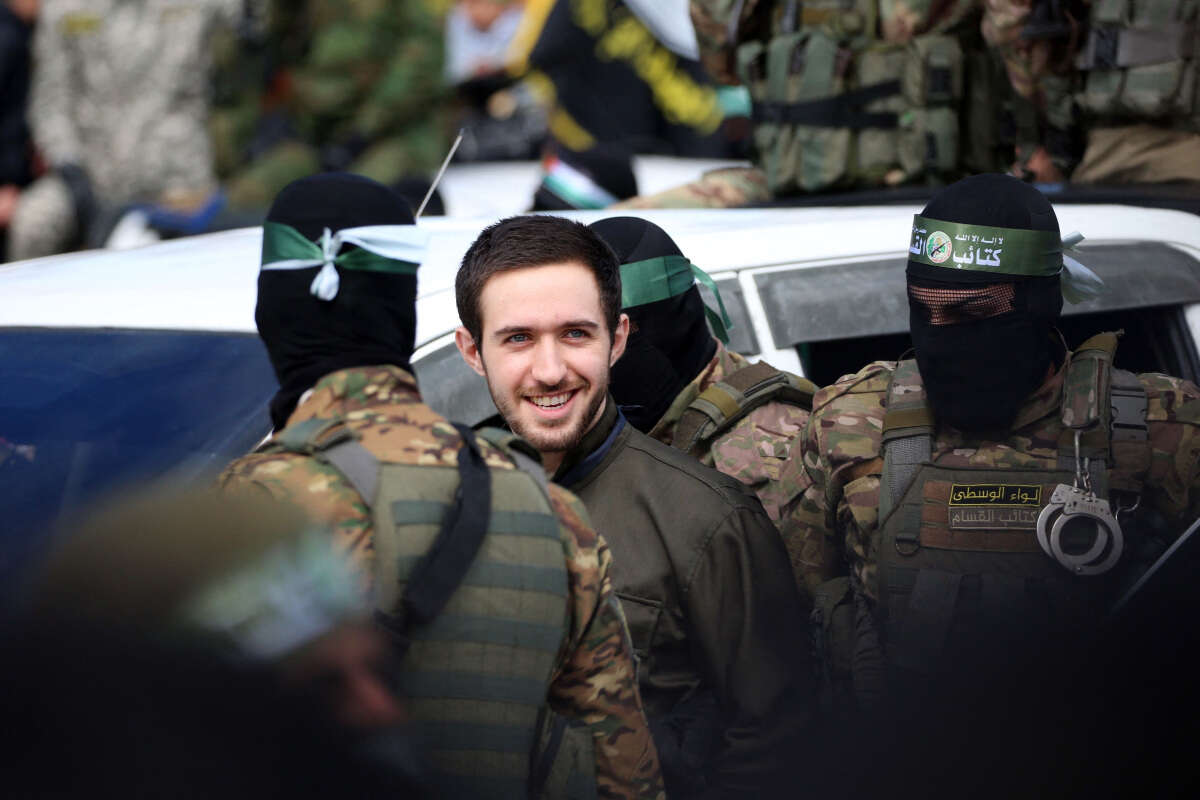
Former hostage Omer Shem Tov published an op-ed Tuesday in The Wall Street Journal, addressing the documentary "NAZA", which won the Special Jury Prize this month at the Venice Film Festival.
Shem Tov, who was abducted from the Nova music festival on October 7 and held by Hamas for 505 days, wrote, "I know what it's like to be collateral damage. For 505 days, that's what I was."
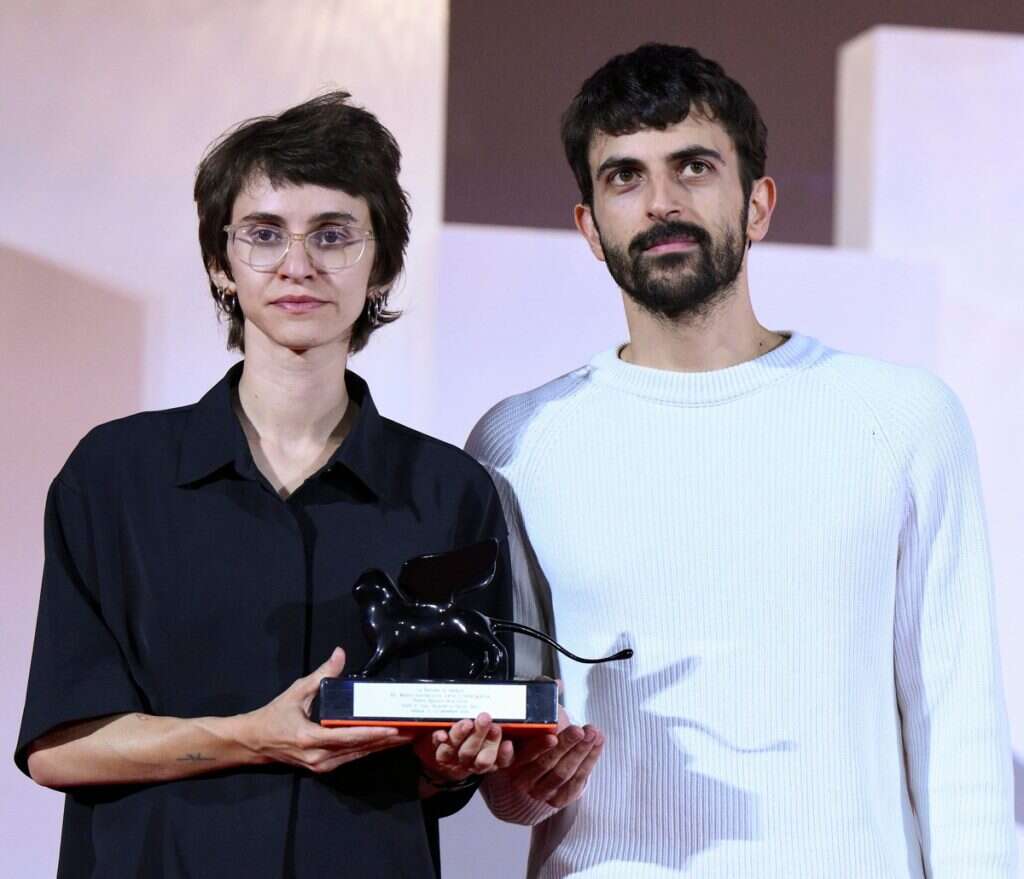
"NAZA" is a British-produced documentary directed by Israeli filmmakers Yuval Abraham and Rachel Szor. The film examines the killing of Palestinian civilians in Israeli Air Force strikes in the Gaza Strip during the Swords of Iron war, as well as the intelligence mechanisms and target-selection process behind the strikes. It is based on 24 anonymous testimonies from Israeli soldiers and officers in Unit 8200.
Shem Tov noted that the film has not yet been released in Israel and that he himself has not seen it. According to him, the film portrays a war in which Palestinian civilians were killed unnecessarily, and even deliberately, but the events that led to the war – the October 7 massacre and the hostages – are, he wrote, "largely outside the frame."
Shem Tov described the period he was held in Gaza, much of it in apartments in areas where fighting was underway. He wrote that alongside the hunger, the captivity and the fear of never seeing his family again, he also feared IAF strikes. "The pilots above me didn't know where I was," he wrote. According to him, there were cases in which his captors anticipated an Israeli strike, fled the scene and left him behind.
"If an Israeli bomb killed me, Hamas would win twice: I would be dead, and Israel would be responsible," Shem Tov wrote.
He then recounted another episode, in which one of his captors told him that his mother had received a phone call warning her to leave her home, because an Israeli strike might endanger her. According to him, the call came from the IDF.
"Hamas knew where I was and left me to die. Israel didn't know my location, but it knew where my captor's mother was, and called to make sure she wasn't killed accidentally.," he wrote. "There I was – kidnapped, starved and tortured by her son – while my army was trying to keep his mother alive."
Shem Tov wrote that Israel wanted to bring him home, but not at any cost. According to him, Palestinian civilians stood between Israel and him, so Israel used leaflets, messages, phone calls and evacuation orders in an attempt to minimize harm to civilians.
"It tried to minimize the NAZA, or collateral damage," he wrote.
Shem Tov also described another episode from his captivity, in which his captors celebrated after Hamas gunmen killed Israeli soldiers. According to him, Israel struck the area where he was being held the next day, with the explosions coming roughly ten seconds apart. "I was terrified. The terrorist next to me was thrilled," he wrote. According to him, for his captor, every explosion was proof of success, "Look what we made Israel do. Look how much we hurt them."
"I understood something then," Shem Tov wrote. "For Hamas, destruction itself could be victory. As long as there was death on either side, Hamas can win."
Shem Tov stressed that the death of a Palestinian child does not become less significant because of numbers or statistics, but he added that Israel's efforts to reduce the death toll should not be ignored.
"If Israel had cared less about NAZA, perhaps I would have come home sooner. Fewer Israeli soldiers might have died. Fewer hostages might have died. But more Palestinians would have [died]," he wrote.
Later in the op-ed, Shem Tov addressed the film and the award it received at the Venice Film Festival directly. According to him, the film received a standing ovation lasting more than 24 minutes. "As a former hostage, those minutes felt like a shower of knives," he wrote.
According to him, there is nothing wrong with the film portraying Palestinian suffering in Gaza, which he said is "real and deserves to be seen." What bothers him, he said, is that the film does not give enough space to his own story or to the circumstances that led to the war.
"It sees the suffering in Gaza, but not what brought the war there: Hamas's planning, the murder of families on October 7, the people dragged from their homes and a music festival," he wrote.
Shem Tov argued that within the story the film tells, he too could be seen as "collateral damage," a Jewish hostage who could have been left to die in a Hamas tunnel or executed alongside his friends at Nova, because the effort to free him and protect Israelis from those who carried out the attack is portrayed as morally problematic.
"In that story, perhaps I am NAZA too," he concluded.