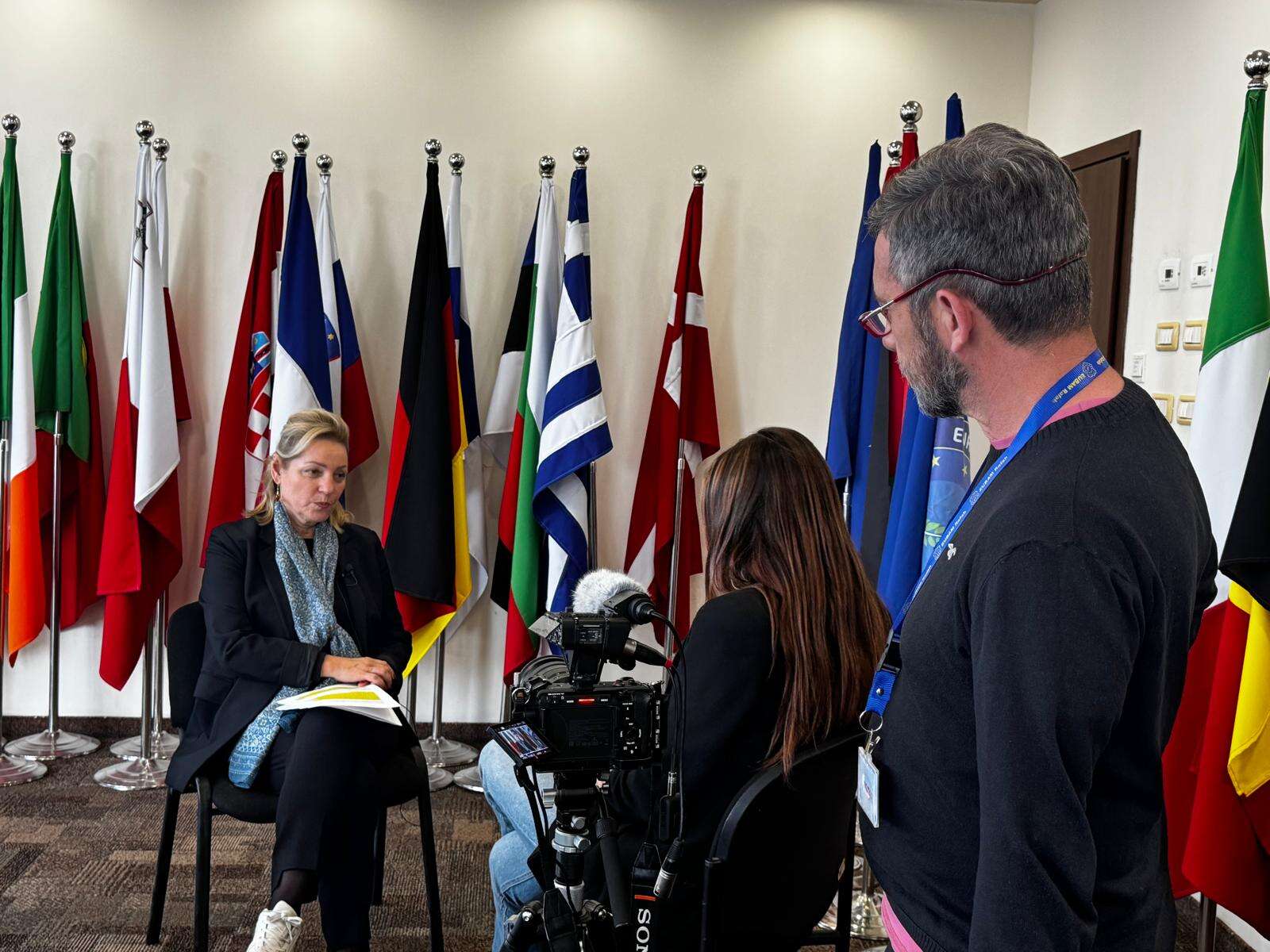
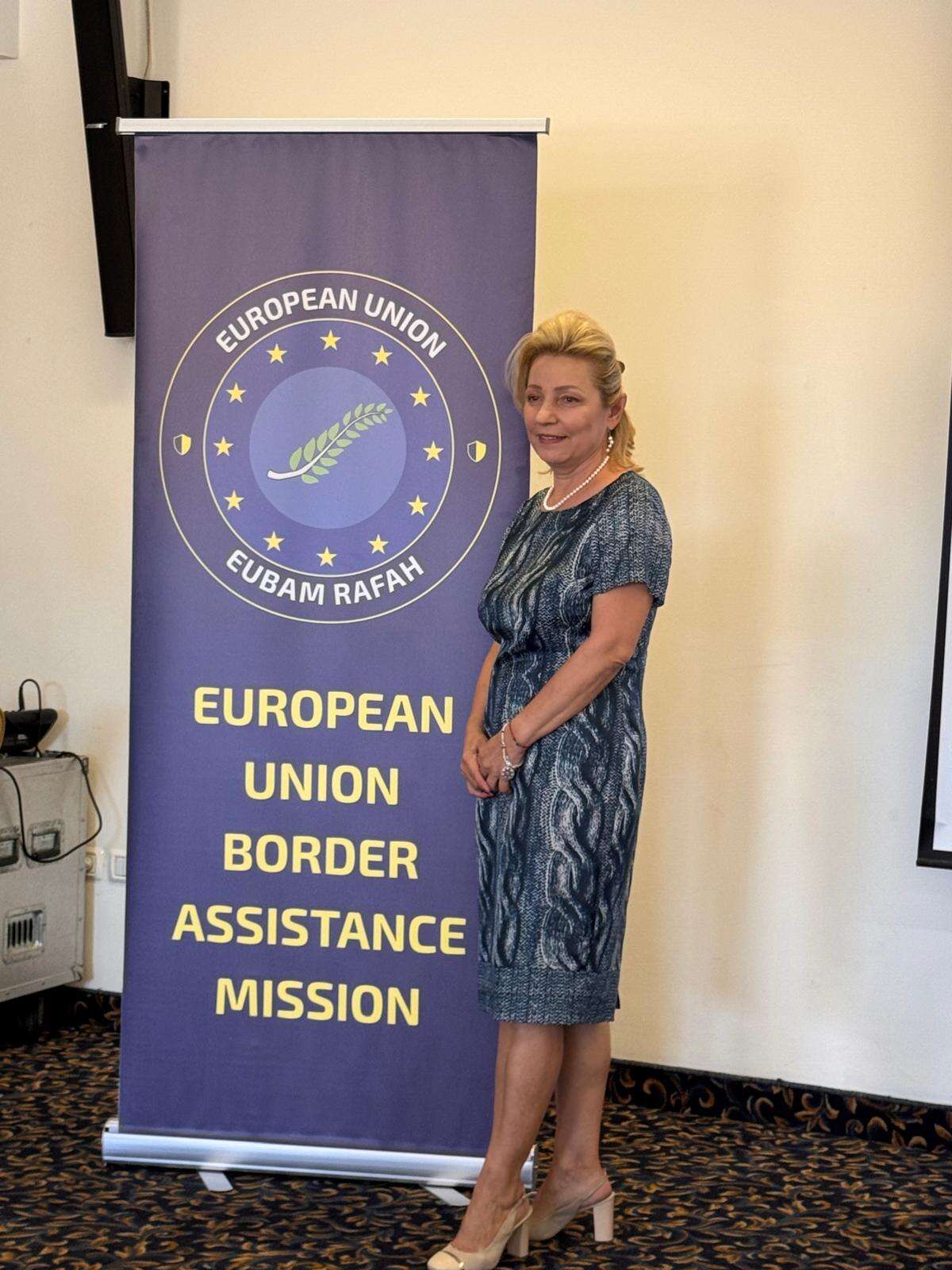
Nataliya Apostolova, a Bulgarian diplomat with more than 25 years of experience in the European Union's foreign service, will step down next month as head of the European Union Border Assistance Mission for the Rafah Crossing Point, one of the most sensitive posts in the Middle East.
She took up the position in November 2023, less than a month after the Oct. 7 massacre, entering the job amid a chaotic situation. Now, as her tenure draws to a close, she is taking stock of the period.
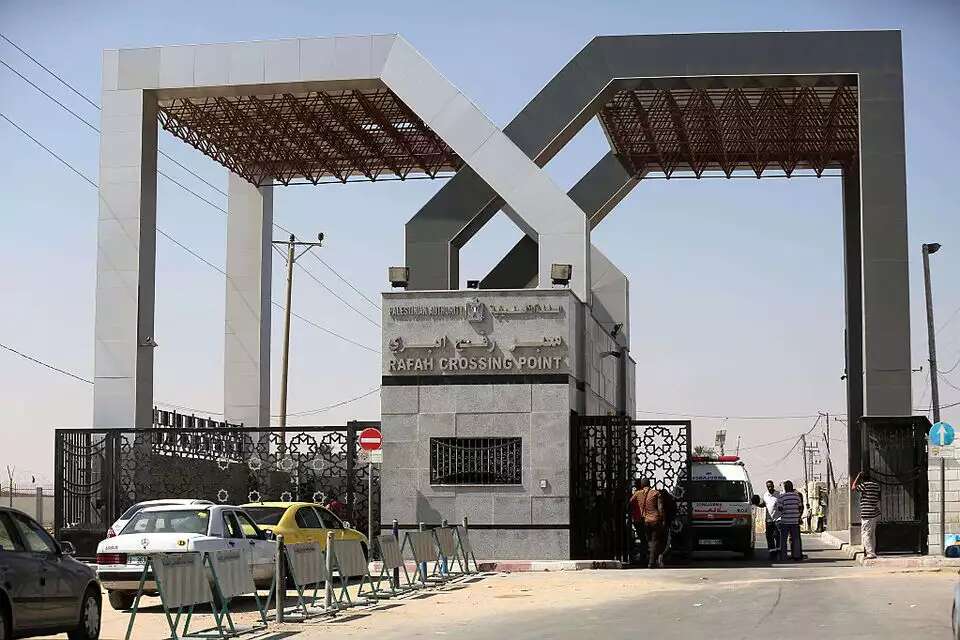
The Rafah Crossing, where the mission she headed operates, has never been merely a border terminal. For years, it has been at the center of a heated debate in Israel over control of the Gaza Strip's border, the potential smuggling of weapons and the ability to monitor who enters and leaves the territory.
The crossing closed on Oct. 7 and operated intermittently during the war. In February, it resumed regular operations under conditions entirely different from those that had prevailed before the war. Instead of an Israeli military presence, a multilateral mechanism is now in place involving Israel, Egypt and the Palestinian Authority, which are also jointly involved in approving the lists of people entering and leaving the Gaza Strip. EUBAM personnel serve as a neutral third party overseeing implementation of the procedures.
Israel has no personnel inside the crossing itself. Instead, it monitors the terminal through cameras and intelligence to ensure that prohibited items that could be used by Hamas, including weapons, goods and dual-use products that could threaten Israel, do not pass through.
Teams of Palestinian inspectors work shifts at the border crossing under the supervision of the European mission. From Feb. 1, 2025, through the present, 16,748 people have passed through the Rafah Crossing, including 6,152 entries into Gaza and 10,596 exits, with a total of 4,116 crossings involving medical cases. In 2025, only exits were recorded, while from February 2026 onward, entries into the Gaza Strip were also recorded.
During the two years you have headed the mission, did the war change the way you operated?
"The way EUBAM Rafah operates at the Rafah Crossing has not changed. The mission's mandate continues to be based on the 2005 Agreement on Movement and Access. The environment has changed, but our mandate remains the same."
During your tenure, what exactly did you manage there, and what was outside your authority?
Apostolova said EUBAM Rafah is a civilian, non-executive mission that neither runs the crossing nor holds executive powers. Palestinian border and customs officials carry out the procedures themselves, while the mission's role is to monitor, verify and provide professional advice.
"EUBAM Rafah does not take part in the screening process and does not make decisions on clearance for passage," she stressed. "If a person is not approved to cross, we cannot change that decision."
Who was actually on the ground under your command on a day when the crossing was open?
On the Gaza side, about 50 Palestinian personnel operated the crossing alongside roughly 25 EUBAM personnel, including border and customs experts from three EU member states as well as a security team.
The border and customs experts working at the Rafah Crossing Point come from Spain, France and Italy. "These are not officials arriving from offices in Europe," Apostolova said. "They are experienced border and customs personnel who are accustomed to working under complex conditions and in environments where the level of risk can change rapidly."
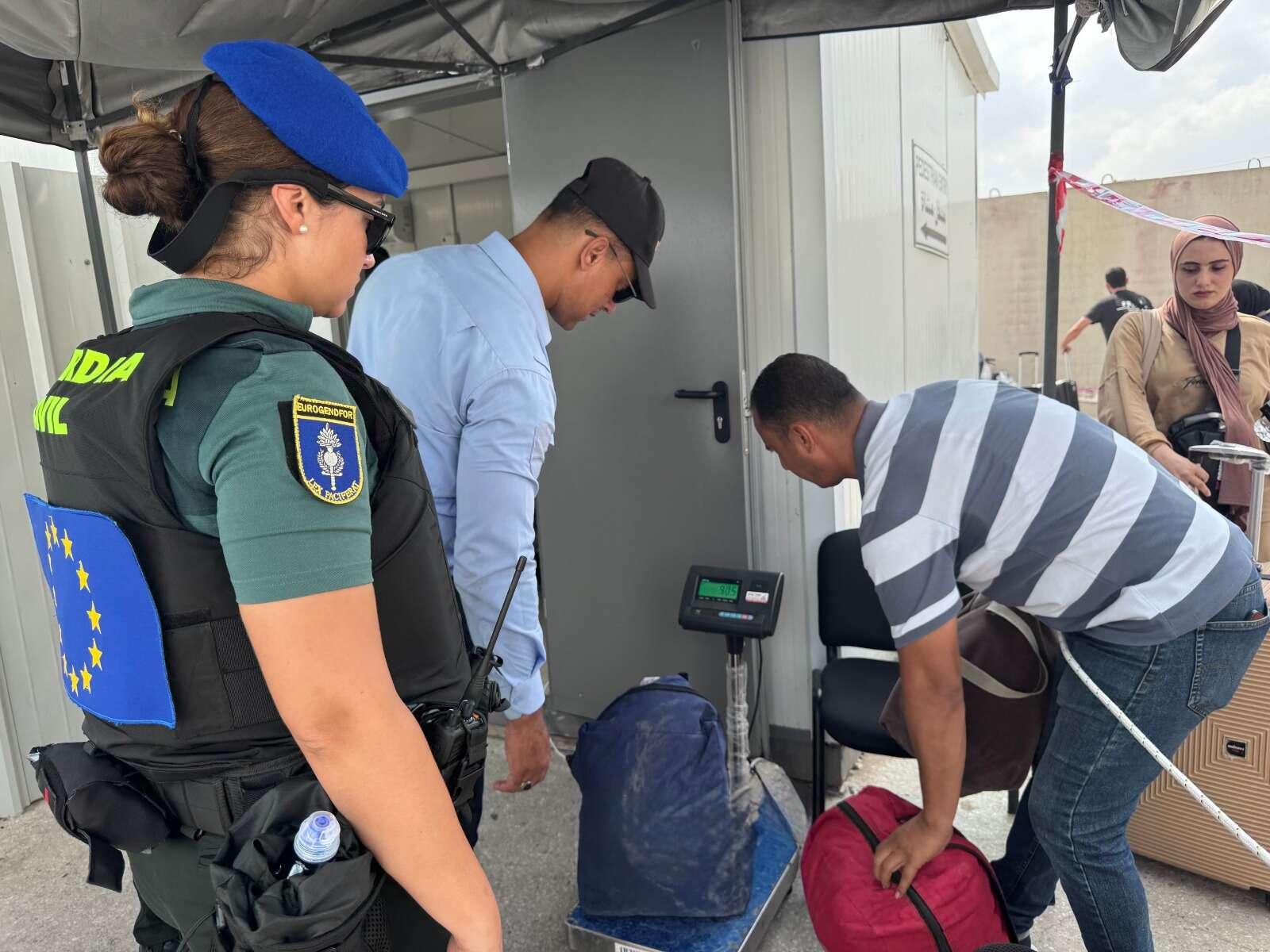
The team works "alongside the Palestinian border personnel," she said, providing them with "on-the-job training and guidance. This includes, among other things, detecting forged documents, searching baggage, using X-ray machines and scanners, and applying human rights standards in the course of border-control work."
What happened when they found something prohibited?
"Since operations resumed, procedures at the crossing have included systematic and thorough checks of passengers' documents and baggage," Apostolova said.
When a violation is detected, Palestinian border and customs personnel confiscate the goods and prepare a detailed violation report, which is documented in their offices. Confiscated items remain at the crossing until a final decision is made on how they should be handled. "Palestinian border personnel have already seized significant quantities of prohibited or restricted products, including cigarettes," Apostolova said. "So far, we have not identified any cases of weapons or drug smuggling through the crossing under the current operation."
The security vulnerability that generated so much concern in Israel: What did it actually look like during your tenure?
"There have been no security incidents since operations at the Rafah Crossing resumed on Feb. 2, 2026," she said. "Nor were there any security incidents that endangered mission personnel during the previous six-week period in which the mission operated, from Jan. 31 through March 17, 2025."
She acknowledged, however, that day-to-day operational disputes over baggage movements, inspection procedures and the use of equipment were common, with the mission serving as a mediator in resolving them.
How would you sum up the balance between safeguarding Israeli security and assisting the Palestinian civilian population?
"Our goal is also to enable legitimate movement, for people who need medical treatment, for families, and for people who need to reunite with relatives," Apostolova said. "At the same time, we provide advice, training and technical assistance to improve border management and establish procedures that are both secure and efficient." Security and humanitarian access are not necessarily competing objectives," she stressed, adding that effective screening can address both needs at the same time.
During her tenure, she said, patients, wounded people requiring surgery and children leaving the Gaza Strip accompanied by a parent all passed through the crossing. "That did not happen by itself," she said, crediting cooperation among the various parties.
Finally, what would you like Israelis to understand about your work and the mission as your tenure comes to an end?
"I want the Israeli public to understand that our mission is committed to stability, transparency and cooperation," Apostolova said. "Our role is neither political nor executive. We are a neutral third party that helps implement the arrangements, carries out monitoring and verification, and helps build trust between the parties."