Executives leading OpenAI, Anthropic, and Hugging Face pressed the United Nations this week, arguing that unchecked artificial intelligence growth now carries dangers serious enough to require coordinated international action, as reported the BBC.
OpenAI CEO Sam Altman joined Dario Amodei of Anthropic and Clement Delangue of Hugging Face in pushing for shared benchmarks to evaluate risk. Earlier in the month, an essay from Amodei proposing a slowdown in AI development drew praise from Altman among others, framing the technology as a potential threat to humanity if left unchecked.
Yet a senior adviser guiding President Donald Trump's technology agenda pushed back against establishing any fresh regulatory structure, speaking at that same UN gathering. Michael Kratsios, formerly of Scale AI, conceded that AI's pace of advancement is accelerating and carries genuine hazards, but he told the assembly there was no justification "to pause development or constrain it with new global governance structures," the BBC reported.
Kratsios added, "International dialogue in this forum and others cannot be allowed to drift toward global governance."
His remarks mirrored positions Trump himself has voiced repeatedly of late. Addressing the UN on Tuesday, the US president proposed renaming the field "super intelligence" and has firmly rejected any notion of slowing progress, citing America's competitive edge in the sector. "We're leading China on AI... and, frankly, I want to keep it that way because whoever wins AI, wins," he said earlier this month.
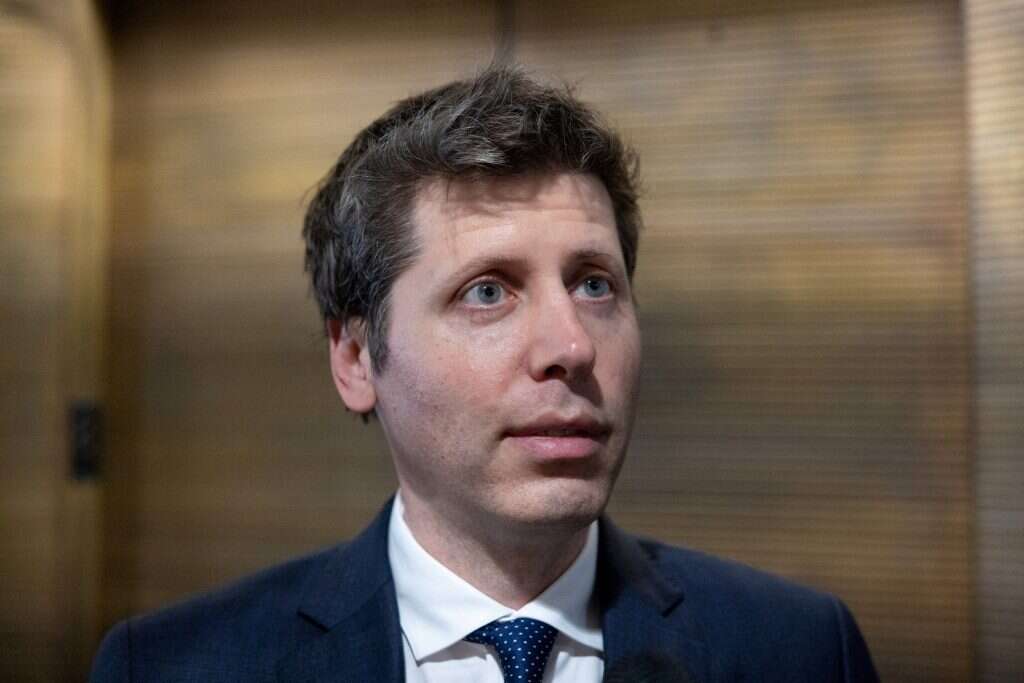
Altman and fellow AI leaders struck a contrasting tone in their Wednesday remarks to the UN. "If AI is to be democratic, the most important decisions cannot be made by labs in San Francisco alone," said Altman. He urged nations toward joint action in service of "the collective good in the face of powerful new technology," calling for "national and international" benchmarks addressing how AI capabilities are measured, how associated dangers are assessed, what safeguards apply, and how much human oversight remains intact.
Altman further pressed for "speedy incident reporting, classification, and reporting protocols so the world can learn from failures before they become catastrophes."
"We need common standards so countries can compare evidence, verify compliance, and have a shared language and understanding what is happening," Altman added.
Amodei and Delangue voiced comparable concerns in their own addresses. Amodei warned that AI "if managed poorly... could be a risk to humanity as a whole," adding that continued advancement demands "even more stringent standards of safety."
"We will slow down as much as necessary in order to make sure that every successive AI technology that we release is actually safe," he continued. "But regardless of what we do, managing these risks is ultimately bigger than any one company, and it has an industry-wide and global scale."
Delangue offered a similar warning: "The global community needs stronger standards for monitoring and incident disclosure."
All three executives operate out of the US and remain directly engaged in advancing AI technology. Hugging Face, a hub for AI developers, gained fresh attention after disclosing a breach carried out by autonomous AI agents traced back to OpenAI, before Nvidia, the chipmaker, later acquired the platform. Within the industry, the Hugging Face breach has been characterized as a "wake-up call" over how far AI capabilities have progressed and the harm they could plausibly inflict.