A municipal council in eastern Germany has triggered widespread anger after voting to discontinue a decades-old practice of embedding commemorative brass markers honoring Holocaust victims into public walkways, the Associated Press reported. The controversy deepened because members of Chancellor Friedrich Merz's center-right bloc broke ranks to back the measure alongside a far-right faction.
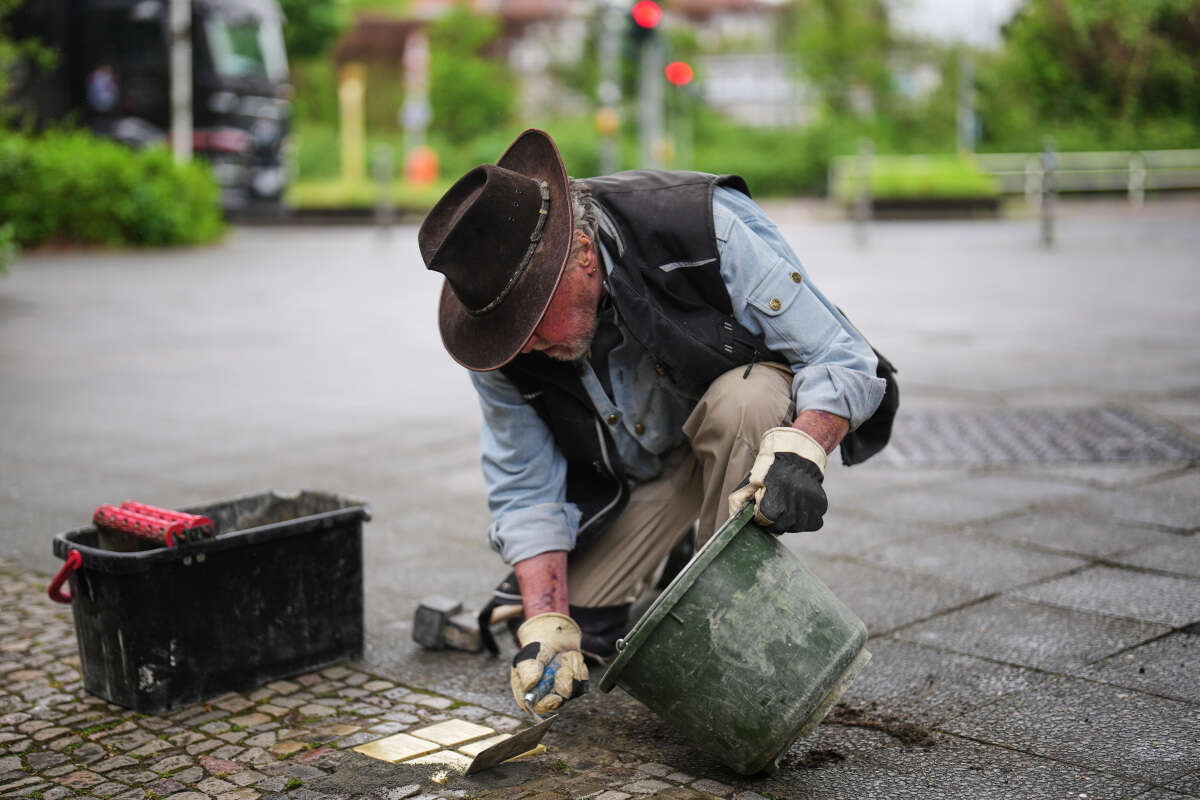
Council members in Heidenau, a municipality near Dresden, approved on Thursday the discontinuation of installing the engraved plaques, known as Stolpersteine, which typically replace cobblestones outside the former residences of victims.
German sculptor Gunter Demnig originated the project, and the German term for the markers translates to "stumbling blocks." Each palm-sized plaque records the identity and fate of a Jewish victim or another individual targeted under Nazi persecution, and the initiative has grown into one of the country's most recognized commemorative traditions.
Cologne hosted the installation of the inaugural marker back in 1992. Over three decades later, upward of 126,000 plaques are now embedded across more than 30 European nations, paying tribute to a portion of the estimated six million Jews and other victims murdered during the Holocaust.
Representatives from the Alternative for Germany (AfD) party and from Merz's Christian Democratic Union jointly backed the municipal measure. Supporters of the change argued that numerous relatives of those memorialized regard the markers as disrespectful, given that pedestrians regularly step over them.
Israel's envoy to Berlin, Ron Prosor, voiced sharp criticism, saying he felt "ashamed," and noted that several of the memorials in the German capital honor members of his own family. "And in Germany in the year 2026, a city council decides to no longer install new Stolpersteine," he wrote on X.
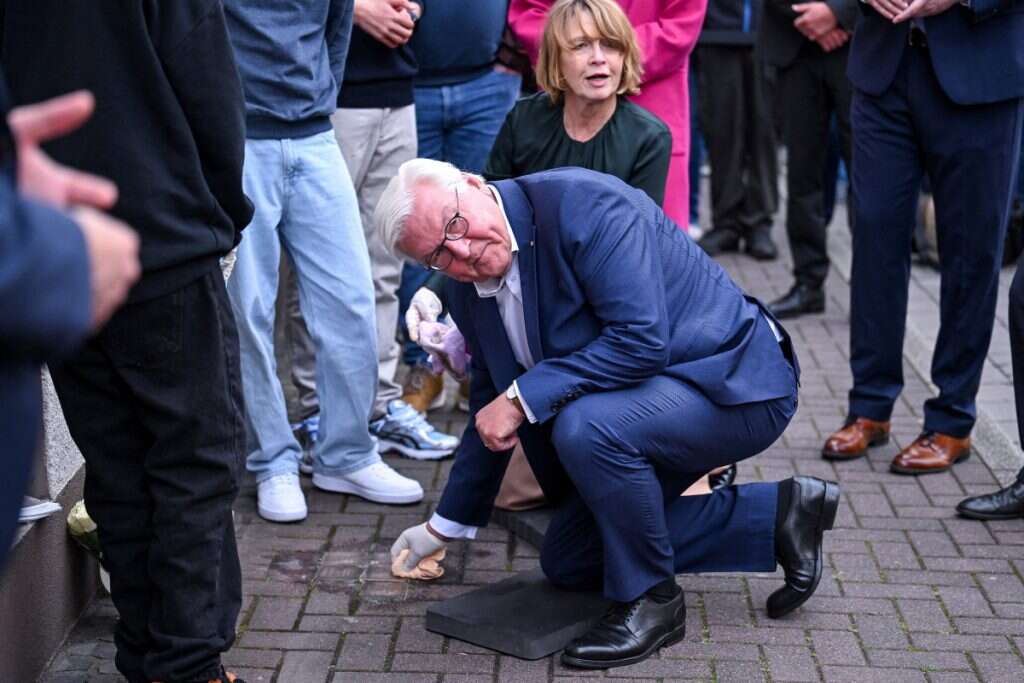
Numerous Jewish visitors have journeyed to Germany specifically to take part in ceremonies marking the installation of these plaques, frequently in memory of relatives who perished in Nazi gas chambers. For many families, these markers function as the nearest equivalent to a headstone.
Christian Meyer-Heidemann, who serves as Schleswig-Holstein's state commissioner overseeing political education, sharply criticized Heidenau's ruling. He told the German press agency dpa that the decision represented "a deliberate attack on our culture of remembrance."
Heidenau, home to roughly 16,000 residents, is not the only German locality resisting the commemorative markers. Munich similarly bars the plaques from being installed on land the city owns, opting instead for alternative memorial approaches, AP noted. Certain Jewish community figures there have raised objections rooted in concern that victims' names could be walked upon.
The AfD, a party opposing immigration with particular strength in the country's eastern regions, has recently enjoyed surging support. It has notched victories in two state elections and now polls as Germany's most popular political party. Merz, who chairs the CDU, has ruled out any partnership with the AfD, a party frequently accused of dismissing the weight of Nazi-era history that has shaped German political culture throughout the decades following World War II.
The AfD's rising fortunes have placed strain on an established consensus among mainstream parties to avoid cooperating with it. In certain regions, Germany's domestic intelligence service has designated the party as extremist.
Demnig, the artist behind the memorial project, was quoted by dpa as saying, "Following the AfD's electoral successes, it was certainly to be expected that something like this would happen." He further accused the CDU of "leaving their Christian roots behind."