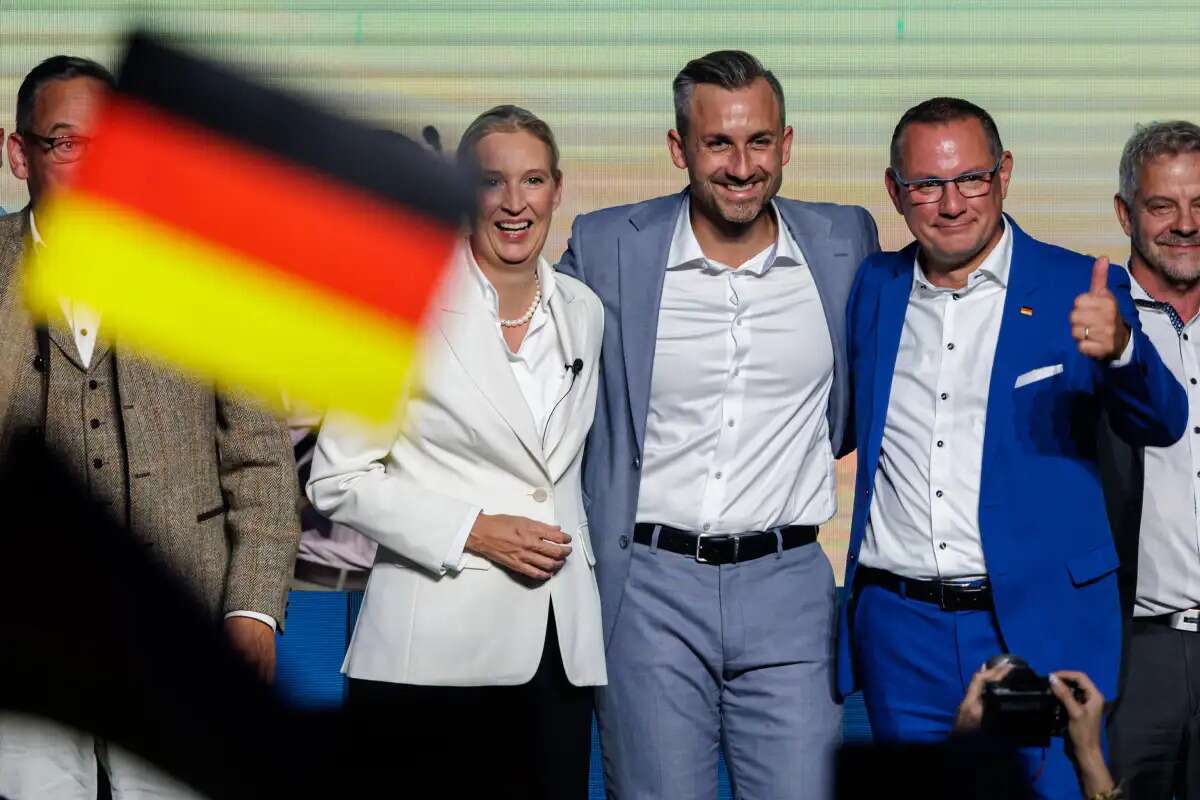
Germany's Jewish community is voicing deep alarm over back-to-back election results in Berlin and Mecklenburg-Vorpommern, which arrived just two weeks after the AfD notched another major win in Saxony-Anhalt. Berlin handed first place to the far-left Die Linke, while the AfD emerged as the largest party in Mecklenburg-Vorpommern.
To many in German Jewry, the pattern is unmistakable. Parties on both fringes of the political map are gaining ground, while the parties of the center keep losing theirs.
That doesn't mean every voter for these parties harbors antisemitic views. Plenty are motivated by the cost of living, housing prices, immigration and security. Still, the community fears that a vote for the fringes inevitably strengthens currents within those parties that are openly hostile to Israel or to Jews.
The left, a bigger problem than the right
All three elections were held in eastern Germany, but the concern extends nationwide. Polls show 43% of the country's residents now back parties at either political extreme.
And on the question of Israel specifically, it's the left, not the right, that currently worries Israel more. The AfD still counts pro-Israel voices among its ranks. Germany's radical left offers no such comfort, having spent recent years locked in an increasingly bitter argument over Israel, Zionism and its very right to exist.
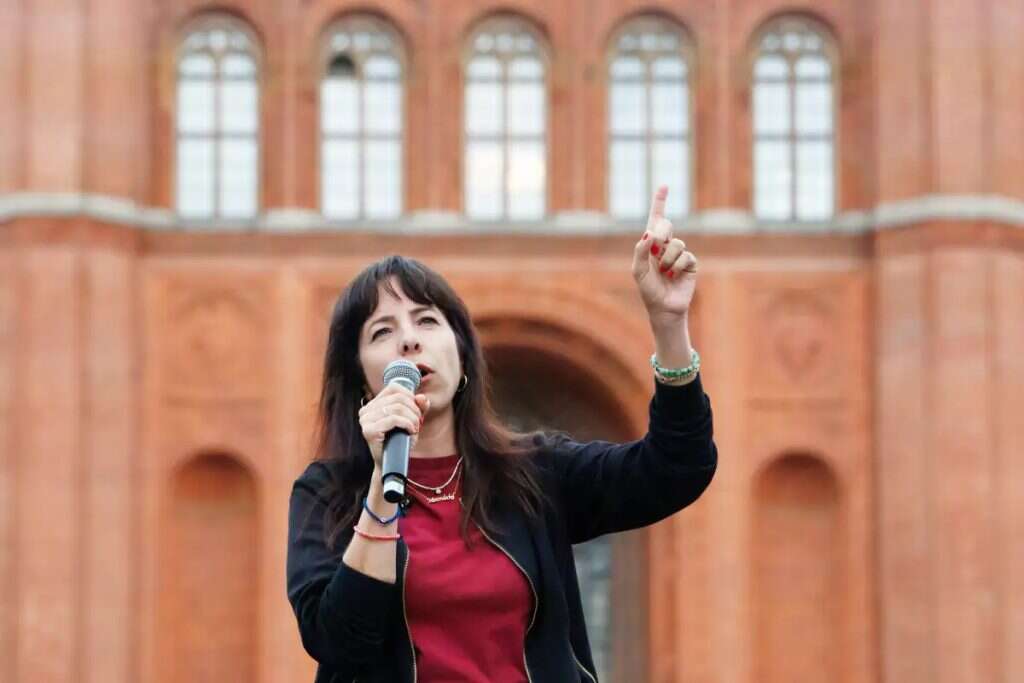
Berlin's election drove that point home. Die Linke posted its best-ever result in a race for the city's House of Representatives, and party leader Elif Eralp could soon be running the coalition that governs the German capital, unless the Greens and the Social Democrats, her likely partners, make good on promises to withhold support absent a real reckoning with antisemitism inside the party.
"Ironically, the parliamentary representation of anti-Zionism, or more precisely of Israel's destruction, of Arab migrants and of pampered, privileged German children who have flooded Berlin's streets for nearly three years with their antisemitic and terror-glorifying "Yallah Intifada" battle cries, is now the strongest political force in the capital," wrote Philipp Peyman Engel, editor of the German-Jewish newspaper Jüdische Allgemeine, on Monday. "The grandfathers and great-grandfathers of German left-wing voters chanted, 'Don't buy from Jews,' 'Jews, go back to Palestine,' and 'The Jew is killing the German people,'" he added, urging centrist parties to steer clear of any coalition with Die Linke.
"Their descendants today chant, only slightly more directly, 'Don't buy Israeli products,' 'Jews, get out of Israel,' and 'Stop Israel's genocide in Palestine.' ... More than 24.8% voted for this party. What has become of this city, once so livable, with its people, who were once so kind? Something simply broke for most of Berlin's Jews."
Distress deepens
Dr. Josef Schuster, chairman of the Central Council of Jews in Germany, echoed the call, urging the SPD and the Greens to steer clear of Die Linke over what he described as a campaign that crossed repeated antisemitic lines. Schuster noted that it deeply concerned him "that a party on whose campaign stage the death of people was openly called for, including Israeli soldiers, and whose crowds cheered chants calling for an intifada, has emerged from the election as the winner" of this election.
The council's move follows, by just two weeks, its earlier warning over the AfD's rise and the antisemitic currents within parts of that party. That it is now training its criticism on the left too marks an unusually forceful stance for a body that has traditionally kept its distance from domestic politics, underscoring just how deep the community's unease has grown.
'Where is this heading?'
The shift in mood was palpable inside Germany's synagogues on Yom Kippur (the Jewish Day of Atonement), as the first exit polls landed just before Kol Nidre (the opening Yom Kippur prayer service). "For many Western countries, October 7 was a kind of Kristallnacht," says Ben Salomo, 49, a German-Jewish rapper born in Israel who has called Berlin home since he was three.
"For the Nazis, burning synagogues and killing Jews in November 1938 was a trial balloon. When they saw that Germans weren't rising up against it in any meaningful way, and were even supporting it, they realized the way was paved to harm Jews, and that's also what happened in many Western countries after October 7. Antisemites saw that they could do almost anything they wanted without consequence, so they felt encouraged to keep going. Only this time, it isn't happening only in Germany."
Salomo is especially wary of the overlap forming between the far left, Islamists and the far right around a shared hostility to Jews and Israel. "Hating Jews unites everyone, the far left and the Islamists, and also the far right," he says, warning that if the trend holds, growing numbers of young Jews may start weighing whether to leave the country altogether. "We don't know where this is heading, but we know where it could go. After the Holocaust, you no longer need to use your imagination. Maybe it won't be exactly the same thing, but the direction points to the same place."
Salomo, who tours German schools lecturing on the fight against antisemitism, puts it bluntly, the country's Jews are "caught between a rock and a hard place," squeezed by the far right on one side and the far left on the other. "If Jewish institutions already look like secured fortresses today," he says, "the sense of security could keep deteriorating."
'We keep fighting'
Few feel the shift as acutely as Andreas Büttner, Brandenburg's commissioner for Jewish life and the fight against antisemitism. A longtime member of Die Linke, Büttner quit the party in March 2026 over its stance on Israel and what he called a lack of backing from his own colleagues. "We are losing Germany," he says flatly.
He describes a landscape where troubling attitudes toward Jews and Israel run through both ends of the spectrum. Inside the AfD, he says, there are figures who genuinely view Israel as a vital Middle East democracy, alongside others who peddle antisemitic theories blaming Israel for wars and even for Muslim migration into Europe. "I think some of them like Jews because they hate Muslims even more, and once they're done with the Muslims, they'll come for the Jews," Büttner says.
The left, he adds, trades in a different but no less corrosive rhetoric. "They talk about Israel as a colonialist state and as an imperialist project of the US that oppresses Palestinians through an apartheid state. They speak against Israel and Zionism, and in the end, they mean Jews."
Büttner traces much of this to October 7, after which thousands of young people flocked to Die Linke and talk of "genocide" and Israel's right to exist moved to the center of party discourse. He says he has personally received threats for defending Israel. "They've changed the definitions of antisemitism," he argues. "We see party members praising October 7 and presenting it as resistance, holding events with Hamas supporters and Palestinian nationalist organizations. In some places, Zionism is seen as a racist idea." He recalls demonstrations outside a synagogue and the question he says such protesters seem to be asking, "Are Jews the government of Israel?" The party's leadership, he says, would rather not see any of this, yet does too little to stop it. "We keep fighting and we don't stop trying to stem this phenomenon. We are on the right side of history."
Merz's battle
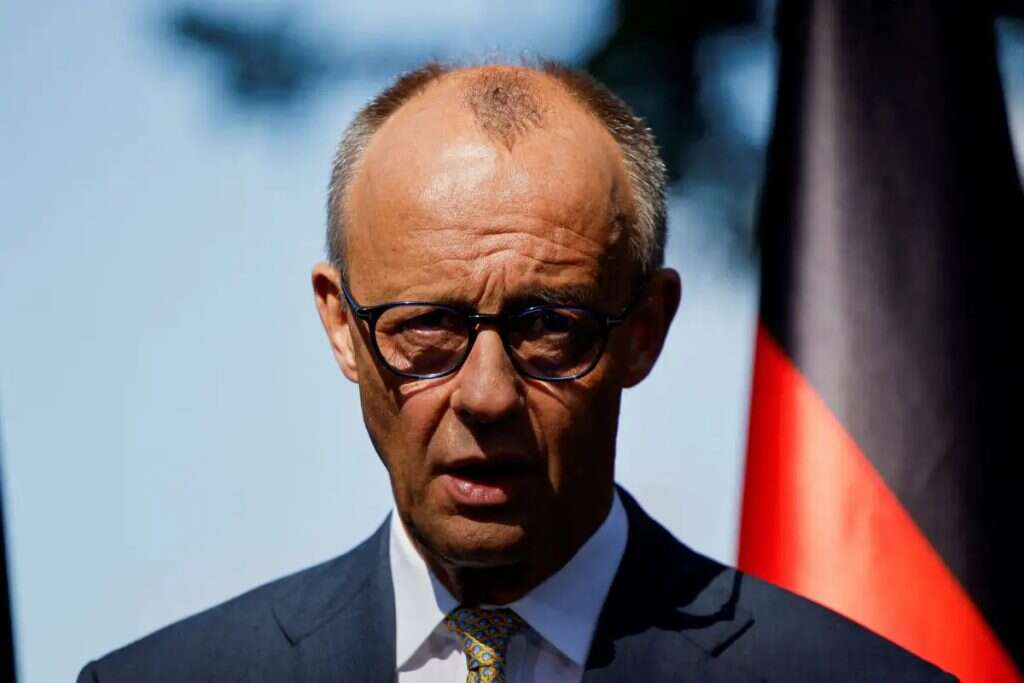
Standing amid this reality is Chancellor Friedrich Merz, whose party, the CDU (Christian Democratic Union), took a hard hit in the latest elections, failing for the first time in its history to clear Mecklenburg-Vorpommern's 5% blocking threshold (the minimum vote share needed to enter parliament) even as Die Linke gained ground in Berlin and the AfD topped the vote in Mecklenburg-Vorpommern. Merz has vowed to stay the course and press ahead with his promised reforms, but the results tell their own story, a political center squeezed from both sides as the far right and the radical left both gain at the expense of the mainstream.
The stakes reach well beyond Germany's borders. For decades, Germany stood among Europe's staunchest defenders of Israel's security, a posture rooted in its historical reckoning with the Holocaust. As that political landscape shifts, the Jewish community is left wondering what the German-Israeli relationship will look like from here.
Meanwhile, in Germany's synagogues, the questions remain open, how safe Jews can feel, what their place will be in a changing Germany, and whether a country that has made Holocaust memory central to its identity will manage to uphold, in the future too, its commitment to Jewish life and to the fight against antisemitism.