
Israel Hayom is a media organization founded on the belief that the Israeli public deserves better journalism—more balanced, more accurate, and more reliable. Journalism that speaks rather than shouts. Journalism that is trustworthy, objective, and matter-of-fact. A different kind of journalism, offered free of charge. The first print edition was published on July 30, 2007, and in 2010 Israel Hayom became the Israeli newspaper with the highest weekday readership. The newspaper’s publisher is Dr. Miriam Adelson. Its Editor-in-Chief is Omar Lachmanovitch, and its founding editor is Amos Regev. Israel Hayom’s Hebrew and English websites, as well as its Android and iOS applications, provide around-the-clock news coverage, exclusive content, breaking news and updates, analysis and commentary, video, podcasts, and live broadcasts. The digital platforms of Israel Hayom include news and opinion channels covering culture and entertainment, lifestyle, technology, sports, business and consumer affairs, health, military affairs, food, Judaism, tourism, and automobiles. In 2021, a new Hebrew-language website and mobile application were launched to provide users with a fast, up-to-date, secure, and convenient experience. The content of the newspaper’s print edition is also available online through a daily digital edition and can be received via newsletter. “The Israel Hayom Clique,” the publication’s exclusive benefits club, offers website users discounts and special promotions on products and services. Israel Hayom welcomes feedback, criticism, and suggestions for improvement from its readers. You can contact the organization by email at hayom@israelhayom.co.il

Friday Oct 30, 2026
NEWSLETTER
www.israelhayom.com
  • Home
  • News
    • Israel
    • Israel at War
    • Middle East
    • United States
  • Opinions
  • Jewish World
    • Archaeology
    • Antisemitism
  • Lifestyle
    • Food
    • Travel
    • Fashion
    • Culture
  • Magazine
    • Feature
    • Analysis
    • Explainer
  • In Memoriam
www.israelhayom.com
Home Commentary

Why does terrorism keep catching Israel by surprise?

No security system can prevent every act of terrorism, but security depends on asking what we have failed to imagine. The objective of the IDF should be the removal of the threat, rather than merely reducing, managing, or containing it, while the state addresses the ideological conditions that allow threats to regenerate.

by  Prof. Zaki Shalom and Prof. Kobi Michael
Published on  10-06-2026 14:05
Last modified: 10-06-2026 14:40
Flydubai co-pilot allegedly plotted to crash jet into Tel Aviv skyscrapers

A flydubai aircraft and the Azrieli Towers in Tel Aviv | Photos: Danny Maron, Koko

Share on FacebookShare on Twitter

We are, again, surprised. The recent incident aboard a Flydubai aircraft, and the suspicion that the co-pilot attempted to seize control, raises a question we should have asked long ago: Why do we continue to be surprised when terrorism changes form?

Whenever a new form of attack emerges, we tend to say that we had not thought of it. This reflects a failure of imagination: the inability to prepare for threats outside established patterns of thought. Terrorism is adaptive. When barriers are strengthened, attackers seek other routes; when surveillance improves, new vulnerabilities are exploited; when ground infiltration becomes difficult, tunnels emerge.

The lesson is not that we must predict the precise form of the next attack. We cannot. We must recognize that another form will emerge and prepare our institutions to think beyond conventional patterns.

We must interpret what our enemies say through their psychological and ideological frameworks rather than our own. The critical question is not, "Why would they do such a thing?" but, "What might they dare to do?"

This lesson acquired its most traumatic significance on October 7, 2023. Israel had built around Gaza an extensive defensive system based on barriers, surveillance, intelligence, technology, early warning, and military power. Yet we focused heavily on capabilities while paying insufficient attention to the enemy's ideological and religious worldview. We assumed that Hamas would necessarily be deterred by the price it knew it might have to pay. But an enemy does not have to assign the same weight to risk and cost that we do. The deeper failure was conceptual: we assumed that the enemy's calculations would resemble our own.
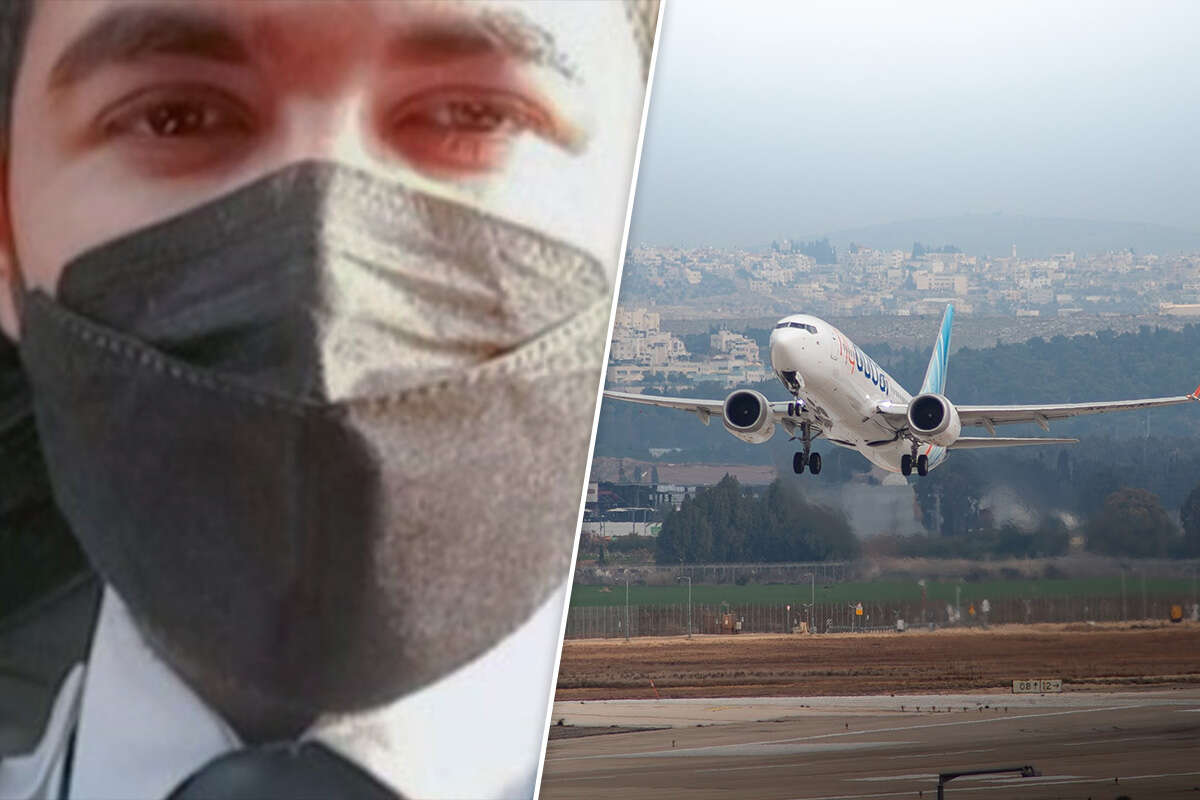
A flydubai aircraft and Hamam al-Hammami. Photo: Yoav Dagon

This brings us to incitement. A state may arrest terrorists, destroy infrastructure, improve intelligence, and build sophisticated defenses, yet still confront a generation raised in an environment where hatred and the glorification of violence are presented as legitimate. If we focus only on the individual who has already decided to attack, we address the problem too late. We must also examine the messages and social environment that help make violence conceivable.

Israel has often responded to hostile incitement with protests, reports, condemnations, or diplomatic complaints, but without treating it as a sustained strategic challenge. Not every expression of incitement produces a terrorist, and there is no simple causal equation between a message and an attack. Yet systematic glorification of violence can create an environment in which violence becomes permissible or even heroic. By our assessment, Israel has failed to address this phenomenon systematically, particularly within the Palestinian Authority, and has too often treated serious incitement in Egypt and Jordan as unavoidable.

The issue has therefore not received the political attention and resources required for a comprehensive campaign. Responsibility also extends beyond government to educators, media, and the public. What begins as an alarming message can gradually become background noise, helping sustain the environment in which terrorism regenerates. Israel should demand that systems it finances or enables through international mechanisms meet basic educational and civic standards and do not promote its destruction. It should also explain internationally that support for terrorism is not merely an Israeli problem, and that Hamas and Hezbollah, supported by Iran, form part of a broader challenge.

The Flydubai incident should therefore prompt self-examination. No security system can prevent every act of terrorism, but security depends on asking what we have failed to imagine. The objective of the IDF should be the removal of the threat, rather than merely reducing, managing, or containing it, while the state addresses the ideological conditions that allow threats to regenerate.

The incident may have been a miracle. Approximately 180 people were aboard the aircraft, and the consequences could have been catastrophic. Human courage, professional skill, and luck deserve recognition. But luck cannot become a security doctrine. The real test is whether we can ask, before the next crisis: What are we still not seeing? Which threat appears impossible simply because we cannot believe that anyone would dare to carry it out?


Related Posts

Qatar election interference allegations raise troubling questions about Shin Bet's failures

Qatar election interference allegations raise troubling questions about Shin Bet's failures

by Yoav Limor

The serious suspicions examined by Justice Noam Sohlberg put Shin Bet chief David Zini in an impossible position, after he...

Israel election 2026 exit polls: Full results

Why is Israel still heading for political deadlock?

by Yoav Limor

With 87 Zionist Knesset seats potentially paving the way for a unity government, political mistrust and campaign promises are keeping...

Northern Israel

Turning a national crisis into renewal, growth

by Michal Cohen

Alongside the fighting on seven fronts, Israel must commit to rebuilding the devastated communities of the north and south. Bringing...

Menu

Analysis 

Archaeology

Blogpost

Business & Finance

Culture

Exclusive

Explainer

Environment


Features

Health

In Brief

Jewish World

Judea and Samaria

Lifestyle

Cyber & Internet

Sports


Diplomacy 

Iran & The Gulf

Gaza Strip

Politics

Shopping

Terms of use

Privacy Policy

Submissions

Contact Us

About Us

The first issue of Israel Hayom appeared on July 30, 2007. Israel Hayom was founded on the belief that the Israeli public deserves better, more balanced and more accurate journalism. Journalism that speaks, not shouts. Journalism of a different kind. And free of charge.

All rights reserved to Israel Hayom

Hosted by sPD.co.il

  • Home
  • News
    • Israel at War
    • Israel
    • United States
    • Middle East
    • Sports
  • Opinions
  • Jewish World
    • Archaeology
    • Antisemitism
  • Lifestyle
    • Food
    • Travel
    • Fashion
    • Culture
  • Magazine
    • Feature
    • Analysis
    • Explainer
    • Environment & Wildlife
    • Health & Wellness
  • In Memoriam
  • Subscribe to Newsletter
  • Submit your opinion
  • Terms and conditions

All rights reserved to Israel Hayom

Hosted by sPD.co.il

Newsletter

[contact-form-7 id=”508379″ html_id=”isrh_form_Newsletter_en” title=”newsletter_subscribe”]

  • Home
  • News
    • Israel at War
    • Israel
    • United States
    • Middle East
    • Sports
  • Opinions
  • Jewish World
    • Archaeology
    • Antisemitism
  • Lifestyle
    • Food
    • Travel
    • Fashion
    • Culture
  • Magazine
    • Feature
    • Analysis
    • Explainer
    • Environment & Wildlife
    • Health & Wellness
  • In Memoriam
  • Subscribe to Newsletter
  • Submit your opinion
  • Terms and conditions

All rights reserved to Israel Hayom

Hosted by sPD.co.il