The deadly Houthi attack on Riyadh's international airport could push Saudi Arabia and other countries in the region toward a broader military campaign against the Iranian-backed terrorist organization.
The 12 civilians killed in the attack included four Saudis, two Bangladeshis, an American, an Egyptian woman, a Jordanian, a Syrian, a Palestinian and a Sudanese national. Another 309 civilians were injured and taken to hospitals. The attack was the latest in a series of strikes on the kingdom that have claimed civilian lives in recent days. The Houthis, meanwhile, mocked the Saudis and renewed their warnings against traveling to airports and approaching critical infrastructure facilities.
For some time, the Saudi royal family had favored a diplomatic approach, even pursuing mediation through Oman. The latest attack, however, has left Saudi Crown Prince Mohammed bin Salman with very little room to maneuver. The crown prince remains intent on securing his position as the kingdom's next monarch. Any outward display of weakness, particularly when it comes to Saudi Arabia's security, could embolden his domestic opponents.
Saudi commentators reject Houthi claims that an air blockade must be lifted. They accuse Iran's Islamic Revolutionary Guard Corps of supporting the terrorist organization, which has steadily escalated its attacks over recent weeks. Missiles and drones have been launched at oil and gas infrastructure and airports. During a ground offensive, the Houthis seized control of parts of Yemen's southern coastal region and areas around the Bab el-Mandeb Strait, a strategic waterway connecting the Red Sea to the Gulf of Aden. Only later, with Saudi air support, did anti-Houthi forces regain control of those areas and push the organization back north.
العربية تعرض لقطات من لحظات الاعتداء على مطار الرياض يوم أمس https://t.co/mQYJiki0m1
— العربية عاجل (@AlArabiya_Brk) October 11, 2026
'The attack will change the situation'
Even Saudi commentators who had previously favored diplomacy now believe the attack marks a turning point.
"The attacks on Riyadh airport may be the deadliest terrorist tragedy in terms of casualties since al-Qaida's terror campaign in the early 2000s. If there was no willingness before to embark on a prolonged campaign against the Houthis, I think this terrorist attack will change that," one commentator said candidly.
A shift in tone is also emerging in countries that had never seriously contemplated attacking the Houthis.
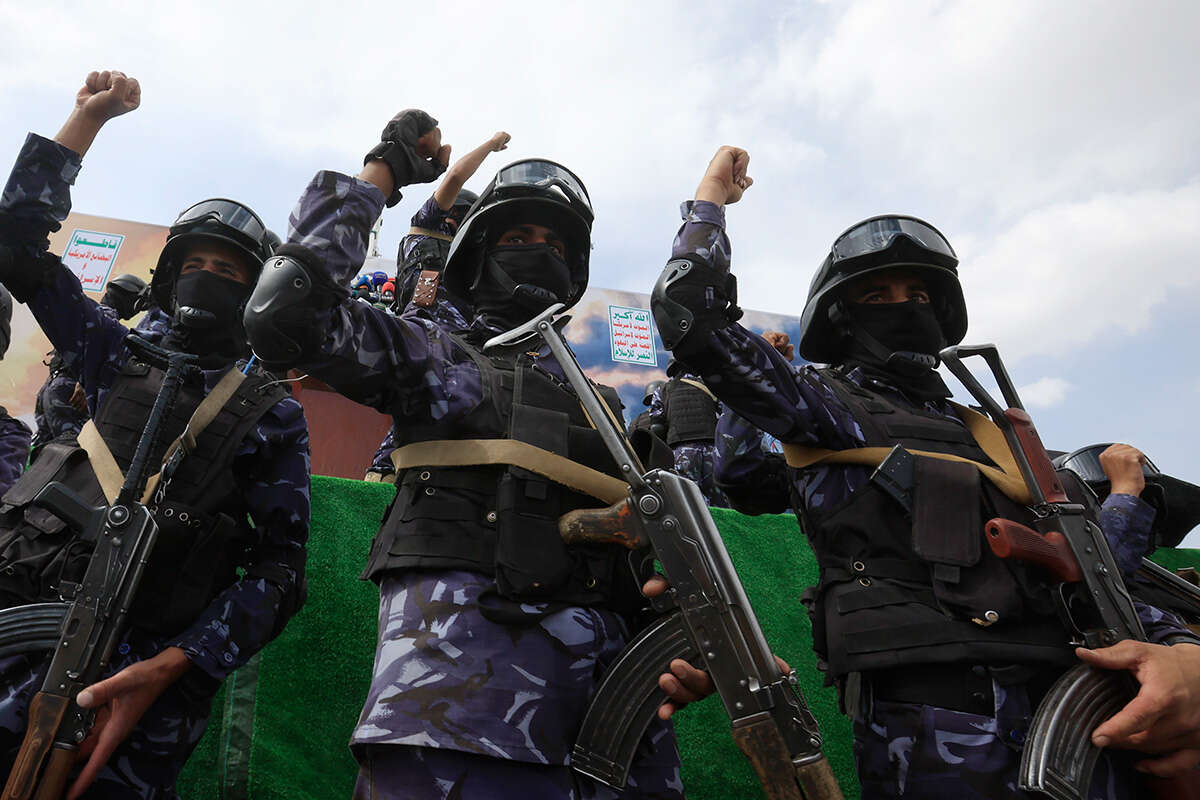
Former Jordanian Information Minister Samih al-Maaytah said in a media interview that "Iran's militias threaten regional stability and the global economy. Putting an end to the danger they pose is an international responsibility." According to al-Maaytah, the problem goes beyond the series of attacks carried out by the Houthis and other Shiite militias. Iran's network of proxy forces, he argued, has become a permanent threat to the very existence of countries in the region.
"We are not experiencing a temporary crisis that will end with a political settlement or agreement. We are living under an existential threat because the Iranian project has no interest in regional stability."
In Cairo, the Egyptian Foreign Ministry issued an official statement mourning the death of a young Egyptian woman, Azza Ramzy Mohamed Hassan, in the terrorist attack on the airport. Five other Egyptian citizens were injured. Until now, Egypt has sought to distance itself from the conflict with the Houthis.
Even after an explosive drone launched by an Iranian-backed militia detonated at a port in northern Egypt, Egyptian officials chose not to respond. Now, Cairo once again faces a decision: Continue to exercise restraint in the face of Houthi terrorism and offer mediation services, or join the Saudi-led coalition.
A divided Yemen
Despite the increasingly forceful rhetoric against the Houthis in the Arab media, the conflict in Yemen continues to pose major challenges for Saudi Arabia and its coalition.
The domestic anti-Houthi camp remains deeply divided between political forces committed to preserving Yemen's unity and separatists seeking to split the country once again, as well as between Islamist movements and nationalist factions.
Coordinating these disparate forces into an effective front against the Houthis remains a formidable challenge. The organization controls much of northern Yemen, including the capital, Sanaa. Moreover, there are still voices within the international community calling on Saudi Arabia to end all involvement in Yemen and "allow the Yemeni people to determine their own fate."
The problem is that Yemen has already faced this crossroads. Had Saudi Arabia not intervened in 2015 with Operation Decisive Storm, its military campaign against the Houthis, the organization would most likely have taken control of most of the country.
These calls also raise the realistic prospect that even if Saudi Arabia expands its military strikes, it will eventually face international pressure to halt its campaign, as it has in the past. Like Hamas and Hezbollah, the Houthis are known for their ability to withstand prolonged military offensives, recover afterward and rebuild their strength.