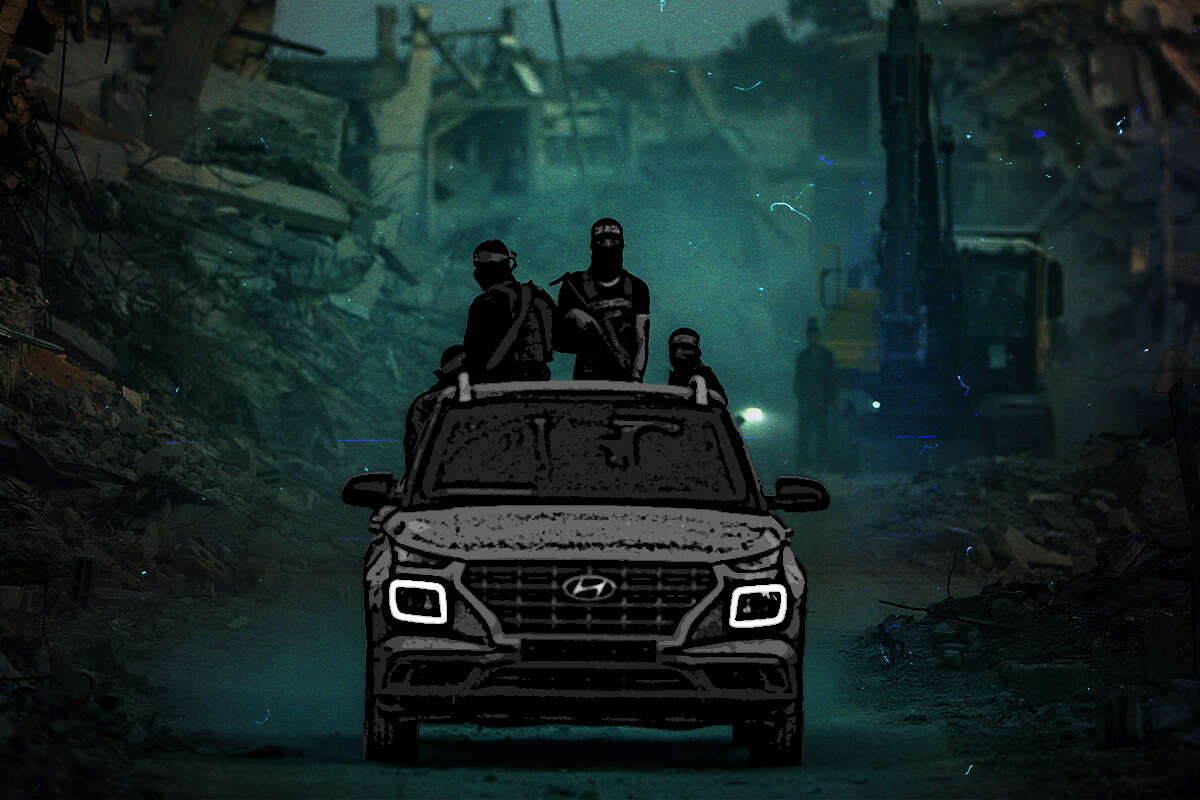
What did our enemies seek to emphasize on the anniversary of the October 7, 2023 massacre, and what should we learn from it?
"Al-Aqsa Flood is a historic milestone and a proud national epic in the ongoing struggle until the defeat of the occupation and the liberation of the land and the holy sites." So read the official Hamas statement marking the third anniversary of the massacre, last week. Al-Risala, the movement's online outlet, devoted extensive coverage to material intended to boost morale in the devastated Gaza Strip and portray the attack as a heroic and pride-inspiring chapter in Palestinian history.
The connection between the attack and the dream of returning to the villages abandoned in 1948 was anything but concealed. "Here is Damra, the village some of whose land was used to establish Kibbutz Erez. And here are Samsam, Burayr, Deir Sunayd, Najd and Huj, which have not been erased from memory," some of the writers excitedly recounted.
Ziyad al-Nakhalah, leader of Palestinian Islamic Jihad, promised: "The Palestinian people will never stop resisting by every possible means as long as the Zionist project exists on our land."
Having survived four Israeli assassination attempts, he made do with a recorded speech delivered from his place of hiding, apparently in Tehran.
It is difficult to separate these messages from the accounts given by hostages who returned from Hamas captivity. Nor is there any reason to do so. "Go back home, pack a suitcase and go to Europe, because we will carry out another October 7. As long as there is even one Jew in the Land of Israel, we will do this to you again and again," one of his captors told Israeli hostage Avinatan Or shortly before his release.
Chen Almog-Goldstein, who was abducted from Kibbutz Kfar Aza with her three children and released after 51 days, gave a similar account as early as March 2024. "They are absolutely certain that they will come again," she said.
As early as that terrible October, before the burial of all those murdered in the massacre had even been completed, senior Hamas official Ghazi Hamad was already boasting about what the organization had accomplished. "We must strike Israel with all our strength," he said. "Al-Aqsa Flood was only the first time. There will be a second, third and fourth time. We have the resilience, the will and the ability to fight and pay the price." Asked what Hamas's objective was, he answered simply: "Israel is a state that has no place on our land. It is a state we want to bring down."
Even if we believe the Palestinian public-opinion polls showing a steady decline in support for the October 7 attack, there is no comfort to be found in them. According to those same polls, roughly 40 percent of the Palestinian public still expresses general satisfaction with Hamas. One in five Palestinians in Gaza is convinced that Hamas is winning the war. Only 15 percent believe that Israel is the side that has won.
Throughout the war, the terrorist organization has suffered a severe blow at Israel's hands and lost much of its military capability. But not only has it survived; it remains the dominant power in the Strip. The IDF controls 60 percent of the territory, but Hamas controls almost 100 percent of the population. The October 7 attack gave Hamas and the other forces in the Palestinian camp something they had never had before: A sense of capability.
As long as our enemies believe that another October 7-style attack on Israel is within their capabilities, they will never stop dreaming of it and preparing for the right moment.
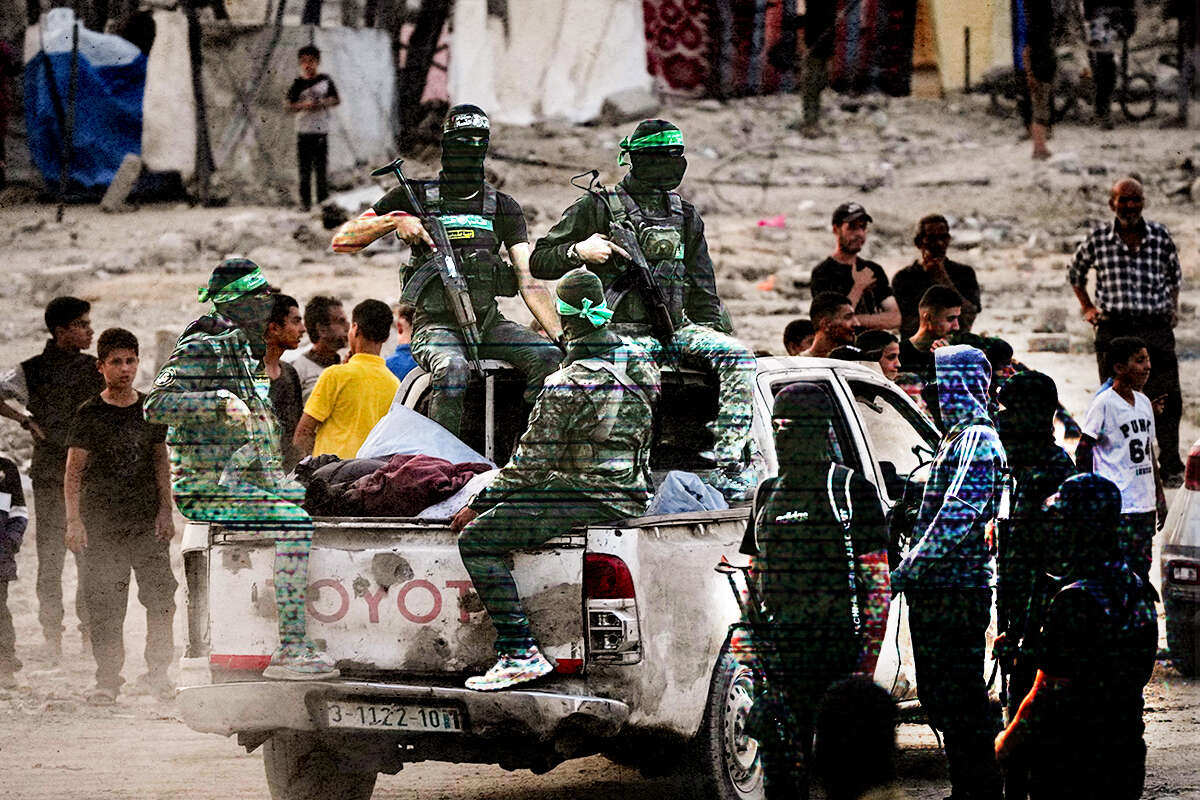
Gaza, the state of Hamas
The debate over Gaza, which in the wake of the controversy surrounding the film "Naza" spilled over into the question of distinguishing terrorists from uninvolved civilians, has taken us back to the days when it was commonly argued that "Hamas holds the residents of Gaza hostage."
We need to remind ourselves—and not those whose ears have been deliberately closed to the truth—that in the last parliamentary elections held in the Strip, in 2006, Hamas won 76 of the 132 seats in the Legislative Council, as well as 15 of the 24 seats representing the five districts of Gaza. That was the choice of the public.
During its 17 years in power, Hamas harnessed every governmental institution to disseminate its ideas and inculcate them throughout every layer of society. More than half the population was born into a reality in which Hamas was the ruling power. They absorbed Hamas ideology in the educational institutions it controlled, consumed Hamas media, prayed in mosques run by its operatives, and were immersed, from head to toe, in Hamas propaganda.
To a considerable extent, in its struggle against Israel, Hamas saw itself as the agent of a large and broad segment of the public, which celebrated its successes alongside it. It is difficult to be optimistic about the prospects of bringing about a significant shift in the consciousness of this population in the foreseeable future. The unique conditions of the Gaza Strip pose unprecedented challenges, unlike the circumstances of previous successful cases of deradicalization.
"It's us or them," said Avihai Becher, a member of Kibbutz Be'eri who lost his wife and son and was seriously wounded in the horrific massacre.
It is difficult to predict what the long term will bring, but in the immediate term the imperative is clear: Israel must fully achieve every objective it has set for the Gaza Strip, which is to dismantle Hamas, completely demilitarize the territory, maintain security control, and enable those who wish to emigrate (but are currently compelled by Hamas to remain inside Gaza) to leave.
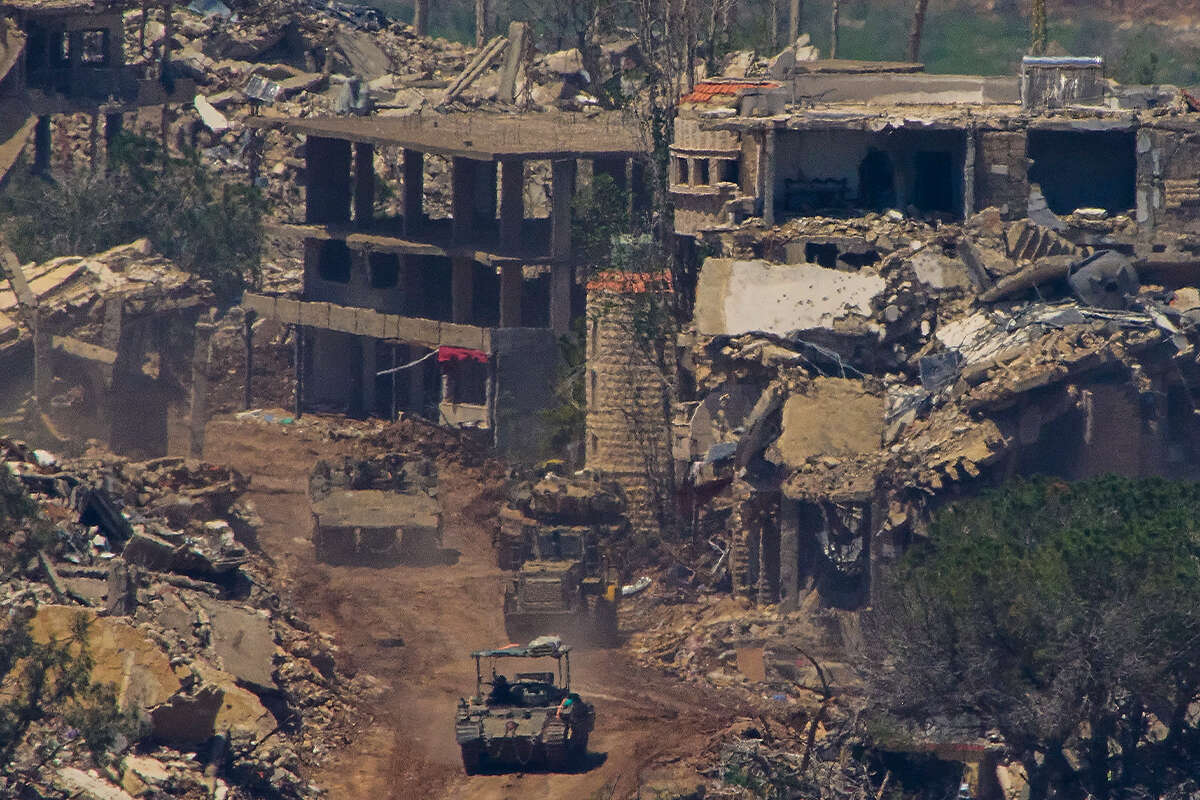
Do not forget
"People are already forgetting. They are already forgetting that Hamas started this terror." Those were the words of Joe Biden, the former president of the United States, in May 2024, just six months after the monstrous massacre, when 128 Israeli hostages were still being held in Gaza. In a forceful speech at the U.S. Holocaust Memorial Museum in Washington, Biden addressed the campus protests and the wave of antisemitism in the United States, and spoke out against attempts to deny or minimize the horrors of October 7.
It is doubtful that Biden ever imagined a scenario in which, within three years, the mayor of New York City would accuse Israel of occupation, apartheid and war crimes, and accuse the administration in Washington of complicity in all this "with every shipment of weapons."
Prime Minister Benjamin Netanyahu's response from the podium of the United Nations did not convince Zohran Mamdani. Presumably, it will not convince Ireland's president, Catherine Connolly, either. She did not hesitate to call Israel a "terrorist state" and declare that "the history of the conflict did not begin on October 7."
Nor will it convince Emmanuel Macron, who tried to out-Palestinian the Palestinians in order to appease the French street, only to find himself grappling with migrant unrest—or, as President Donald Trump put it, with "Islam that wants to take over the country." Netanyahu's response will not convince Britain's Ed Miliband either, who protested the suffering Israel is causing in Gaza, or Spain's Pedro Sánchez, who accused Israel of destroying a defenseless people in Gaza and is now preoccupied with the political crisis that brought down his government.
Netanyahu's words are needed above all as a constant reminder to us: "Israel did not commit genocide; it prevented genocide. That is what Hamas would have done to us had we not stopped them. They would have killed every one of us, every man and woman, to the very last Israeli."
Originally published in Makor Rishon.