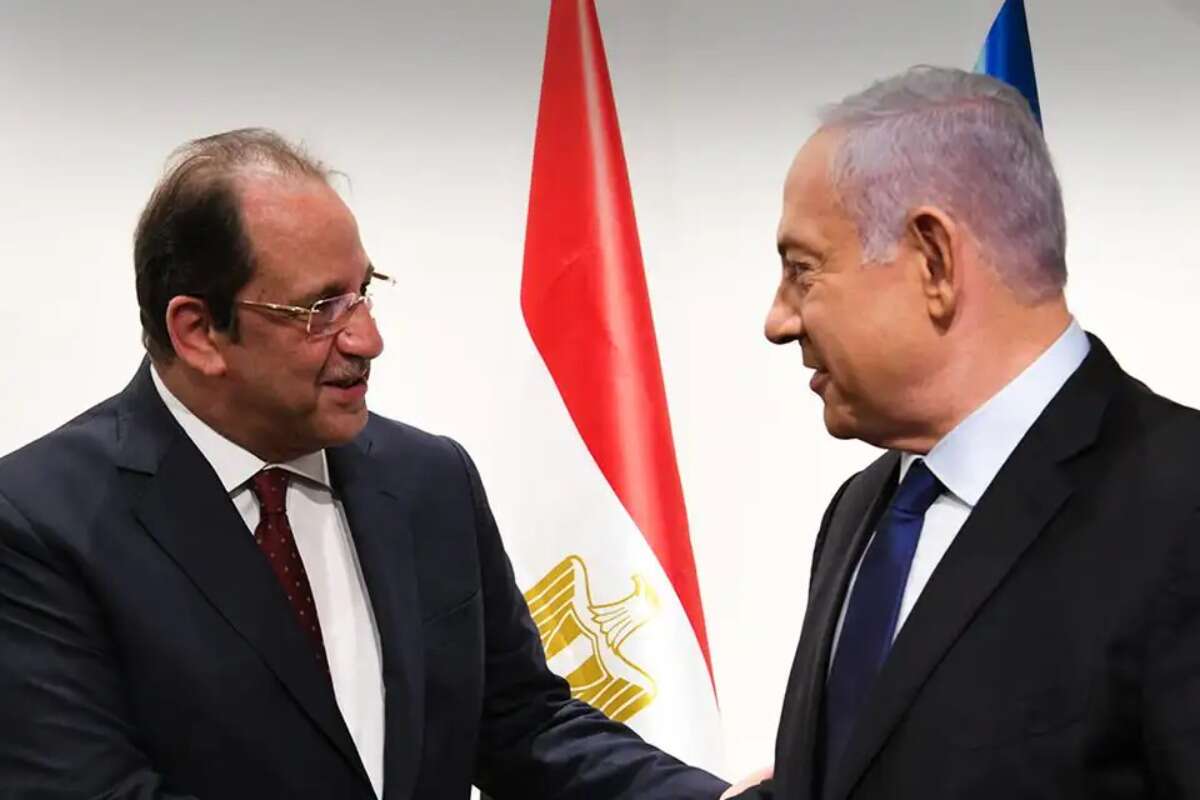
Prime Minister Benjamin Netanyahu's interview Tuesday evening on Channel 14's "The Patriots" brought back to the agenda one of the most critical questions regarding the period preceding the October 7 massacre. For months, the Prime Minister's Office and the National Security Council denied that Egyptian Intelligence Director Abbas Kamel's plane landed in Israel 11 days before the massacre, stayed on the ground for just over an hour, and that he met with a senior Israeli official to warn that Gaza was "on the verge of an explosion."
On Tuesday, Netanyahu changed his story. For the first time, he confirmed that Kamel, one of President Abdel-Fattah el-Sissi's closest confidants, was on the plane. "Kamel did not meet with me because I was at a memorial ceremony for IDF fallen soldiers," he said, adding, "Since when does an intelligence chief speak with a head of state? It has not happened to me once. There is no such thing. He will always come with someone." Later, Netanyahu demanded to know which senior Israeli official had met with Kamel. No one, it should be noted, claimed that the prime minister himself had met with him.
The aircraft that brought Kamel to Israel was an executive jet owned by the Egyptian charter company Smart Aviation. It landed at Ben-Gurion Airport on September 26, 2023, at 9:56 a.m., a week and a half before the massacre, and departed for Cairo at 11 a.m. Using a charter flight was not accidental: unlike a government or military aircraft, whose landing reveals that an official state representative is aboard, a private plane that can be leased by any business person allowed the delegation to maintain complete anonymity.
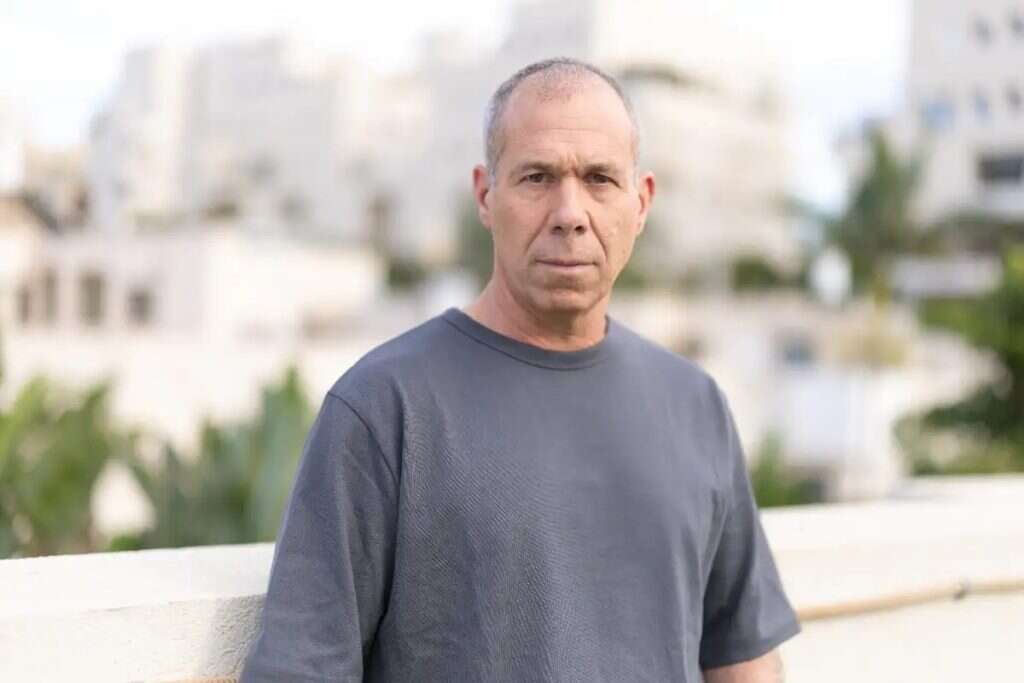
Netanyahu's admission comes after former military secretary Maj. Gen. Avi Gil stated in interviews with Channel 12 and Israel Hayom, "A plane belonging to Egyptian intelligence landed in Israel and remained here for a little over 60 minutes. That is a fact. Such a plane does not arrive for no reason."
At first glance, Netanyahu's statements on Tuesday evening could be viewed as a technical clarification, but their significance is far broader, raising several tough questions that remain unanswered.
Did Netanyahu not know?
According to Netanyahu's own account, the head of Egyptian intelligence landed in Israel, met with an Israeli official whose identity remains unknown to this day, and the prime minister does not know who that official was. It is difficult to understand how this is possible. An unusual event of this nature is typically brought to the attention of the entire senior leadership, precisely because of its sensitivity and the discreet work behind it: the landing, the aircraft's stay in an isolated area far from sight, and of course the sensitive intelligence Kamel conveyed during that meeting.
Did Netanyahu not remember?
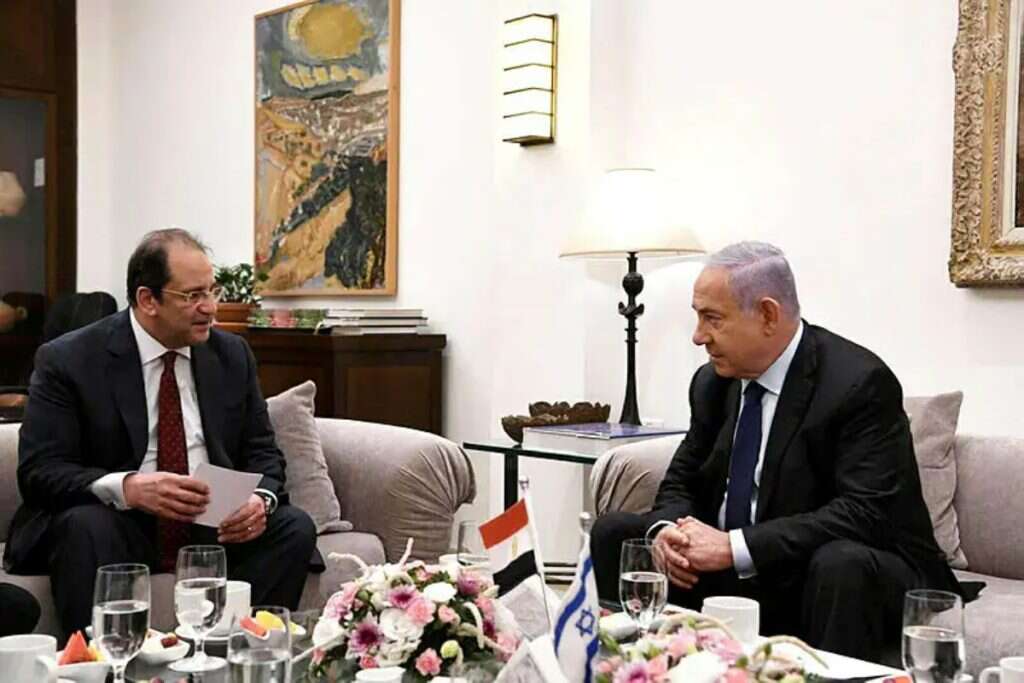
During the interview, Netanyahu asserted as a clear rule that an intelligence chief does not meet directly with a prime minister, and as far as he is concerned, it has never happened. However, in 2021, Netanyahu hosted that same Abbas Kamel at the official Prime Minister's Residence on Balfour Street in Jerusalem, and his office even distributed an official video of the meeting. At best, this points to a memory issue.

Even within the prime minister's camp, this is not denied. Speaker of the Knesset Amir Ohana, who was interviewed on Wednesday morning on the program "This Morning" on Kan Bet, tried to minimize the damage, saying, "Netanyahu said he did not meet Kamel on that day. He did not mean that he had never met Kamel; I think he made a mistake." Ohana assessed that Kamel met with one of the heads of the defense establishment, but admitted he did not have an answer, adding, "Netanyahu called to find out who met Kamel, but it is more important to know what happened in that meeting."
Who will take responsibility?
Now that Netanyahu has also been forced to admit that Kamel was in Israel less than two weeks before the massacre, Israeli citizens are entitled to answers: who met with him, what exact information did he deliver, to whom was the information passed, and what action was taken. Full answers to these questions will be obtained only when a state commission of inquiry is established to thoroughly examine the sequence of events in the period leading up to the massacre.