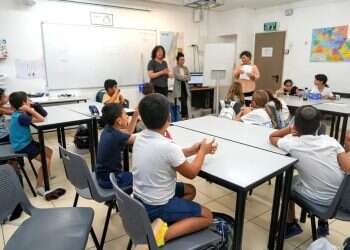
This story begins with an anecdote. The year was 2001, at the height of the Second Intifada, when Israel was reeling from a wave of terrorist attacks. At a time when Diaspora Jews increasingly viewed Israel as a dangerous place, Reichman University, then known as the Interdisciplinary Center Herzliya, decided to establish the Raphael Recanati International School, welcoming Jewish and non-Jewish students from around the world to study in Israel.
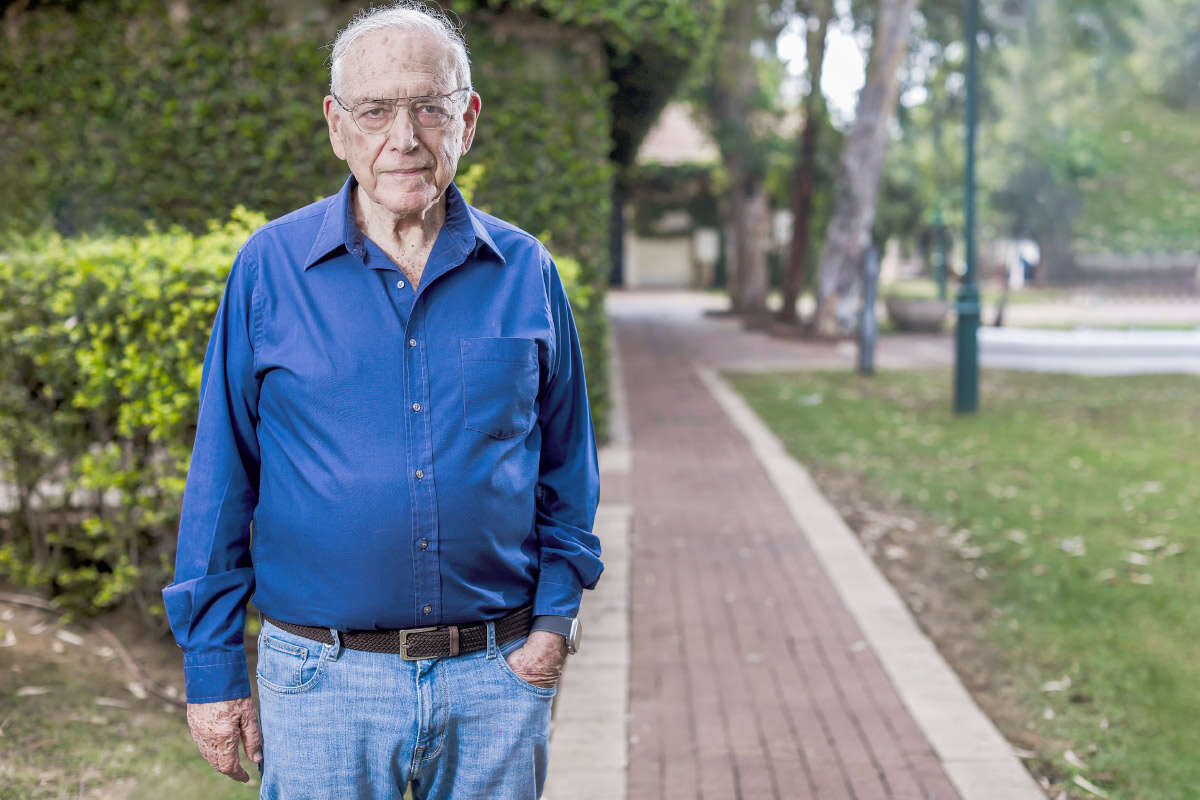
"We started with only about 20 Jewish students from a handful of countries. The situation was difficult, and there was a proposal to shut the program down," recalls Prof. Uriel Reichman, the university's founding president and chairman of its board of directors. But Reichman refused to give up. "I said, 'We're going to keep going.' Today, even with the war and after two rounds of fighting against Iran, we have 2,200 international students, most of them Jewish, from some 90 countries, out of a total student body of approximately 9,000."
How has Oct. 7 affected young Jews' willingness to come to Israel?
"We see that students continue to come, even when we're at war with Iran. Given the way things are developing, I expect the number of international students to reach 3,500 in the future. There has been a slight decline in enrollment at the international school compared with the previous year, but that could also be due to students moving between programs within the university."
Celebrating 25 years
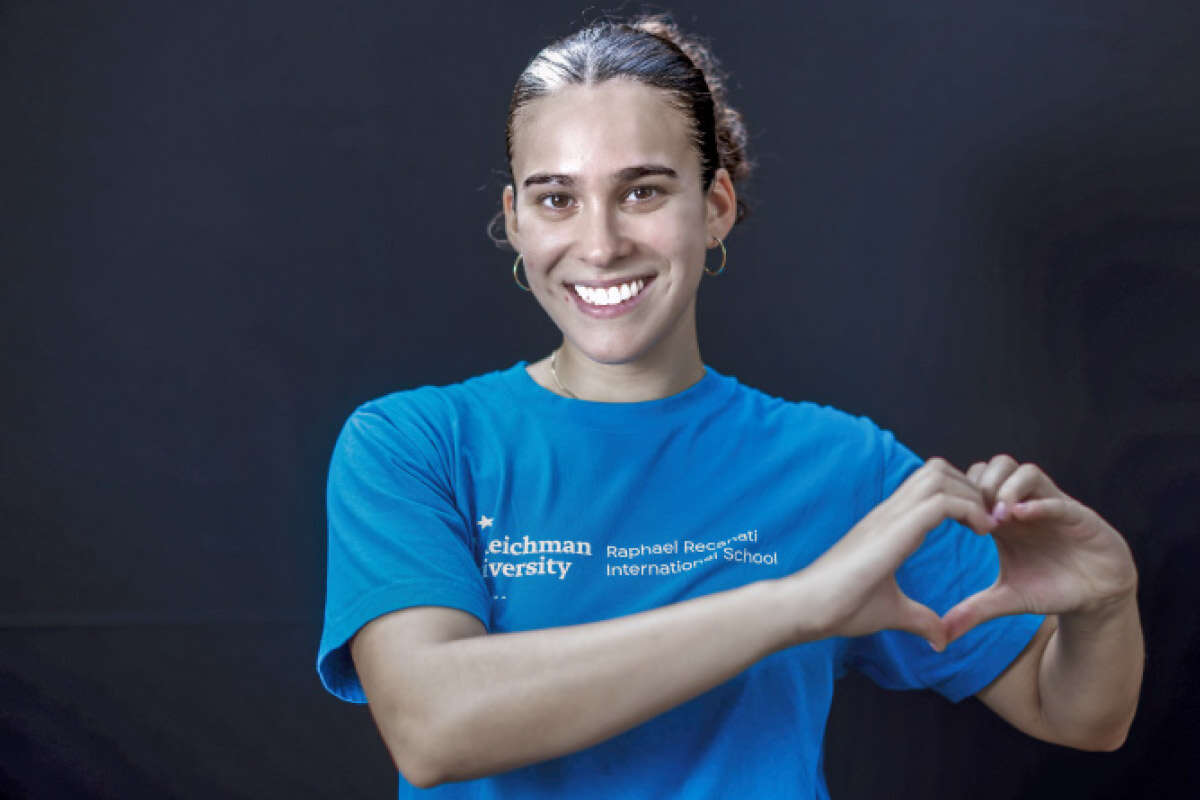
The Raphael Recanati International School at Reichman University is marking its 25th anniversary this year, and it, too, has felt the effects of the war. Some 300 of its students are lone soldiers, serving in the Israel Defense Forces without immediate family in the country, who took part in the Swords of Iron War that began after the Hamas-led Oct. 7, 2023, attack.
We visit the university on the opening day of orientation week for new students, including some who landed in Israel just days earlier.
"We are the university of the Jewish people," Reichman says. "In fact, we have the largest number of Jewish students from abroad of any university in Israel. They study in English what other students study in Hebrew. But they quickly form friendships, pick up the language and absorb the way of life by integrating with Israelis.
"This is the finest immigrant absorption center in the country. We help them navigate the bureaucracy, introduce them to Israel and take them on trips and educational tours to get to know the country, including visits to Sde Boker and David Ben-Gurion's grave, to strengthen their Zionist identity. We have communal Shabbat meals on Fridays, and most importantly, here they encounter some of the finest young Israelis, including male and female combat soldiers. They go out together, and genuine bonds develop. It's not always easy at first, but over time it becomes completely natural."
Reichman's Zionist educational project began in 1994 as a private college. After a long journey and numerous battles, without receiving a single shekel in government funding, a situation that continues to this day, the Council for Higher Education recognized the institution in 2021 as Israel's first private university. It now also has a medical school, with a science park planned for the near future.
"I founded a Zionist university," Reichman says. "I would never have embarked on such a crazy undertaking, without any public assistance whatsoever, if I hadn't seen it as a mission. I was born during the British Mandate and started first grade when the State of Israel was established in 1948. For me, the miracle of the Jewish people has always meant that we have a duty both to defend the country physically and to safeguard its values."
Do you think antisemitism and the treatment of Jews abroad will drive more students to study in Israel?
"Some come because of antisemitism, and I expect their numbers to continue growing. Ultimately, we offer a home where you can be Jewish, unlike at other academic institutions around the world."
Doesn't that risk effectively giving up on universities abroad and leaving them without Jewish representation?
"I wish we were in that position and the entire Jewish people would come here," he says with a smile. "There are still plenty of Jews in higher education institutions in the US, Europe and elsewhere. Some are suffering, but they stay and fight for Israel. Jewish students don't come to us only because of antisemitism. They were coming long before that, because they want a connection to Israel and the Jewish people. My greatest joy is seeing some of them fall in love with Israel, fall in love with each other, get married here and build a home."
Which is preferable: that they stay in Israel, or return to their countries of origin and serve as ambassadors for Israel?
"That's their choice. A large proportion, more than half in my estimation, make aliyah and settle here. Others return home, and those who do become ambassadors for Israel. They've been marked by the experience. They embody the Zionist ideal and defend Israel."
How concerned are you about the way Israel is perceived in academia worldwide?
"The process unfolding around the world against Israel could exact a terrible price on our ability to survive. This is a national problem of the highest order. Yes, there are issues at universities abroad involving joint research projects and similar matters, but those are secondary to the tragedy of how the masses, particularly young people, have been successfully brainwashed with anti-Israel messages. That's why the students who come to study here and then return to their home countries can make a difference. In the past, we engaged in public diplomacy here. Today, however, we're fighting for our very legitimacy and against the lies being spread about us. I'm not talking only about Gaza, but about our historical rights and the State of Israel's right to exist. That's the real challenge, and it's something we're working on even today."
Opening doors for wounded IDF veterans
Alongside these efforts, approximately 400 wounded IDF veterans are expected to study at Reichman University this year.
"When a disabled IDF veteran comes to us, even if they don't meet all the usual requirements, such as a high high-school matriculation average or a strong score on the psychometric entrance exam, I admit them so that they have a chance to rebuild their lives after being wounded," Reichman says. "My greatest dream is that this institution's DNA, its warm and personal relationship with students, will endure. I hope we never become so large that we lose that sense of intimacy and our ability to reach every individual."
The Raphael Recanati International School is headed by Jonathan Davis, Reichman University's vice president for external relations, who was himself a lone soldier and joined the institution 18 years ago.
"I have bad news for the producers of the film 'NAZA': Our students don't believe them," Davis says, referring to the British-produced documentary about Israeli military operations in Gaza. They come here because of their Zionist values. In my opinion, the film has actually led some people who didn't identify very strongly as Jews to embrace their Jewish identity. They're turning Jews into the underdogs. So our biggest challenge is actually to surround these students with 'total loving care,' to embrace them when they arrive, take care of all their needs and speak with their parents, so that they won't want to leave and go back abroad."
Students come from the US, Canada, Brazil, Argentina, Mexico, China, India, Italy, Spain, France and other countries.
"Right now, we're seeing a 10% increase in students from certain parts of Europe as a result of antisemitism there," Davis says. "It doesn't necessarily have to involve wearing a kippah. Sometimes it's a professor who singles you out and makes your life difficult simply because you're asking the wrong questions. Yes, there are missiles, the Houthis, Hezbollah operatives, Hamas terrorists and Iranians. And even though it's not always safe here, Jewish students feel safe."