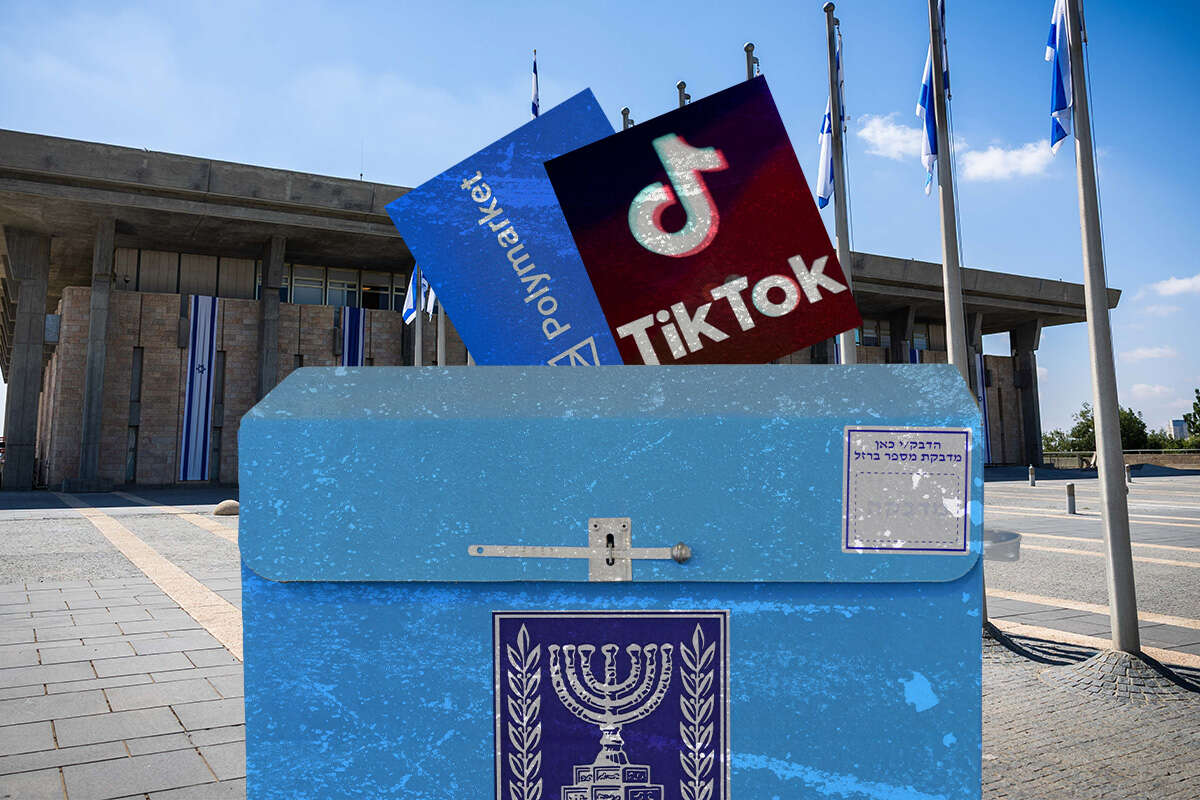
With just one week remaining until Israel's elections for the 26th Knesset, the Central Elections Committee issued a warning Tuesday to media outlets, polling firms and political parties, clarifying the restrictions on publishing election polls in the final days of the campaign.
In a letter obtained by Israel Hayom, Central Elections Committee Acting Director-General Dean Livne made clear that the restrictions apply to a wide range of platforms, including social media and direct communications with voters. The letter also stressed that anyone publishing figures from election betting platforms must include appropriate disclosures.
"The most sensitive stage"
"The days immediately preceding the opening of polling stations are the most sensitive stage of the election campaign, when many voters make their final decisions," the letter stated. The committee also warned that "publishing election poll results, particularly those of polls that do not use recognized statistical methods, could present the public with a misleading picture, improperly influence voters' free will and undermine the integrity of the elections."
Under the law, beginning Friday, Oct. 23, at 11:59 p.m. and continuing until polling stations close on Election Day, Oct. 27, publishing or broadcasting the results of election polls that have not previously been made public will be prohibited.

Anyone seeking to republish an earlier poll must prominently state that the findings are outdated and cannot be used to draw conclusions about voting patterns or public opinion at the time of publication. The ban applies to any poll conducted during the election campaign that examines voting intentions or issues directly related to the candidates, regardless of how the survey was conducted.
The committee emphasized that it makes no difference whether the poll was carried out through an online panel, text messages, electronic means or manual sampling. The restrictions are also not limited to traditional media outlets. They extend to websites, social media platforms and even direct communications with voters.
Polls and election betting platforms
The letter also specifically addresses the publication of figures from election betting platforms such as Polymarket. According to the committee, anyone publishing such figures must prominently disclose, alongside the results, that they are not based on recognized statistical methods and therefore cannot be used to draw conclusions about public opinion or voting patterns.
"Anyone who publishes, including at this time, the results of surveys that are not based on recognized statistical methods (including, for example, reporting on 'live' results from election betting platforms) must prominently state, alongside the results, that the figures do not constitute a survey based on recognized statistical methods," the letter stated.

The clarification is particularly significant given the growing use of Polymarket figures in political news coverage. Unlike conventional opinion polls, Polymarket's figures reflect prices in a betting market rather than the responses of a representative sample of voters. As a result, publishing these figures requires the explicit disclosure prescribed by law, along with additional information required when reporting such data.
At the end of the letter, Livne stressed: "Please ensure compliance with these provisions, which are intended to safeguard equality and voters' independent judgment. Violating these provisions may constitute a criminal offense."
Dramatic shifts
The warning follows a study published Monday by Israel Hayom, conducted by Prof. Moran Ofir of the University of Haifa and Prof. Joshua Mitts of Columbia University, which cautioned against relying on Polymarket predictions as an indication of candidates' electoral standing.
The study, based on an analysis of more than 1.24 million transactions, found that relatively small amounts of money could trigger dramatic changes in the probabilities displayed on the platform.
In one case, a purchase worth just $152 was enough to propel former IDF Chief of Staff Gadi Eisenkot to the top of Polymarket's election prediction rankings. In another, a $100,000 purchase pushed Prime Minister Benjamin Netanyahu's displayed probability of winning from 29.5% to 36%, before the effect dissipated within two hours.
The researchers warned that such fluctuations could create the misleading impression of a shift in political momentum, even when they do not necessarily reflect any change in voters' preferences.