Fluctuating voter turnout projections, particularly among Arab Israelis and right-wing voters, mean neither side can afford to declare victory just yet. Across the political spectrum, a fierce battle is underway for literally every vote, both within and between the rival blocs.
The numbers in the latest polls, published over the weekend, leave almost every scenario on the table, from a minority government to another round of elections. And if the politics of boycotts and political exclusion do not prevail, perhaps even a unity government.
The anti-Netanyahu bloc is preparing for three possible scenarios: a minority government supported by Ra'am, or made possible by the Arab party's abstention, if the bloc manages to maximize its vote and secure 56-57 seats in the 120-member Knesset; legislation targeting Prime Minister Benjamin Netanyahu; or, if the bloc wins fewer seats, another election.
Liberman's threats
In light of recent threats by Yisrael Beytenu Chairman Avigdor Liberman to oppose any government dependent on the votes of Arab MKs, another option is being considered: fast-tracking legislation targeting Netanyahu, either through a law barring politicians under criminal indictment from serving as prime minister or through legislation imposing term limits.
But such legislation would not necessarily pave the way for a new government. Instead, it could force former IDF Chief of Staff Gadi Eisenkot, whose Yashar party is leading in the polls, into another election he has no desire to contest.
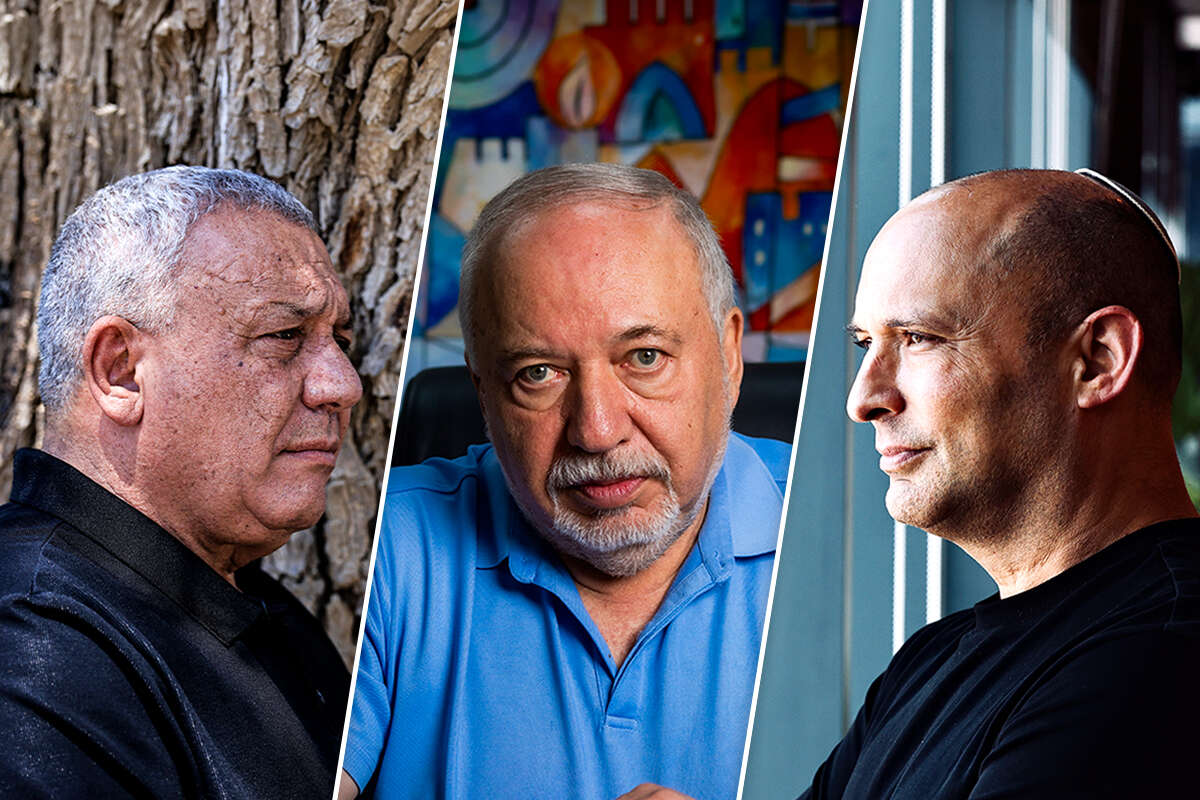
Apart from Liberman, who has ruled out a minority government, former Prime Minister Naftali Bennett, Eisenkot and, of course, Democrats leader Yair Golan have not ruled out the possibility. Some have even publicly expressed support for it.
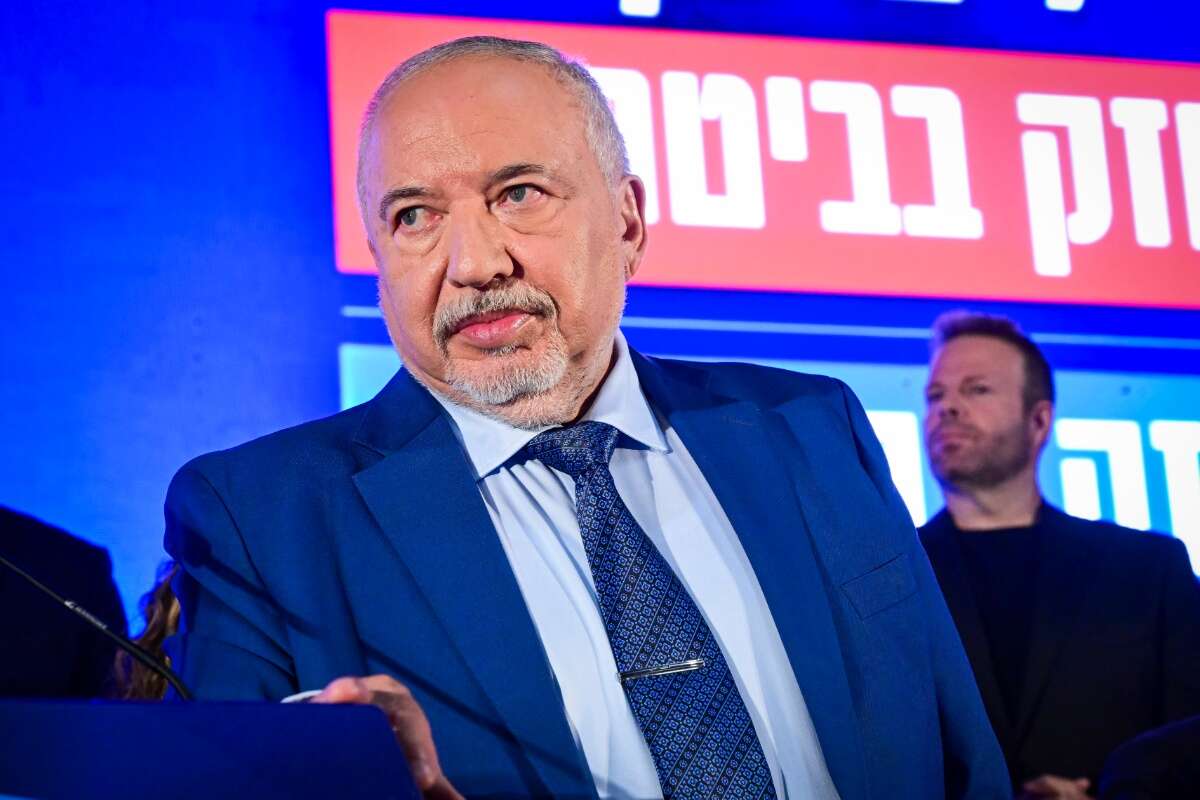
Liberman is the only figure in the bloc who speaks of securing 61 seats without the Arab parties. His prospective coalition partners, however, can also see that the numbers are nowhere near adding up. For now, that makes it a dream rather than a viable political strategy.
If Liberman does indeed dash hopes of forming a government backed by Ra'am, imposing a veto similar to the one he placed on a right-wing government after the 2019 election, Bennett and Eisenkot will experience firsthand the price of his insistence that his word is his bond.
The man who once dreamed of becoming prime minister in this election cycle appears unwilling to compromise along the way. Bennett and Eisenkot would then face just two choices: a unity government or another election.
At Tibi's mercy
It is worth noting that the right-wing bloc is not relying on the latest polling figures at all. Its leaders believe their potential electoral support is considerably higher than the surveys suggest. They see 61 seats as attainable, but their immediate objective is to prevent their opponents from assembling any viable coalition. Much will depend on whether right-wing voter turnout reaches its full potential, or comes close, as well as on the fortunes of smaller parties.
For example, if former IDF Brig. Gen. Ofer Winter's Amcha Yisrael party crosses the electoral threshold and the anti-Netanyahu bloc falls further below 57 seats, it would need the votes of MKs Ahmad Tibi and Yousef Jabareen to establish a government. Such an arrangement could be described as a minority government sustained by Arab MKs abstaining from key votes. In practice, however, the government's survival would depend on Tibi on a daily basis.
If the anti-Netanyahu bloc could not pass the regulations extending Israeli law to Israelis living in Judea and Samaria, or the Mimadim LeLimudim (From Uniforms to Studies) bill providing tuition assistance to former combat soldiers, what could such a government realistically accomplish?
And if the anti-Netanyahu bloc finds itself increasingly far from forming a government, Netanyahu's camp is not closing the door on a unity government with Eisenkot. Eisenkot's camp, for its part, rejects that possibility outright.
Still, post-election dynamics, security challenges and the limited options available to each political player could produce arrangements that none of them initially wanted. Just ask former Defense Minister Benny Gantz, or even Eisenkot himself, about the decisions they made after the Oct. 7, 2023, Hamas attack, when both joined Netanyahu's emergency wartime government.
Otherwise, a repeat of the 2019 political deadlock will not be confined to Avigdor Liberman. It will send the entire country back to the polls for yet another election, the consequence of rigid bloc politics that could leave at least some of today's political players on the sidelines next time.