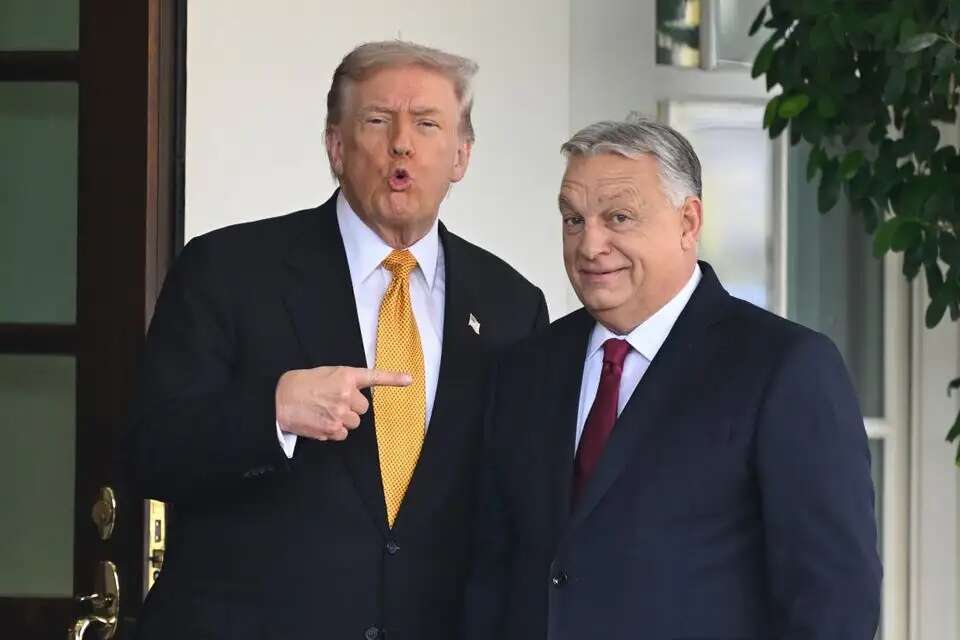
The Trump administration is pushing to install former Hungarian Prime Minister Viktor Orban as the next UN secretary-general, potentially as a joint candidate backed by the US, Russia and China, The Wall Street Journal revealed in an editorial published Sunday. Although no final decision has been made, the initiative could reshape the race to succeed Antonio Guterres, whose term ends on Dec. 31.
According to The Wall Street Journal, which cited sources in three countries, the proposal originated in Washington, where US officials approached Orban and encouraged him to run. Based on earlier discussions with Moscow and Beijing, administration officials believe Russia and China would support the move.
In turn, Orban has expressed interest but is reluctant to enter the race unless he is convinced he has a realistic chance of winning. He declined to comment to The Wall Street Journal.

A State Department official estimated that Orban could secure eight votes on the Security Council relatively easily, with 10 votes potentially within reach. A candidate needs the support of at least nine of the council's 15 members to secure its recommendation, without a veto from any of the five permanent members. Even if the US, Russia and China back Orban , Britain and France could still block his appointment. The Security Council's recommendation must then be approved by the UN General Assembly.
Administration officials see Orban as a candidate whose views align closely with the Make America Great Again (MAGA) movement, particularly his opposition to mass immigration and willingness to confront liberal institutions and organizations. According to the report, President Donald Trump and Vice President JD Vance are expected to support Orban if he enters the race, although any announcement would likely come after the US midterm elections in November.
The initiative comes amid a deadlock in the race for the UN's top job. Rebeca Grynspan, the Jewish candidate from Costa Rica, has led the informal straw polls conducted by the Security Council. In the latest round, however, she and every other candidate received at least two negative votes from permanent council members, signaling potential vetoes that have prevented the selection process from moving forward.
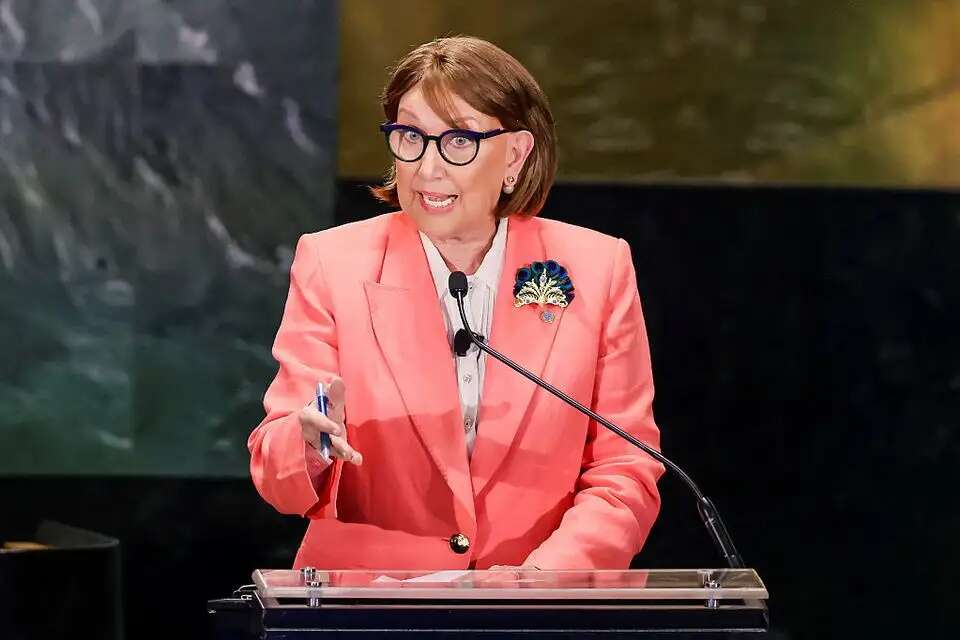
Meanwhile, Lana Nusseibeh, an Emirati diplomat who served as her country's ambassador to the UN for more than a decade, entered the race last week.
Nusseibeh, who has Palestinian roots, has consistently defended the United Arab Emirates' normalization agreement with Israel, while also working to advance humanitarian assistance for Palestinians in Gaza. During the UAE's term on the Security Council, she was sharply critical of Israel's conduct during the war. Her candidacy has already secured the backing of all six Gulf states and the Palestinians.
An Israeli official familiar with the matter told Israel Hayom: "We have good relations (with the Emiratis), but at the same time, she represents something (the Arab and Muslim voice), and we need to see where the Americans stand. We'll speak with them in the coming days."
The official added: "It would be interesting to know what understandings they've reached with the Americans and the Russians. It looks like they're trying to make a move."
Despite her extensive diplomatic experience, Nusseibeh faces scrutiny over allegations that the UAE has supported Sudan's Rapid Support Forces, a paramilitary group that UN investigative bodies and the Trump and Biden administrations have linked to war crimes and crimes against humanity. The US has also determined that members of the Rapid Support Forces and allied militias committed genocide. The UAE denies allegations that it has supported the group.
Nusseibeh is expected to face questions from UN General Assembly member states on Tuesday as part of the selection process for the next secretary-general. The Security Council is scheduled to hold its next straw poll on Wednesday.