How does a slip of paper placed in an envelope turn into a seat in the Knesset? What is the Bader-Ofer Law, and how does it affect political parties? How many new voters are joining the voting pool Tuesday, and how do they break down by community and city? This full guide to election day also covers voting by IDF soldiers and citizens abroad, invalid ballots and the votes lost in the previous election, and examines what the numbers suggest about the expected results.
How many votes does one seat require?
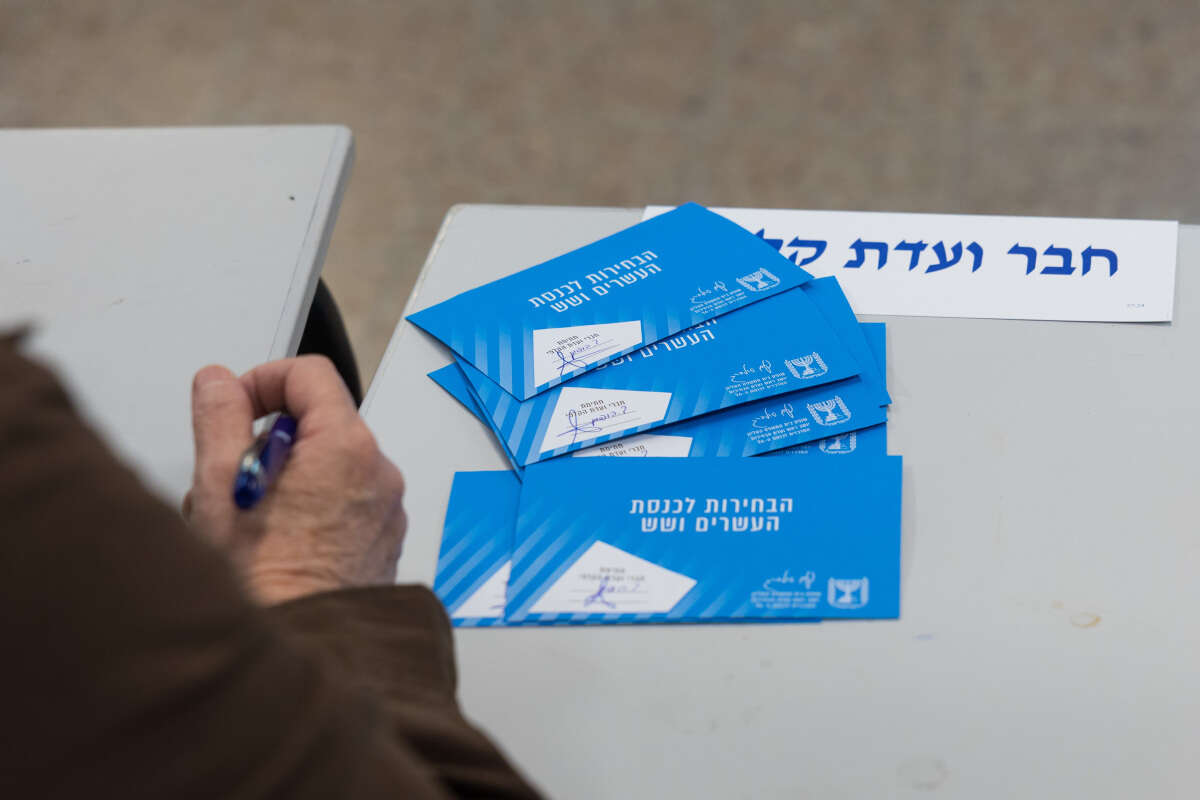
Picture the Knesset as a hall with 120 seats. Each seat is called a mandate, and every party receives a number of seats based on its proportional share of the public vote.
The calculation begins once all the ballots at the polling stations are counted and the invalid votes, along with the votes of parties that failed to clear the required minimum threshold, are subtracted. The total valid votes cast for parties that cleared the threshold are then divided by 120, and the result is called the general quotient, which is essentially the vote "price" of a single seat in the Knesset.
This number isn't known in advance, since it depends on how many people turn out to vote and how many votes go to parties that end up winning representation. For example, if 4.5 million valid votes go to parties that clear the threshold, each seat would be worth about 37,500 votes. In the 2022 election, the figure stood at 36,227 votes per seat.
The electoral threshold
Not every party that runs in an election can enter the Knesset. The law sets an electoral threshold (the minimum vote share needed to win a seat), under which a party must receive at least 3.25% of the total valid votes to gain representation.
In the previous election, a party needed at least 154,855 votes to clear that bar. Votes cast for parties that fail to clear the threshold are not counted in the seat allocation and effectively go unrepresented. Every election also produces invalid ballots, including blank slips, scribbled slips, envelopes containing ballots for several different parties, or damaged envelopes. These invalid votes are subtracted at the very start of the count and are not factored into the threshold calculation or the seat allocation. Tens of thousands of ballots are disqualified in every election. In the 2009 election, for instance, more than 43,000 votes were disqualified.
The Bader-Ofer Law
After the initial allocation, a handful of seats almost always remain undistributed, because parties rarely win a number of votes that divides evenly into the quotient.
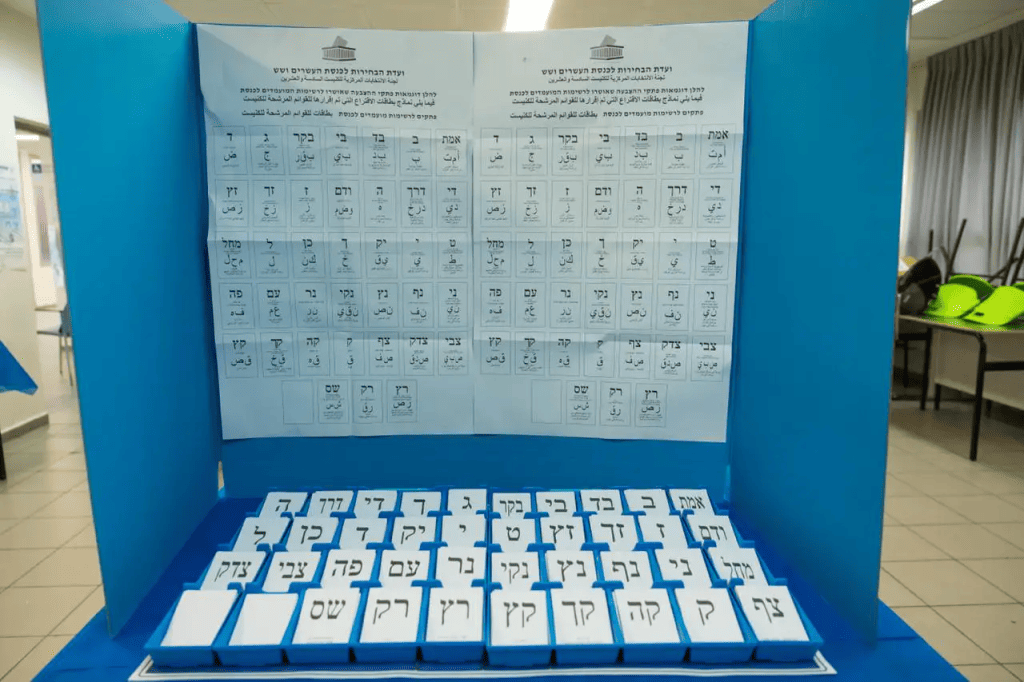
This is where the Bader-Ofer Law comes in, named for Knesset members Yohanan Bader and Avraham Ofer, who enacted it in 1973. The method examines which parties would pay the highest price in votes for each additional seat. The formula calculates, for every party, its total vote count divided by the number of seats it has already won, plus one.
The party with the highest result from that calculation receives the remaining seat. The law gives a certain advantage to larger parties, which is why parties use surplus vote agreements. Such an agreement allows two parties that cleared the electoral threshold to combine their surplus votes for the purposes of the calculation, increasing the chances that one of them wins an additional seat.
Breakdown of new voters
The current election cycle is marked by a significant increase in the number of eligible voters. Roughly 7.3 million eligible voters are currently registered in the voter rolls, of whom about 6.5 million actually reside in Israel, reflecting growth of about 5.4% since November 2022.
The wave of new voters, ages 18 to 22, casting a ballot for the first time in their lives, numbers about 595,000 young people, making up roughly 8.7% of all voters. By community, the ultra-Orthodox public is the main driver of that growth, with about 105,000 new voters, meaning one in every six ultra-Orthodox voters is a first-time voter. The Arab community has about 118,000 new voters. Women make up a slight majority of new voters, at 50.9%. Geographically, Jerusalem leads with about 60,000 new voters, followed by Tel Aviv with about 20,000 and Bnei Brak with about 19,000.
IDF soldiers, citizens abroad and double envelopes
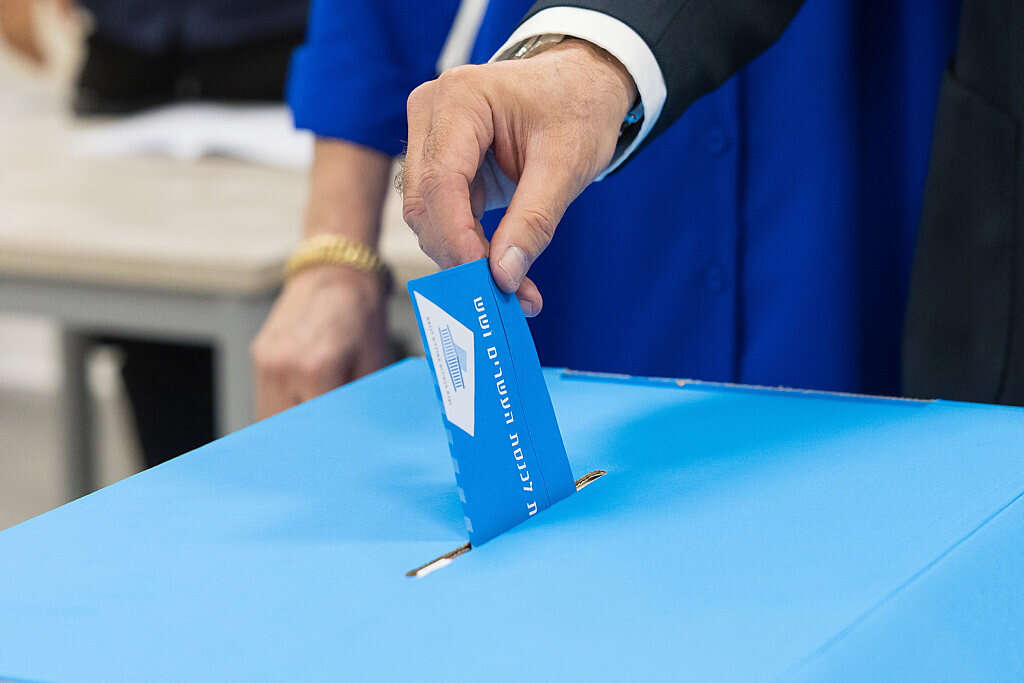
A central issue on election day is how groups that cannot reach a regular polling station cast their ballots. About 4,800 emissaries and state employees abroad voted at polling stations opened by the Central Elections Committee at roughly 100 diplomatic missions around the world.
Still, between 500,000 and 800,000 citizens listed in the voter rolls live abroad permanently and cannot vote from where they live unless they travel to Israel in person. Among IDF soldiers and their commanders, voting is spread over several days at more than 850 military polling stations, about a quarter of them mobile, with the goal of reaching every soldier at bases and in combat zones. All voters casting ballots away from their home polling station use a double-envelope system. The ballot goes into an anonymous inner envelope, which is then placed inside an outer envelope bearing the voter's identifying details. The envelopes are transferred to the Central Elections Committee and are counted only after it is confirmed that the citizen did not also vote at their home polling station.
What we learned and what to expect
In the 2022 election for the 25th Knesset, voter turnout stood at 70.6%. One of the most dramatic phenomena of that election was the burning of votes that fell below the electoral threshold.
Meretz (a left-wing party) received 150,793 votes, falling short of clearing the threshold by only about 4,000 votes. Balad (an Arab nationalist party) received about 138,600 votes and also fell short. Hundreds of thousands of votes never translated into seats, and that loss helped the right-wing bloc win 64 seats.
In Tuesday's election, the increase in the number of eligible voters is expected to raise the electoral threshold to between roughly 167,000 and 178,000 votes, depending on turnout. With many small parties hovering right around that bar, there is a risk of burned votes on the scale of several seats, and that could tip the balance between the blocs once again.