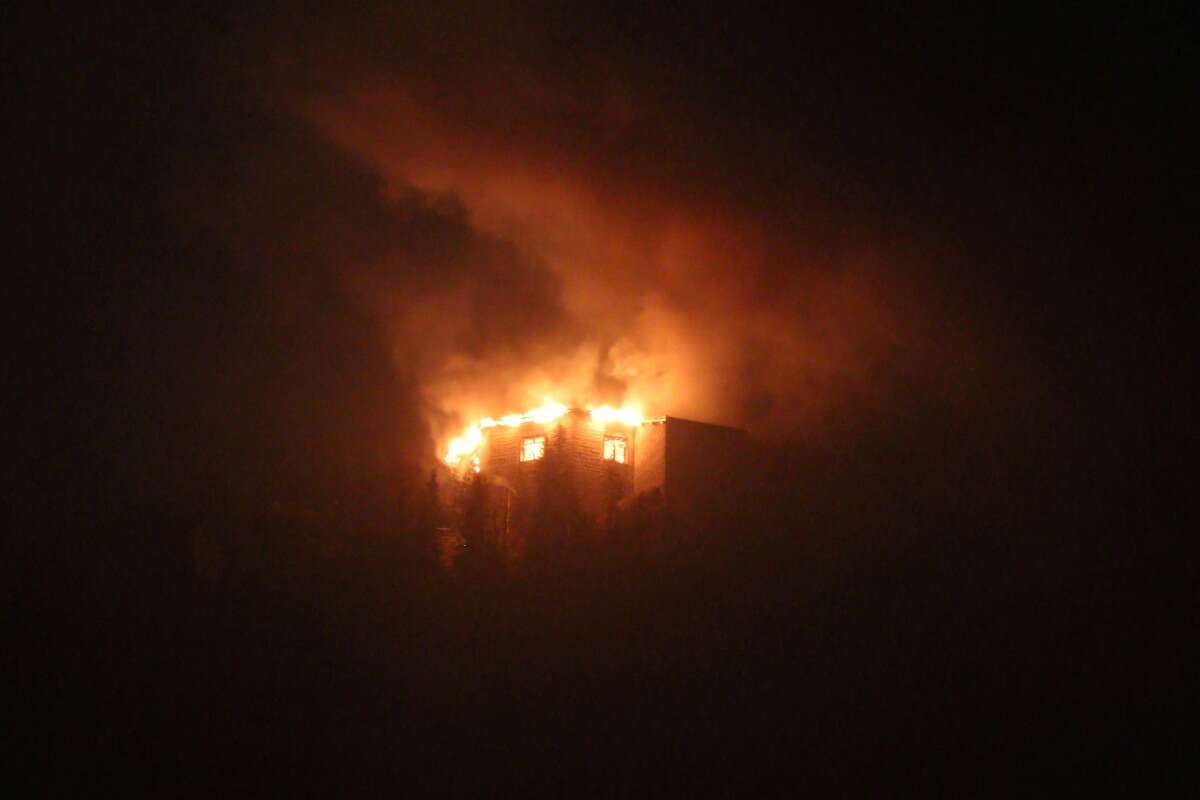
Arson is suspected in the October fire that destroyed Adolf Hitler's Eagle's Nest, a rare surviving relic of the dictatorship, The Guardian reported.
Some 200 firefighters battled the flames overnight on 23 October, yet only scorched remains are left of the remain of the Alpine lodge, 1,834 meters (about 6,000 feet) above sea level, once a tourist draw and memorial site. The site is shut until further notice.
Authorities suspect a 33-year-old with a history of mental illness of starting the fire deliberately.
"Even if a British air force bomb had struck the building on 25 April 1945, as it did most of the other structures in what was then the 'Führer's no-go zone' on the Obersalzberg near Berchtesgaden, Hitler's former tea house … could scarcely have been more severely damaged than it was by the fire," the Munich daily Süddeutsche stated. Markus Blume, Bavaria's culture minister, has promised an expert commission to decide the site's future, and he said, "any reconstruction must do justice to this historical responsibility".
Nazi-era historian Felix Bohr detailed the cost of the project. "The prestige project and the road leading to it cost about 30 million Reichsmarks, equivalent to about 130 million British pounds today," he said. "Hitler loved architecture that made other people look small. He insisted on being involved in the planning and construction of propaganda buildings."
Sven Keller, who directs the Obersalzberg Documentation Centre, described the site's role under Hitler. "Important decisions about prosecution and crime, about war and genocide were taken there," he said. "The surrounding mountain scenery was used as a backdrop for the construction of Hitler's 'Führer' image. It offered spectacular, awe-inspiring views, and demonstrated technical prowess to subjugate even this rough natural environment."
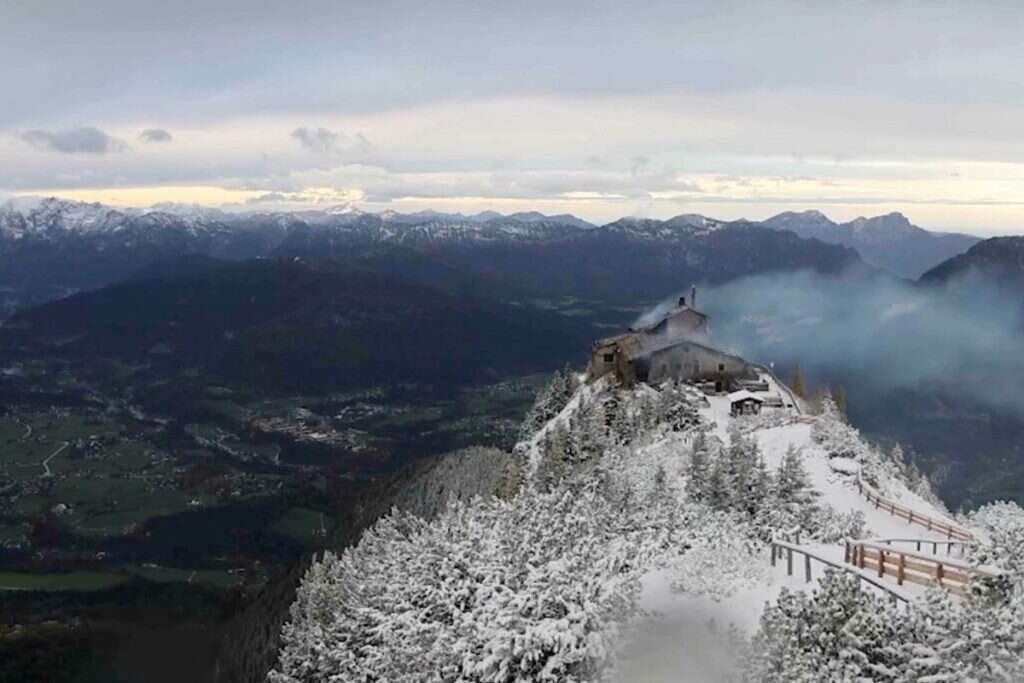
After the war, trees were planted over the Berghof's remains. "The Americans and the Bavarian state tried to prevent it from becoming a pilgrimage site for old Nazis and Hitler admirers. It didn't work. If anything, a hidden site in the woods is even more interesting and mysterious," Keller said. Carved swastikas were frequently discovered in the bark of the trees.
"Public accessibility creates transparency whereas barriers or fences encourage rumors and legends," Keller noted. "Today, a popular public trail crosses the site, and mundane activities such as hiking keep it from becoming a sacred space (for neo-Nazis)."
Keller said transparency should guide the way forward. "I cannot imagine that those responsible would opt for [a] simple reproduction of Nazi architecture, but it also can't be left as a ruin – those tend to be even more fascinating," he said. "Instead, we should find ways to integrate the material remains and new information and education, showing the temporal layers, including the use as a tourist destination since the 1950s. The fire added a new layer to the history to Obersalzberg, and this should be visible too."
He added that the far-right Alternative for Germany (AfD) and the Freedom Party, both leading national polls in Germany and Austria, must be considered.
Bohr, by contrast, opposes any rebuilding, stating, "Hitler's megalomania should remain a ruin. My suggestion would be to secure the remaining structure as far as possible and to use it to convey the history of the site," he said. "Particularly in view of the strength of the AfD and the rise of right-wing extremism in Germany, the focus should be on coming to terms with Nazi ideology, not on restoring its stage sets."