Israel Hayom is a media organization founded on the belief that the Israeli public deserves better journalism—more balanced, more accurate, and more reliable. Journalism that speaks rather than shouts. Journalism that is trustworthy, objective, and matter-of-fact. A different kind of journalism, offered free of charge.
The first print edition was published on July 30, 2007, and in 2010 Israel Hayom became the Israeli newspaper with the highest weekday readership. The newspaper’s publisher is Dr. Miriam Adelson. Its Editor-in-Chief is Omar Lachmanovitch, and its founding editor is Amos Regev.
Israel Hayom’s Hebrew and English websites, as well as its Android and iOS applications, provide around-the-clock news coverage, exclusive content, breaking news and updates, analysis and commentary, video, podcasts, and live broadcasts.
The digital platforms of Israel Hayom include news and opinion channels covering culture and entertainment, lifestyle, technology, sports, business and consumer affairs, health, military affairs, food, Judaism, tourism, and automobiles.
In 2021, a new Hebrew-language website and mobile application were launched to provide users with a fast, up-to-date, secure, and convenient experience.
The content of the newspaper’s print edition is also available online through a daily digital edition and can be received via newsletter.
“The Israel Hayom Clique,” the publication’s exclusive benefits club, offers website users discounts and special promotions on products and services.
Israel Hayom welcomes feedback, criticism, and suggestions for improvement from its readers. You can contact the organization by email at hayom@israelhayom.co.il
Exile is not only a punishment but also a correction. Many times, leaving it does not happen kindly, but as a flight. In our dialogue with the world, we present our immense contribution to humanity, and we almost always receive Laban’s eternal answer to Jacob: “all that you see is mine” (Genesis 31:43). And then comes the timeless call to return home. Reflections for the weekly Torah portion “Vayetse Jacob”.
After the fall of the Assad regime, Israel moved quickly and ordered the IDF to take control of the buffer zone on the Syrian Golan Heights. Over the past year, IDF forces have thwarted Hamas-directed cells, Islamic State-inspired cells and cells guided by Iranian emissaries. The operation is also shaping developments inside Syria that directly affect Israel’s long-term strategic interests.
Echoing the rhetoric of Poland’s far-right nationalist camp, Rose declared that suggesting Poles had any role in the Shoah was “a grotesque falsehood and the equivalent of a blood libel against the Polish people and Polish nation.”
Anyone expecting Hezbollah to raise a white flag and surrender does not understand the terrorist organization. The desire to respond to the killing of its chief of staff certainly exists, but its need for quiet is stronger, and that need is shaping its policy.
More than a year after the pager attack, the Middle East's geopolitical map has been redrawn. Iran in a precarious position as it grapples with internal crises and the potential for an overwhelming Israeli response to any provocation.
It is no longer a question of whether Iran plans to interfere in Israel’s elections, but a working assumption. Iran is expected to exploit Israel’s upcoming vote to deepen internal divisions and undermine political stability, a serious threat Israel is not prepared for.
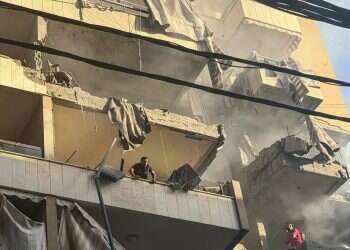
The strike in Beirut’s Dahiyeh against Hezbollah’s chief of staff is clear evidence of the terrorist organization’s distress. Now, after the targeted killing, a debate has erupted within its leadership: risk a response, or hold back?
The IDF is stretched across Gaza, Lebanon and the West Bank while Tehran rebuilds arsenal, yet ministers are focused on granting the Haredim a waiver from conscription.
Khamenei is growing more confident, calling Israel a “cancerous growth that must be removed,” while reports of Iran rebuilding its military capabilities continue to multiply, yet all of this masks a profound internal crisis.