Israel Hayom is a media organization founded on the belief that the Israeli public deserves better journalism—more balanced, more accurate, and more reliable. Journalism that speaks rather than shouts. Journalism that is trustworthy, objective, and matter-of-fact. A different kind of journalism, offered free of charge. The first print edition was published on July 30, 2007, and in 2010 Israel Hayom became the Israeli newspaper with the highest weekday readership. The newspaper’s publisher is Dr. Miriam Adelson. Its Editor-in-Chief is Omar Lachmanovitch, and its founding editor is Amos Regev. Israel Hayom’s Hebrew and English websites, as well as its Android and iOS applications, provide around-the-clock news coverage, exclusive content, breaking news and updates, analysis and commentary, video, podcasts, and live broadcasts. The digital platforms of Israel Hayom include news and opinion channels covering culture and entertainment, lifestyle, technology, sports, business and consumer affairs, health, military affairs, food, Judaism, tourism, and automobiles. In 2021, a new Hebrew-language website and mobile application were launched to provide users with a fast, up-to-date, secure, and convenient experience. The content of the newspaper’s print edition is also available online through a daily digital edition and can be received via newsletter. “The Israel Hayom Clique,” the publication’s exclusive benefits club, offers website users discounts and special promotions on products and services. Israel Hayom welcomes feedback, criticism, and suggestions for improvement from its readers. You can contact the organization by email at hayom@israelhayom.co.il

Sunday Jul 19, 2026
NEWSLETTER
www.israelhayom.com
  • Home
  • News
    • Israel
    • Israel at War
    • Middle East
    • United States
  • Opinions
  • Jewish World
    • Archaeology
    • Antisemitism
  • Lifestyle
    • Food
    • Travel
    • Fashion
    • Culture
  • Magazine
    • Feature
    • Analysis
    • Explainer
  • In Memoriam
www.israelhayom.com
  • Home
  • News
    • Israel
    • Israel at War
    • Middle East
    • United States
  • Opinions
  • Jewish World
    • Archaeology
    • Antisemitism
  • Lifestyle
    • Food
    • Travel
    • Fashion
    • Culture
  • Magazine
    • Feature
    • Analysis
    • Explainer
  • In Memoriam
www.israelhayom.com
Home Commentary

Hezbollah is cornered, and Israel knows it

The strike in Beirut's Dahiyeh against Hezbollah's chief of staff is clear evidence of the terrorist organization's distress. Hezbollah has tried to mollify its base, which suffered heavy losses during the war, promote a narrative of victory and sacrifice, and provide financial compensation to those harmed. As part of this effort, Hezbollah's senior leadership chose to absorb Israeli attacks. Now, after the targeted killing, a debate has erupted within the leadership: risk a response or hold back?

by  Dr. Yossi Mansharof
Published on  11-24-2025 00:29
Last modified: 11-24-2025 00:30
Hezbollah is cornered, and Israel knows it

The strike in the Dahiyeh district – the target killed in Lebanon was Hezbollah’s No. 2. Photo: AFP

Share on FacebookShare on Twitter

The surgical strike in Beirut's Dahiyeh against Hezbollah's chief of staff, Haytham 'Ali Tabataba'i, is unmistakable proof of the pressure facing the terrorist organization. Since the elimination of most members of the Jihad Council, Hezbollah's equivalent of a general staff, including the killing of Hassan Nasrallah and the top levels of the terrorist organization's military command, Hezbollah has attempted to set in motion a period of regrowth and rebuilding.

As part of that process, the terrorist organization sought to calm its social base, which was severely harmed during the war and has signaled bitterness and fatigue. Given the base's vital importance as Hezbollah's source of manpower and electoral support, the terrorist organization pushed a narrative of victory and sacrifice. It also provided financial compensation, with Iranian assistance, to families whose homes were destroyed or who were forced to flee in fear of the war.
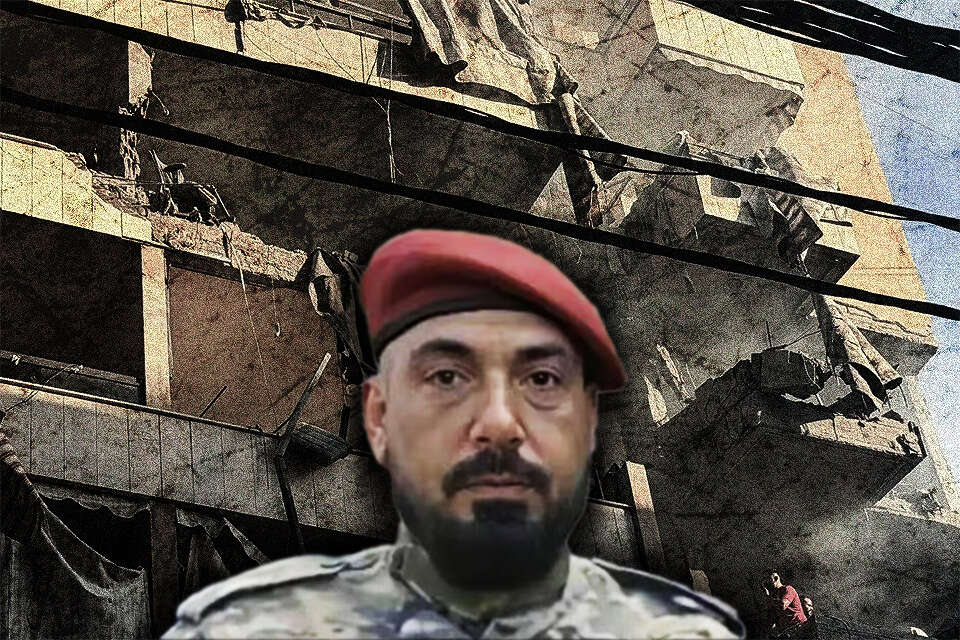
Ali Tabatabai against the background of the attack on Beirut. Photo: AFP

At the same time, Hezbollah launched an intensive reconstruction project, aided by smuggling from Iran and relying on local production capabilities. Since the end of the war, the terrorist organization has conducted an internal investigation to identify the sources of the leaks that enabled Israel's deep penetration into its ranks. It has also begun a reorganization process to adapt to the new reality of its confrontation with Israel and has recruited new operatives.

For that reason, in an effort to emerge from the historic crisis caused by the war, Hezbollah's leadership, headed by Secretary-General Naim Qassem, chose to contain Israel's attacks, despite the resentment and unrest this policy generated among field commanders. Lebanon's new political climate, including signs of a state revival and a desire to limit the consequences of the war to end Iranian domination in the country, also influenced the terrorist organization's decision to adopt a containment strategy.

The killing of Tabataba'i comes at a moment when Hezbollah faces a complex equation. If the terrorist organization chooses to retaliate against Israel, it risks losing the gains it has achieved since the cease-fire and playing into the hands of Jerusalem, where leaders are eager to intensify Israeli strikes. On the other hand, failing to respond would project significant weakness, damage Hezbollah's image in Lebanon, and could even spark early signs of internal rebellion within the organization.

Hezbollah flags against the backdrop of destruction in Lebanon. Photo: AFP AFP

It is also difficult to envision Tehran rushing to Hezbollah's aid and reentering direct confrontation with Israel. In addition to its multiple domestic crises, including a crisis of legitimacy, water and energy shortages, and deep economic distress, Iran is now troubled by the decision of the International Atomic Energy Agency's Board of Governors. The decision requires Iran to update the agency on its uranium stockpile and on the facilities struck during Operation Am Clavi. As occurred days before the start of the 12-day war, this could serve Israel as a tool to build legitimacy for renewing its campaign against Iran.

The Houthis, even if they join the confrontation alongside Hezbollah, cannot provide the necessary backing against Israel. Hamas and Islamic Jihad, given their current state, are also not interested in renewing fighting in the Gaza Strip. Hezbollah's potential isolation on the battlefield will likely shape the organization's decision regarding the scope of its response.

For these reasons, and particularly due to internal pressures within the terrorist organization, it appears Hezbollah will choose to engage in several limited days of fighting, if Tabataba'i was indeed killed. This would allow its field ranks to vent frustration and respond to Israel's attacks. After absorbing the expected Israeli blow, Hezbollah will likely resume its reconstruction process.

Tags: HezbollahIranIsrael

Related Posts

A reckless gamble on Ahmadinejad demands a state inquiryReuters

A reckless gamble on Ahmadinejad demands a state inquiry

by Danny Citrinowicz

The Mossad fantasy of installing a puppet in Tehran and partnering with Kurdish militias collapsed under geopolitical realities, leaving Israel...

Regime feels economic squeeze as talks to end war stall

Iran's threats against Trump must be taken seriously

by Dr. Yossi Mansharof

Western observers tend to dismiss the new supreme leader’s threats as mere rhetoric. In reality, revenge is an ideological imperative...

Trump expected to announce Turkey's return to F-35 program

Trump's F-35 deal with Erdoğan threatens Israel, but could also strengthen it

by Zvika Haimovich

All signs indicate that the sale of F-35 fighter jets to Turkey will go ahead. While Trump’s move could eventually...

Menu

Analysis 

Archaeology

Blogpost

Business & Finance

Culture

Exclusive

Explainer

Environment


Features

Health

In Brief

Jewish World

Judea and Samaria

Lifestyle

Cyber & Internet

Sports


Diplomacy 

Iran & The Gulf

Gaza Strip

Politics

Shopping

Terms of use

Privacy Policy

Submissions

Contact Us

About Us

The first issue of Israel Hayom appeared on July 30, 2007. Israel Hayom was founded on the belief that the Israeli public deserves better, more balanced and more accurate journalism. Journalism that speaks, not shouts. Journalism of a different kind. And free of charge.

All rights reserved to Israel Hayom

Hosted by sPD.co.il

  • Home
  • News
    • Israel at War
    • Israel
    • United States
    • Middle East
    • Sports
  • Opinions
  • Jewish World
    • Archaeology
    • Antisemitism
  • Lifestyle
    • Food
    • Travel
    • Fashion
    • Culture
  • Magazine
    • Feature
    • Analysis
    • Explainer
    • Environment & Wildlife
    • Health & Wellness
  • In Memoriam
  • Subscribe to Newsletter
  • Submit your opinion
  • Terms and conditions

All rights reserved to Israel Hayom

Hosted by sPD.co.il

Newsletter

[contact-form-7 id=”508379″ html_id=”isrh_form_Newsletter_en” title=”newsletter_subscribe”]

  • Home
  • News
    • Israel at War
    • Israel
    • United States
    • Middle East
    • Sports
  • Opinions
  • Jewish World
    • Archaeology
    • Antisemitism
  • Lifestyle
    • Food
    • Travel
    • Fashion
    • Culture
  • Magazine
    • Feature
    • Analysis
    • Explainer
    • Environment & Wildlife
    • Health & Wellness
  • In Memoriam
  • Subscribe to Newsletter
  • Submit your opinion
  • Terms and conditions

All rights reserved to Israel Hayom

Hosted by sPD.co.il