Israel Hayom is a media organization founded on the belief that the Israeli public deserves better journalism—more balanced, more accurate, and more reliable. Journalism that speaks rather than shouts. Journalism that is trustworthy, objective, and matter-of-fact. A different kind of journalism, offered free of charge.
The first print edition was published on July 30, 2007, and in 2010 Israel Hayom became the Israeli newspaper with the highest weekday readership. The newspaper’s publisher is Dr. Miriam Adelson. Its Editor-in-Chief is Omar Lachmanovitch, and its founding editor is Amos Regev.
Israel Hayom’s Hebrew and English websites, as well as its Android and iOS applications, provide around-the-clock news coverage, exclusive content, breaking news and updates, analysis and commentary, video, podcasts, and live broadcasts.
The digital platforms of Israel Hayom include news and opinion channels covering culture and entertainment, lifestyle, technology, sports, business and consumer affairs, health, military affairs, food, Judaism, tourism, and automobiles.
In 2021, a new Hebrew-language website and mobile application were launched to provide users with a fast, up-to-date, secure, and convenient experience.
The content of the newspaper’s print edition is also available online through a daily digital edition and can be received via newsletter.
“The Israel Hayom Clique,” the publication’s exclusive benefits club, offers website users discounts and special promotions on products and services.
Israel Hayom welcomes feedback, criticism, and suggestions for improvement from its readers. You can contact the organization by email at hayom@israelhayom.co.il
On the sukkah in the Diaspora and in the Land of Israel; on Jewish existence in a world once again trembling; on the fallen sukkah of David that has hovered over us for a long moment and risen; and on the great spirit that has awakened and will not return empty-handed.
Trump, undeniably one of Israel’s greatest allies in history who has stood by Israel in the most challenging times against the entire world, but in collaboration with Steve Witkoff, perceives Gaza as a venue for a deal, not necessarily a dangerous minefield. Both are real estate professionals who operate on the belief that when an asset declines, one merely needs to purchase it at a low price, refurbish it, and sell it for a profit. This mindset, however, is ill-suited for the Middle East.
Should the new peace plan fail, the blame should be placed squarely on Hamas. Netanyahu acted properly when he granted request to halt attacks in Gaza. The bottom line is that success was and remains dependent on implementation.
The American plan to end the war succeeded in drawing both sides to Cairo but will likely end with only a partial deal. Israel’s assumption that rejecting the proposal would grant legitimacy to continue fighting has fallen flat. The terrorist organization, Hamas, intends to toss the burning issues into a futile process, while mediators try to impose their own reality.
Reporters and commentators have had to eat their hats before the studio lights even dimmed, following the dizzying U-turns in President Donald Trump’s statements. Yet despite everything, Israel remains adamant that when the moment of truth comes, Trump will stand by its side and deliver.
The deal to end the war in Gaza could be interpreted in Tehran as an overarching strategic move directed against the Islamic Republic. Internal pressure on Iran’s Supreme Leader Ali Khamenei to launch a surprise attack on Israel may now intensify.
Hamas views President Trump’s proposal as a "surrender plan," but it risks regional isolation and would legitimize a continuation of the war. With every senior commander eliminated, the idea of running Gaza behind the scenes "in the day after" is losing relevance.
For the first time in nearly two years, a plan has been developed by President Trump's administration that has won support from Arab states and Israel.
To move forward, the prime minister will need to convince his ministers that his acceptance of the American proposal is merely lip service meant to buy time and secure political maneuvering. Meanwhile, Israel’s future military control of Gaza remains unclear.
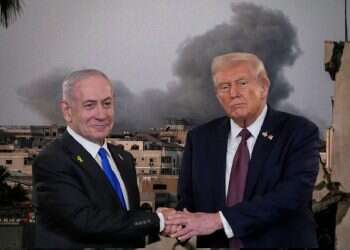
The agreement reached at the Trump-Netanyahu meeting may not be perfect, but it is one Israel can live with. The real challenge lies in implementation. Will Hamas agree to the deal and release our hostages? Will it truly disarm? Will it refrain from returning to power? While the declaration of the war’s end is stirring, hard battles may still lie ahead.