Israel Hayom is a media organization founded on the belief that the Israeli public deserves better journalism—more balanced, more accurate, and more reliable. Journalism that speaks rather than shouts. Journalism that is trustworthy, objective, and matter-of-fact. A different kind of journalism, offered free of charge.
The first print edition was published on July 30, 2007, and in 2010 Israel Hayom became the Israeli newspaper with the highest weekday readership. The newspaper’s publisher is Dr. Miriam Adelson. Its Editor-in-Chief is Omar Lachmanovitch, and its founding editor is Amos Regev.
Israel Hayom’s Hebrew and English websites, as well as its Android and iOS applications, provide around-the-clock news coverage, exclusive content, breaking news and updates, analysis and commentary, video, podcasts, and live broadcasts.
The digital platforms of Israel Hayom include news and opinion channels covering culture and entertainment, lifestyle, technology, sports, business and consumer affairs, health, military affairs, food, Judaism, tourism, and automobiles.
In 2021, a new Hebrew-language website and mobile application were launched to provide users with a fast, up-to-date, secure, and convenient experience.
The content of the newspaper’s print edition is also available online through a daily digital edition and can be received via newsletter.
“The Israel Hayom Clique,” the publication’s exclusive benefits club, offers website users discounts and special promotions on products and services.
Israel Hayom welcomes feedback, criticism, and suggestions for improvement from its readers. You can contact the organization by email at hayom@israelhayom.co.il
There is power in ancient tradition to lift our gaze from the complex present and challenges of war to an eternal perspective • Once again we begin anew the cycle of Torah reading and learn how to read history • 10 comments on Genesis.
US Secretary of State Antony Blinken has arrived in the region, seemingly in a last attempt by Washington to achieve a comprehensive ceasefire before the US elections. However, given that Israel has yet to respond to Iran's ballistic missile attack and the drone strike aimed at the Prime Minister's private residence in Caesarea, the chances of success seem slim.
Sources reveal that Israel and the US orchestrated sanctions offensive as alternative to military strikes, cutting Tehran's oil revenue by 40 billion USD.
Beyond disrupting Hezbollah's financing and destabilizing its military operations, the Israeli strikes on Al-Qard al-Hasan aim to break the financial dependence of Lebanese citizens on the terror organization.
The catastrophic failure preceding the Oct. 7 massacre was the billions squandered on a fence that crumbled against thousands of terrorists infiltrating Israel.
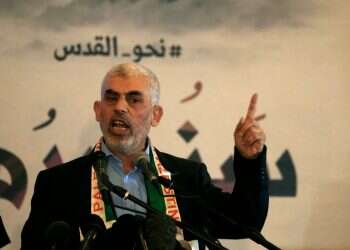
The atrocities witnessed in southern Israel a year ago – the cold-blooded murder of infants, women, and the elderly, beheadings, rape of women and corpses, and other unspeakable acts – were merely a fraction of what was planned. Sinwar and Hamas's meticulously crafted strategy aimed at Israel's complete annihilation within a mere two years.
Unlike other issues, such as the future of Hamas and its leadership or the fate of Gaza and its residents, the hostage situation allows no time for deliberation. It is painfully evident that the captives are dying in captivity, and Sinwar's elimination potentially exacerbates their risk. Israel must prioritize their safe return – the war's primary objective – before becoming entangled in other matters and fronts.
Hezbollah’s terror empire was built right under UNIFIL’s nose along Israel’s border; UNIFIL knew about it and did nothing. Everyone heard the sounds of tunnel digging and knew about the weapons stored in civilian homes in villages facing Israel.