1. Europe and Germany
The "Old Continent," or more precisely, the European Union, is currently divided into two main camps: Germany and the Eastern European countries on one side, and on the other, Western European countries led by France, Spain, and Italy. Germany's traditional support for Israel is understandable, rooted in historical reasons; the country has undergone a process of self-reckoning with the horrors of the Holocaust and fully grasps the significance of Iran's "Ring of Fire" surrounding Israel. It also understands the moral obligation to break Iran's stranglehold. This week, German Foreign Minister Annalena Baerbock made statements that must be resonated throughout the West: "…we have made it clear time and again that self-defense means, of course, not only attacking terrorists, but also destroying them. This's why I have made it so clear that when Hamas terrorists hide behind people, behind schools, then we end up in very difficult waters. But we're not shying away from this. This is why I made it clear at the United Nations that civilian sites could lose their protected status if terrorists abuse this status. That's what Germany stands for – and that's what we mean when we refer to Israel's security."
2. Italy and our war
In contrast to Germany's moral clarity, Italy has never viewed its fascist and Nazi past as a subject that imposes any special obligation toward the State of Israel. Italians affirm Israel's right to defend itself, but these declarations are meaningless. Since Israel's establishment, history has changed: Jews defend themselves without asking for permission from anyone. Italy should have adopted the German minister's stance and declared too that Israel has the right to eliminate terrorists and their strongholds, even when they use civilians as human shields. Instead, Italy halted the supply of spare parts for weapons it had sold to us, claiming that such sales violate Italian law, which prohibits arms trade in conflict zones. Yet this did not stop them from supplying weapons to Ukraine. Moreover, Hamas is officially recognized as a terrorist organization by the Italian government, meaning this is not a conflict with a sovereign state but with a Nazi-like organization. Italy also opposed Israel's entry into Rafah. Worse yet, last week, following the attack on a UNIFIL post that Hezbollah was hiding behind, Italian Defense Minister Guido Crosetto declared that this could constitute a "war crimes," no less!
3. Italy at the UN
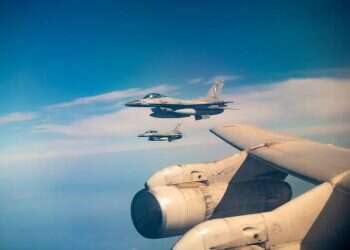
Israel provides Italy with more in terms of security than it receives – both openly and through intelligence sharing. In June 2021, for the first time, Israeli F-35 jets left Israel for a three-week joint exercise with the Italian Air Force (with the British and American air forces joining for a few days). At exactly the same time, Italy abstained from voting against a UN Human Rights Council resolution to establish a commission to investigate "war crimes" during Operation Guardian of the Walls (May 6-21, 2021). Before the vote, I asked the Italian Foreign Minister at the time to vote against it, as Italy was well aware of the truth and of exactly what kind of organization Hamas is. It didn't help. So, I went to the media and said that by abstaining from a moral vote against the resolution, Italy had declared that Israel and Hamas were one and the same. These remarks forced the Italians to defend themselves, but regardless such modes of action are part of a longstanding policy.
Since 2015, the UN has voted on 155 resolutions against Israel (for comparison: in that time, there have been 8 resolutions against Iran and 9 against North Korea). What role has Italy played in this theatre of the absurd? It has voted 110 times against Israel and abstained 40 times; only twice has it voted with us (those two instances occurred early in Giorgia Meloni's term as Prime Minister, following two years of meetings with her when she was in opposition, where we demonstrated the disproportionate nature of Italy's stance towards Israel. But soon enough, she reverted to traditional policy).
4. UNIFIL
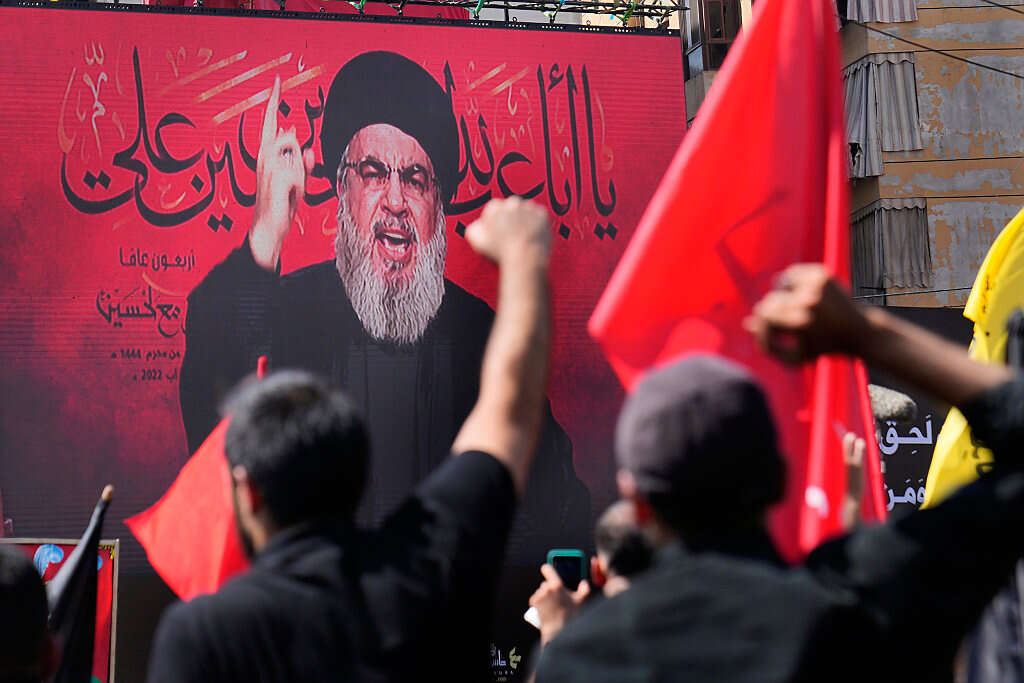
A brouhaha is currently ongoing in Italy because Israel targeted a UNIFIL post (no Italian soldiers were harmed). I worked in the past with the Italian contingent's commanders. Italy spends about half a billion euros (!) annually on its presence in Lebanon. I understood from the commanders on the ground what I had already known from my sources in Israel, that their presence is symbolic, as they never had the ability to enforce UN policy on the terrorist organizations. Hezbollah didn't allow them access to suspect sites or to carry out enforcement actions without prior coordination. Hezbollah's terror empire was built right under UNIFIL's nose along Israel's border; UNIFIL knew about it and did nothing. Everyone heard the sounds of tunnel digging and knew about the weapons stored in civilian homes in villages facing Israel. Had Hezbollah decided to invade Israel on October 7, 2023, alongside Hamas, they would have done so unimpeded by UNIFIL. The plan was to conquer the Galilee, massacre thousands of Israelis, and take hostages to tunnels in Lebanon. What would Italy have done in the event that this scenario had materialized – no doubt, it would have once again talked about "Israel's right to defend itself."
A significant part of public opinion in Italy has adopted an anti-Israel stance during the war. The fact is that Israel hasn't invested in public diplomacy in Europe in general, and in Italy in particular. Even the 47-minute horror film of Hamas' barbarism on October 7 was shown to only a handful of people, instead of being screened at large events for politicians, journalists, and social influencers in Rome, as well as in the South and North. It's not too late to turn the trend.
There have been rumors that Italy is willing to participate in a new peace-keeping force in Gaza to be established after the war. Unbelievable. A key lesson from this war and its causes is that Israel must not rely on foreign forces to safeguard its security, neither in the North nor the South. Let us remember the prophet Isaiah in the 8th century BCE, who taught that in matters concerning our existence, we must not rely on others but only on ourselves and on our God: "Then I looked, but there was none to help; I stared, but there was none to aid – So My own arm wrought the triumph, And My own rage was My aid."
5. Sukkot
The past year has further deepened the historical significance of the State of Israel for the Jewish people and for the world. Throughout history, after every pogrom we experienced, all we could do the next day was flee or hide. In contrast, on October 8, we rose from the ashes of our communities and fought back. In truth, we did so already on October 7. The war in the South and North against the forces of global evil that sought to annihilate us is proof of a profound change in history. Jews are no longer willing to be victims, even if that costs us the sympathy of the world. We have returned home, and we do not intend to allow anyone to treat us in the way the world has grown accustomed to over the past two thousand years.
The walls of a sukkah are merely symbolic. They cannot physically protect those dwelling within. In the Diaspora, it was dangerous to make this temporary dwelling one that we would stay in for the duration of the holiday. Only in Israel can we truly live in our Sukkot, because the IDF protects the walls of the state, thereby rebuilding the fallen "Sukkah of David." In the Zohar, the sukkah is called the Tzila deMeheimnuta, the "shade of faith," a protective shield for our people as they walk through the valley of the shadow of death among nations and peoples, through destruction and redemption, and even in times of war. In modern terms, this "shade of faith" is our identity, whose strength protects us. In this sense, the sukkah is also a symbol of our true national freedom. I once told Jews in Italy that when you enter a sukkah abroad, for a moment, you step into the Land of Israel.