Israel Hayom is a media organization founded on the belief that the Israeli public deserves better journalism—more balanced, more accurate, and more reliable. Journalism that speaks rather than shouts. Journalism that is trustworthy, objective, and matter-of-fact. A different kind of journalism, offered free of charge.
The first print edition was published on July 30, 2007, and in 2010 Israel Hayom became the Israeli newspaper with the highest weekday readership. The newspaper’s publisher is Dr. Miriam Adelson. Its Editor-in-Chief is Omar Lachmanovitch, and its founding editor is Amos Regev.
Israel Hayom’s Hebrew and English websites, as well as its Android and iOS applications, provide around-the-clock news coverage, exclusive content, breaking news and updates, analysis and commentary, video, podcasts, and live broadcasts.
The digital platforms of Israel Hayom include news and opinion channels covering culture and entertainment, lifestyle, technology, sports, business and consumer affairs, health, military affairs, food, Judaism, tourism, and automobiles.
In 2021, a new Hebrew-language website and mobile application were launched to provide users with a fast, up-to-date, secure, and convenient experience.
The content of the newspaper’s print edition is also available online through a daily digital edition and can be received via newsletter.
“The Israel Hayom Clique,” the publication’s exclusive benefits club, offers website users discounts and special promotions on products and services.
Israel Hayom welcomes feedback, criticism, and suggestions for improvement from its readers. You can contact the organization by email at hayom@israelhayom.co.il
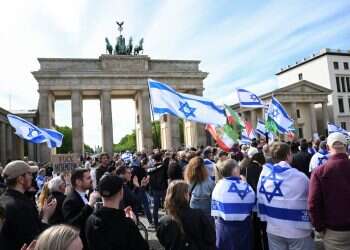
Israel's image in the world has tanked during the Gaza war, but how is Western and global public opinion responding to the current war between Israel and Iran? We asked AI platforms and got some interesting insights.
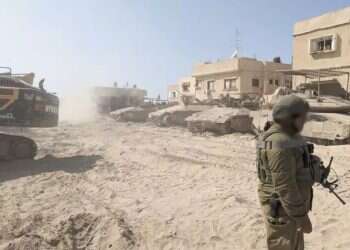
With improved intelligence and advanced drones, the IDF is breaking into the main arteries of Hamas’s tunnel network. An Israel Hayom correspondent joined the 7th Brigade forces in Khan Younis to hear how doctrine has changed and what has made underground warfare more effective.
Behind stunning views from the newly captured peak of Mount Hermon, lies the real mission: stopping the next October 7. Israel Hayom got to see the new reality on the northern border – just 12 miles from Damascus.
Israel’s public diplomacy is in a state of crisis, lacking a leader for over a year, with a critically understaffed team and responsibilities scattered across various government bodies. Despite substantial funding, the Foreign Ministry has not fully utilized its budget to counter the flood of hostile global propaganda. The outcome is a dangerously slow and fragmented response system, leaving Israel without a unified voice or clear strategy in the battle for international perception.
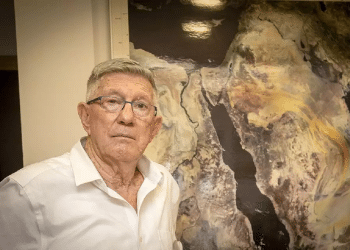
Eli Sharabi, who returned from 491 days in the hell of Gaza, is often asked how he manages to get up each morning. Now, in a special interview marking the release of his new book, Captured, he tells Israel Hayom: "The sorrow will follow me everywhere, but alongside my life, not instead of it."
Many differences explain the gap between the IDF's situation in the northern theater and in the strip – geography, Israel's goal, the political situation and of course the hostage issue. But victory is still possible in Gaza too, and it depends mainly on us.
The intelligence gaps, the notion that Yemen was a "secondary front", a warning that Israel would be next, which went ignored, and the missile that was uncovered just before October 7 - while Israel was focused on Hamas and Iran, the Houthi threat was growing. What's the solution? Military force alone may not suffice.
The apparent elimination of Muhammad Sinwar has left Hamas virtually leaderless and paved the way for a fierce power struggle over Gaza. More than 15 different organizations may compete to fill the vacuum after the war ends, and Israel should start paying attention.
Five months after the IDF decided to implement profound changes to exposure procedures for soldiers and career service members as part of the lessons learned from October 7 and the war that followed, it appears the military is struggling to enforce its information security policy, especially on social media.
In an exclusive interview, MEMRI president Yigal Carmon claims Qatar funds terrorism while mediating hostage deals and accuses Netanyahu of fearing confrontation with the Gulf state.