Israel Hayom is a media organization founded on the belief that the Israeli public deserves better journalism—more balanced, more accurate, and more reliable. Journalism that speaks rather than shouts. Journalism that is trustworthy, objective, and matter-of-fact. A different kind of journalism, offered free of charge.
The first print edition was published on July 30, 2007, and in 2010 Israel Hayom became the Israeli newspaper with the highest weekday readership. The newspaper’s publisher is Dr. Miriam Adelson. Its Editor-in-Chief is Omar Lachmanovitch, and its founding editor is Amos Regev.
Israel Hayom’s Hebrew and English websites, as well as its Android and iOS applications, provide around-the-clock news coverage, exclusive content, breaking news and updates, analysis and commentary, video, podcasts, and live broadcasts.
The digital platforms of Israel Hayom include news and opinion channels covering culture and entertainment, lifestyle, technology, sports, business and consumer affairs, health, military affairs, food, Judaism, tourism, and automobiles.
In 2021, a new Hebrew-language website and mobile application were launched to provide users with a fast, up-to-date, secure, and convenient experience.
The content of the newspaper’s print edition is also available online through a daily digital edition and can be received via newsletter.
“The Israel Hayom Clique,” the publication’s exclusive benefits club, offers website users discounts and special promotions on products and services.
Israel Hayom welcomes feedback, criticism, and suggestions for improvement from its readers. You can contact the organization by email at hayom@israelhayom.co.il
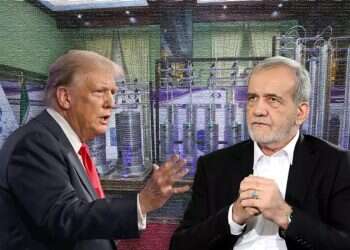
A confusing weekend in the Gulf saw Iranian Foreign Minister Abbas Araghchi declare the Strait of Hormuz open, US President Donald Trump celebrate on Truth Social, and then Iran's Islamic Revolutionary Guard Corps opened fire at tankers. While the US president is threatening that "we'll have to start bombing again," Tehran is weighing a proposal to release $20 billion in exchange for giving up its uranium. The clock is ticking, with Trump's ultimatum expiring on Wednesday.
Tehran claims the US violated the ceasefire and is demanding “security fees” for passage. At the same time, reports say the US military is preparing to seize Iranian tankers in international waters. President Donald Trump’s ultimatum expires on Wednesday.
Diplomatic sources familiar with the negotiations say the breakthrough came after Iran’s economic distress intensified under the American blockade. In exchange for reopening the strait, the US will unfreeze $20 billion in funds belonging to the Iranian regime. On the nuclear issue, Iran will be allowed to keep civilian facilities under full supervision and above ground.
Israeli and US officials say a fundamental change in Israel’s northern neighbor will be possible only if the regime in Iran stops supporting Hezbollah, an option that does not appear to be on the horizon.
According to the US president, the ceasefire will last 10 days, while the sides continue efforts to achieve "lasting peace." Trump says he will invite Prime Minister Benjamin Netanyahu and Lebanese President Joseph Aoun to the White House for "the first meaningful talks between Israel and Lebanon since 1983."
A source in Tehran told Reuters that Pakistani army chief Field Marshal Asim Munir’s visit to Iran helped bridge some of the differences between the sides. Major disputes remain, however, particularly over the nuclear issue.
In Jerusalem, officials are not ruling out a halt to strikes deep inside the Land of the Cedars. At the same time, the IDF is expected to continue operating with relative freedom in the Litani River area. For now, even ministers remain confused after a cabinet meeting in which they did not receive an answer from Prime Minister Benjamin Netanyahu.
The next meeting is expected to take place as early as next week in Washington, with the sides preparing to map out the main issues, led by borders and civilian matters. Lebanon wants to avoid damage to civilian infrastructure, while Israel has made clear it will continue to act against any target that helps Hezbollah. The negotiations are later expected to step up, with the goal of reaching a broader agreement between the two countries.
After Netanyahu, whom he called “the butcher of Gaza,” said the Turkish president was “slaughtering the Kurds,” the Turkish leader responded: “They dare to slander our country through our Kurdish brothers without looking at the blood of 73,000 Gazans.”
Lebanese sources told Al-Diyar, a newspaper affiliated with Hezbollah, that the talks stalled because of Israel's insistence on holding diplomatic contacts while the fighting in Lebanon continued.