Israel Hayom is a media organization founded on the belief that the Israeli public deserves better journalism—more balanced, more accurate, and more reliable. Journalism that speaks rather than shouts. Journalism that is trustworthy, objective, and matter-of-fact. A different kind of journalism, offered free of charge.
The first print edition was published on July 30, 2007, and in 2010 Israel Hayom became the Israeli newspaper with the highest weekday readership. The newspaper’s publisher is Dr. Miriam Adelson. Its Editor-in-Chief is Omar Lachmanovitch, and its founding editor is Amos Regev.
Israel Hayom’s Hebrew and English websites, as well as its Android and iOS applications, provide around-the-clock news coverage, exclusive content, breaking news and updates, analysis and commentary, video, podcasts, and live broadcasts.
The digital platforms of Israel Hayom include news and opinion channels covering culture and entertainment, lifestyle, technology, sports, business and consumer affairs, health, military affairs, food, Judaism, tourism, and automobiles.
In 2021, a new Hebrew-language website and mobile application were launched to provide users with a fast, up-to-date, secure, and convenient experience.
The content of the newspaper’s print edition is also available online through a daily digital edition and can be received via newsletter.
“The Israel Hayom Clique,” the publication’s exclusive benefits club, offers website users discounts and special promotions on products and services.
Israel Hayom welcomes feedback, criticism, and suggestions for improvement from its readers. You can contact the organization by email at hayom@israelhayom.co.il
A senior Israeli official told Al Arabiya there are assessments indicating Hezbollah has managed to smuggle hundreds of short-range rockets from Syria into Lebanon, adding that if Hezbollah’s weapons are not dismantled, another strike on Beirut's Dahieh district, a Hezbollah stronghold, is on the table.
A multinational force is set to deploy along the “yellow line” as a buffer between IDF troops and Hamas terrorists. The US is mapping out the designated buffer zone in a way that would leave Israel in control of key strategic points.
A gas-cylinder filling plant caught fire and exploded in an industrial zone near a main road in the southern Iranian city of Shiraz, shaking the entire area. According to Iranian state media, only two people sustained light injuries.
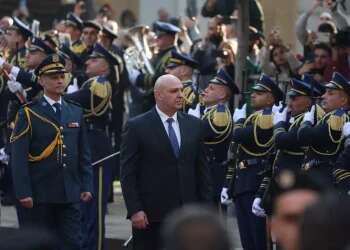
Joseph Aoun says Beirut is ready for negotiations to end the Israeli presence in the southern Lebanon, but claims Israel has answered the offer with intensified strikes amid mounting civilian casualties since the ceasefire began.
An American initiative to “encourage Hezbollah to disarm” has been shelved, and officials in Washington now conclude that “preserving the status quo will leave Lebanon a failed state.”
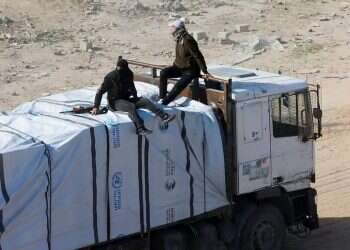
Washington plans to deploy a multinational force in Gaza, including Palestinian "police" units trained abroad, yet Arab states refuse to join without Hamas’ full disarmament.
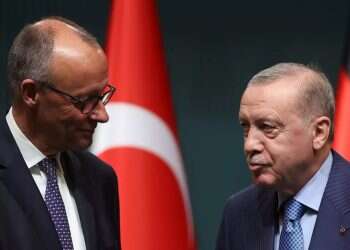
Friedrich Merz visited Ankara in an effort to strengthen relations with Turkey, hoping it would pressure Syria to take back refugees. Merz refused to define the war in Gaza as genocide and criticized Hamas, saying, “Hamas should have released the hostages earlier and laid down its weapons.” Erdogan fired back, saying, “Israel has always sought to oppress Gaza through starvation and genocide.”
Jerusalem and Washington see the coming days as critical for the Trump plan, as an Israeli source confirmed Qatar is pressuring Hamas to disarm. Israel has conditioned talks on the return of hostage bodies.
CNN revealed that Tehran purchased 2,000 tons of sodium perchlorate from Beijing for use in its ballistic missile industry. Some of the cargo ships and Chinese entities involved in the deal are under US sanctions.