For the first time in a decade, there's been an unprecedented decline in illegal Palestinian construction in Area C, coupled with a significant increase in enforcement actions by the Civil Administration. This isn't just a statistic; it's a beacon of hope and a testament to the impact that determined policy decisions can have on the reality on the ground.
Regavim's recent analysis of aerial surveys from May 2023 to June 2024 reveals a striking decline in illegal construction starts: in previous years, average illegal Arab construction in Area C climbed as high as 642 new structures per month under the Bennett-Lapid government in 2022, while the most recent study reveals a monthly average of 260 new illegal structures. This year's figures suggest a reversal of the relentless upward trend of illegal construction, with the current government prioritizing the preservation of state land.
The decline in enforcement actions is due to more than just the ongoing war; staffing shortages from reserve duty have impacted the Civil Administration. However, the key factor is the strategic shift in demolitions, with 602 structures destroyed in 2024 compared to 306 in 2023. This year's focus has been on significant, permanent structures in strategic locations posing security risks, unlike the previous sporadic demolitions of minor, temporary structures.
This shift, more than anything else, has sent a clear deterrent message to the Palestinian Authority: Israel is no longer turning a blind eye to the systematic takeover of Area C. This area, under full Israeli civil and security jurisdiction, has been the quiet battleground, where the Palestinian Authority has been establishing facts on the ground, as per the 2009 Fayyad Plan, the blueprint for de facto establishment of a Palestinian state. The periodic aerial surveys conducted by The Regavim Movement have consistently shown that since 2009 the PA has taken a stark, unmistakable turn away from construction and development in Areas A and B and focused instead on aggressive expansion in Area C. The systematic construction and development observed reveal a strategic and systematic program that is encircling and isolating Israeli communities while creating territorial contiguity between PA-controlled areas.
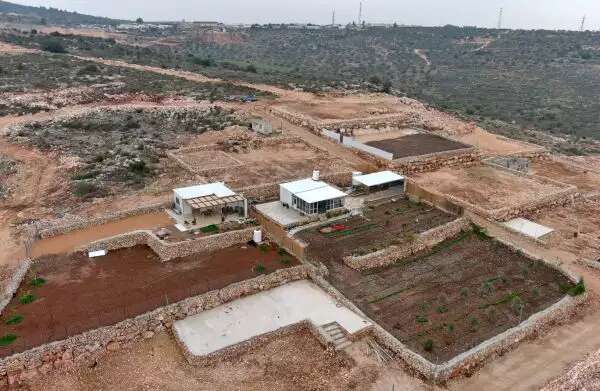
Just as the State of Israel was essentially established long before 1948 by the pioneers who built homes and farms and developed communities, the State of Palestine is being established daily - on Israeli state land. The current data suggests that, at last, the Israeli government is responding to the mandate of its voters by actively countering this existential threat.
Despite the encouraging findings of the recent survey, the battle for Area C is far from over. With a total of 97,581 illegal structures now standing in Area C, the challenge remains monumental. However, recent enforcement actions signify that the tide may be turning. This isn't just about maintaining territorial integrity; it's about ensuring security, both for the Israeli communities in Area C and for the entire State of Israel. The October 7th attack, which was facilitated by similar dual-purpose construction along Israel's relatively small border with Gaza, was a wakeup call for Israelis living on both sides of the "green line". It is heartening to see that Israeli legislators have begun to act and to fulfill the mandate they have been given by the public.
This may be a crucial moment, a crossroads that may be a critical turning point. The impressive shift observed on the ground must be a call to action, for the Israeli public, for its elected representatives and for the international community. It is also a reminder of the power of policy reform, the importance of vigilance, and the positive impact that a firm and resolute stand on matters of national sovereignty and security can have on our shared reality.
Meir Deutsch is the director General for The Regavim Movement, an Israeli policy think-tank dedicated to protection of Israel's national resources and sovereignty