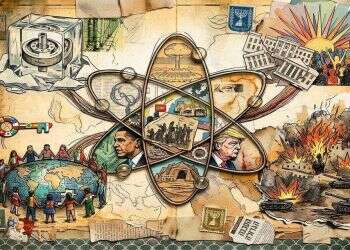
In polar contrast to the tense atmosphere that surrounded at least some of the meetings between former U.S. President Barack Obama and Prime Minister Benjamin Netanyahu, the current visit to the American capital by the Israeli leader is a reflection of the dramatic shift in the special ties between the two nations since Jan. 20, 2017.
Affection and support have replaced attempts by the American superpower to conceal the points of contention and resentment that clouded U.S.-Israel relations in the Obama era. Even if there is no absolute consensus on the entirety of issues at hand, U.S. President Donald Trump's remarks on Monday that the relationship between Washington and Jerusalem has "never been better" and that it was his stated ambition to attend the opening of the U.S. Embassy in Jerusalem reflect the extent of the change that has taken place over the past year.
To this, we must also add the emphasis Trump has placed on the special nature and the scope of ties with Israel both in the security and economic fields, which have indeed been upgraded beyond recognition since he took office last January. Even Trump's body language as he sat alongside Netanyahu on Monday displayed genuine warmth and friendliness toward his guest in direct opposition to the cold demeanor typical of Obama in his public meetings with Netanyahu.
The Palestinian issue, perceived as the main stumbling block to reconciliation and regional calm in the Obama era, has now been sidelined. Moreover, while Obama placed the majority of the responsibility for the diplomatic deadlock between Israel and the Palestinians and exerted massive pressure on the former to agree to, among other things, an ongoing freeze on settlement construction, Trump has taken a categorically different approach. He has anchored his policy vis-à-vis Jerusalem not on threats but rather an array of incentives meant to encourage Netanyahu's government to take risks in future negotiations.
At the same time, the president's approach to the Palestinian Authority remains critical and confrontational. A prominent example of this could be seen when he said there would not be peace unless the Palestinians return to the negotiating table. Trump's demand the Palestinians return to the negotiating table is yet another link in the chain of actions and statements that separate Trump light years from his predecessor, whose policies brought the U.S. back to the dark days of U.S. President Jimmy Carter and the failed attempts to force Israel to agree to the outlines of a one-sided final status agreement on the Palestinian front. A revolution, indeed.