Iran's grip on the Strait of Hormuz is slipping, The Wall Street Journal reported, as the US Navy and Gulf producers get better at dodging Iranian attacks. That shift is eroding Tehran's leverage in talks with Washington and raising fears of a fresh military escalation.
Regional crude exports have rebounded to nearly their highest level since February's war, with Hormuz and bypass routes moving almost 80% of prewar volumes, tracker Kpler found. Output from Saudi Arabia, Iraq, the UAE and others has climbed to nearly 13 million barrels a day, per ship tracker Huax, while Riyadh has also resumed flows through its repaired East-West pipeline into the Red Sea.
Iran, unable to move oil through Hormuz since July's US blockade, could see its stockpiled reserves run out by mid-October, according to Kpler. That threatens a key revenue source as sanctions and war strain its economy, weakening its ability to hold energy supplies hostage for concessions even as shrinking income could push it toward renewed attacks.
"It shows the diminishing returns of Iran's Hormuz approach," Sanam Vakil, director of the Middle East program at London think tank Chatham House, told The Wall Street Journal. "That could lead to a more explosive dynamic where they will have to provoke or press the go button on a larger conflict themselves in order to get out of this bind."

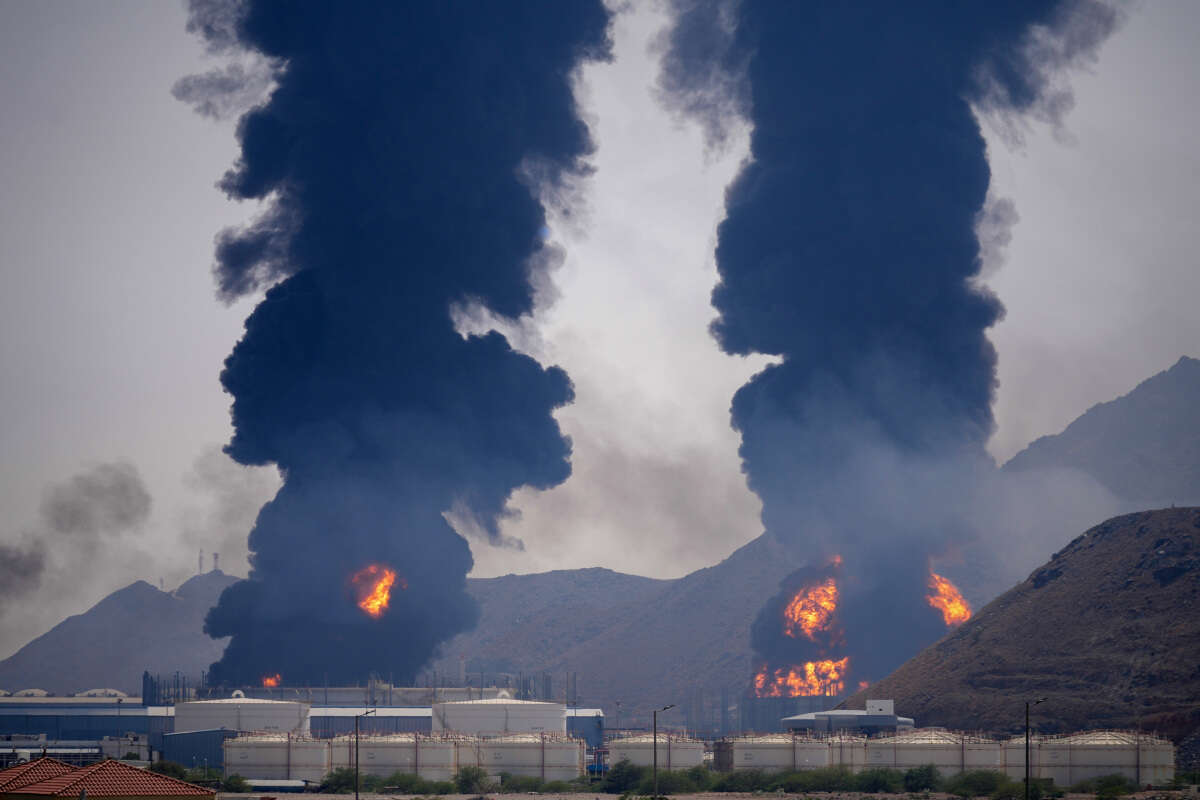
Gulf producers worry about fresh strikes as the Islamic Revolutionary Guard Corps shifts tactics, while Iran has already widened the fight into the Red Sea through its Houthi allies targeting Saudi shipping. Global markets remain exposed to any disruption, even though the recent export rebound has eased price pressure.
"In the absence of a decisive end to the conflict, the balance of risks to oil prices will remain skewed to the upside," said Hamad Hussain, a senior economist at Capital Economics.
Since the February war, Gulf producers have relied on costly workarounds while Iran's June deal with Trump, promising relief for reopening the strait, collapsed after renewed attacks. Washington reimposed its blockade in July, and on Friday, Trump rejected a new Iranian ceasefire offer that would have reopened Hormuz for a week.
Supreme Leader Ayatollah Mojtaba Khamenei referenced "the defenders of the Strait of Hormuz" in a Monday statement, signaling Tehran still views the waterway as key leverage. Bypass routes have also faltered, with drone strikes forcing a shutdown of Saudi Arabia's East-West pipeline and Houthi threats pushing Aramco back toward Hormuz.
Iran has no comparable detour, with trucks capped at roughly 40,000 barrels daily against prewar exports near 2 million. Its floating crude beyond the blockade has fallen to about 15 million barrels from 29 million in early September, with Kpler expecting China-bound supplies to run dry by mid-October.

"Probably within the next two weeks…they are going to make their final deliveries of oil to China, and then they will have nothing," Treasury Secretary Scott Bessent said Sunday on Fox News.
Attacks in Hormuz appear paused, with the UK Maritime Trade Operations reporting no confirmed incidents in the 72 hours through Sunday, though the threat level stayed severe. The last recorded strike was Sept. 23, a lull analysts say may reflect Tehran testing Trump's appetite for a deal, according to The Wall Street Journal.
"If Iran's leadership feels its control over Hormuz is weakening, that does increase the risk they will look for other ways to escalate the conflict," Richard Bronze, co-founder and head of geopolitics at Energy Aspects, told the paper.