Wednesday Sep 9, 2026
NEWSLETTER
www.israelhayom.com
  • Home
  • News
    • Israel
    • Israel at War
    • Middle East
    • United States
  • Opinions
  • Jewish World
    • Archaeology
    • Antisemitism
  • Lifestyle
    • Food
    • Travel
    • Fashion
    • Culture
  • Magazine
    • Feature
    • Analysis
    • Explainer
  • In Memoriam
www.israelhayom.com
  • Home
  • News
    • Israel
    • Israel at War
    • Middle East
    • United States
  • Opinions
  • Jewish World
    • Archaeology
    • Antisemitism
  • Lifestyle
    • Food
    • Travel
    • Fashion
    • Culture
  • Magazine
    • Feature
    • Analysis
    • Explainer
  • In Memoriam
www.israelhayom.com
Home News Israel Israel at War Iran War

US evaluates advanced bunker-busting capabilities as secret Iranian nuclear fortress expands

According to CNN, intelligence analysts notice surge at Iran's underground Pickaxe Mountain nuclear site using six years of satellite imagery. A source familiar with the matter told CNN that elements held a "planning sprint" on the topic, with efforts to develop plans for decisive strikes against underground facilities.

by  Erez Linn
Published on  09-09-2026 14:48
Last modified: 09-09-2026 15:56
US evaluates advanced bunker-busting capabilities as secret Iranian nuclear fortress expandsSatellite image ©2026 Vantor / AFP ; Julia Demaree Nikhinson/Pool via REUTERS

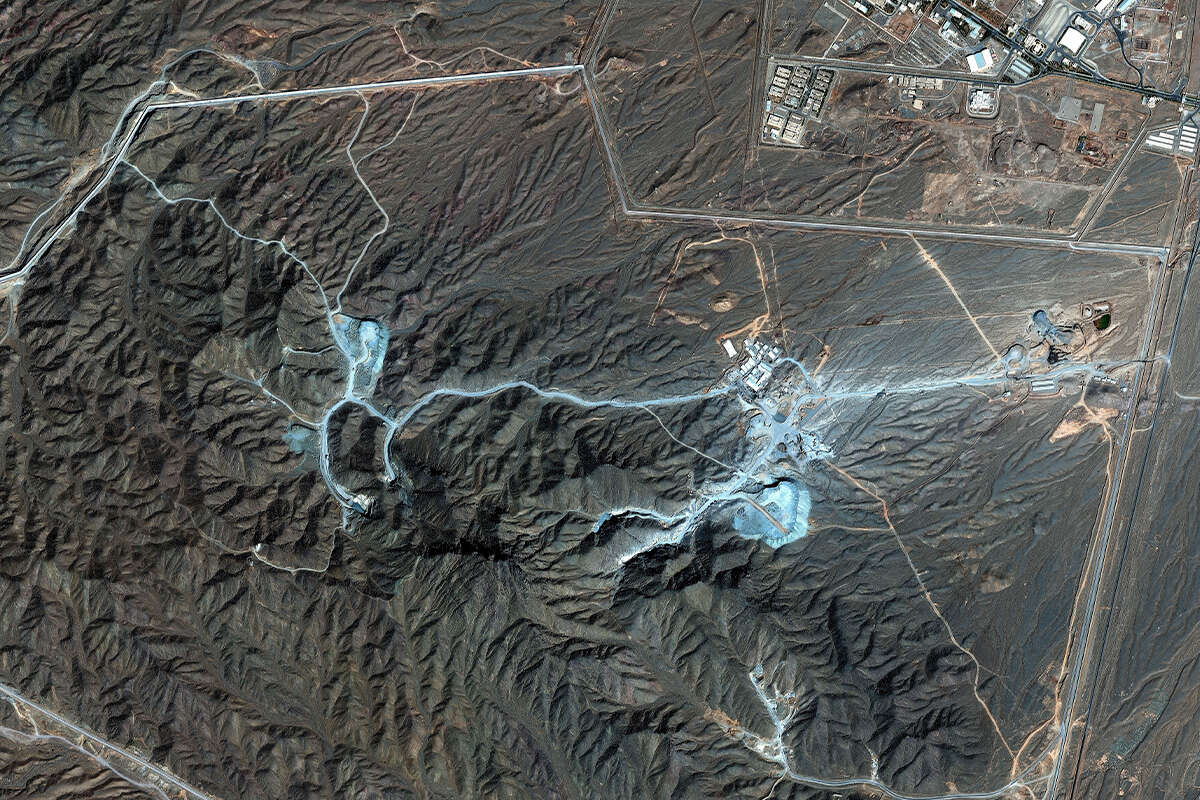
A satellite overview of the Pickaxe Mountain tunnel complex adjacent to the Natanz Nuclear Facility near Natanz, Isfahan province, central Iran, on June 30, 2026 (Front: President Donald Trump) | Photo: Satellite image ©2026 Vantor / AFP ; Julia Demaree Nikhinson/Pool via REUTERS

Share on FacebookShare on Twitter

New satellite imagery reveals a construction surge this year at Pickaxe Mountain, a suspected Iranian nuclear site buried beneath granite, according to analysts at the Center for Strategic and International Studies. CNN reported the CSIS analysis exclusively. The findings come as President Donald Trump has repeatedly threatened to strike the site, and as the Pentagon works to build bombs capable of reaching it.
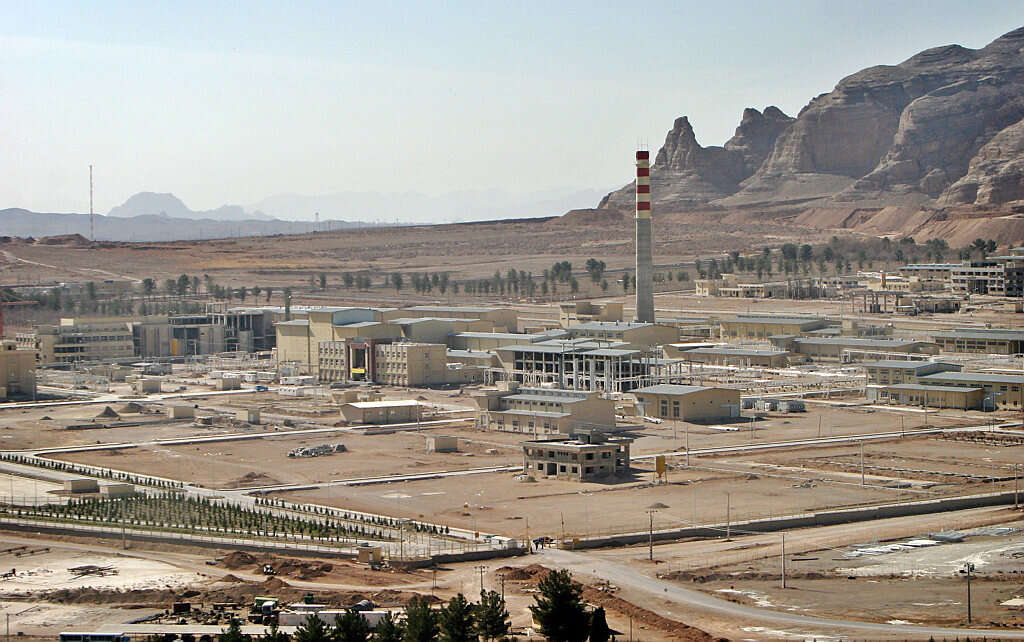
An uranium processing site in Isfahan, 340 km (211 miles) south of Tehran, March 30, 2005 (Reuters / Raheb Homavandi)

Roughly 140 miles south of Tehran, near the Natanz nuclear complex, Pickaxe Mountain has drawn steady attention from intelligence agencies that regard it as a likely place for Iran to shield future nuclear work. A new satellite imagery analysis from the Center for Strategic and International Studies think tank, obtained exclusively by CNN ahead of its publication, found "a clear surge in construction activity" at the site this year.

Construction activity has surged this year at Pickaxe Mountain, a suspected Iranian nuclear site near Natanz, 140 miles south of Tehran, per new CSIS satellite analysis shared with CNN. https://t.co/GGMCVdHvui pic.twitter.com/AK8zhly9ft

— Open Source Intel (@Osint613) September 9, 2026

CSIS analysts believe the underground facility serves a specific purpose. In their assessment, it was "likely" built as a safe haven for Iran's nuclear program.

Israeli intelligence has suggested Iran may be moving centrifuges to the site as part of its uranium enrichment efforts, even as President Donald Trump has repeatedly threatened to strike it.

"We may hit Pickaxe very soon," Trump told reporters last week, noting separately that "we know everybody that's moving" at the site. Even the Pentagon's "heaviest non-nuclear" bombs would struggle against the granite mountain, the CSIS team found; the outlet also flagged it as one of several Iranian nuclear facilities believed to lie beyond the reach of current-generation weapons.

Four days before the US launched Operation Epic Fury with Israel in February, CNN found that a program manager at a Pentagon agency combating weapons of mass destruction signed an emergency $1.2 million contract justification to repair a "unique subterranean test facility at White Sands Missile Range" in New Mexico for a "live-fire test designed to validate classified capabilities against rapidly emerging threats."

CNN confirmed the filing through a review of federal contracting records. The Defense Threat Reduction Agency's document was uploaded to a database on February 27, the day before the war started. Another database labeled the contract awarded to Pate Construction "rapid test prep." The memo said it needed to be finished within two-to-three weeks because of "a time-sensitive national security directive."
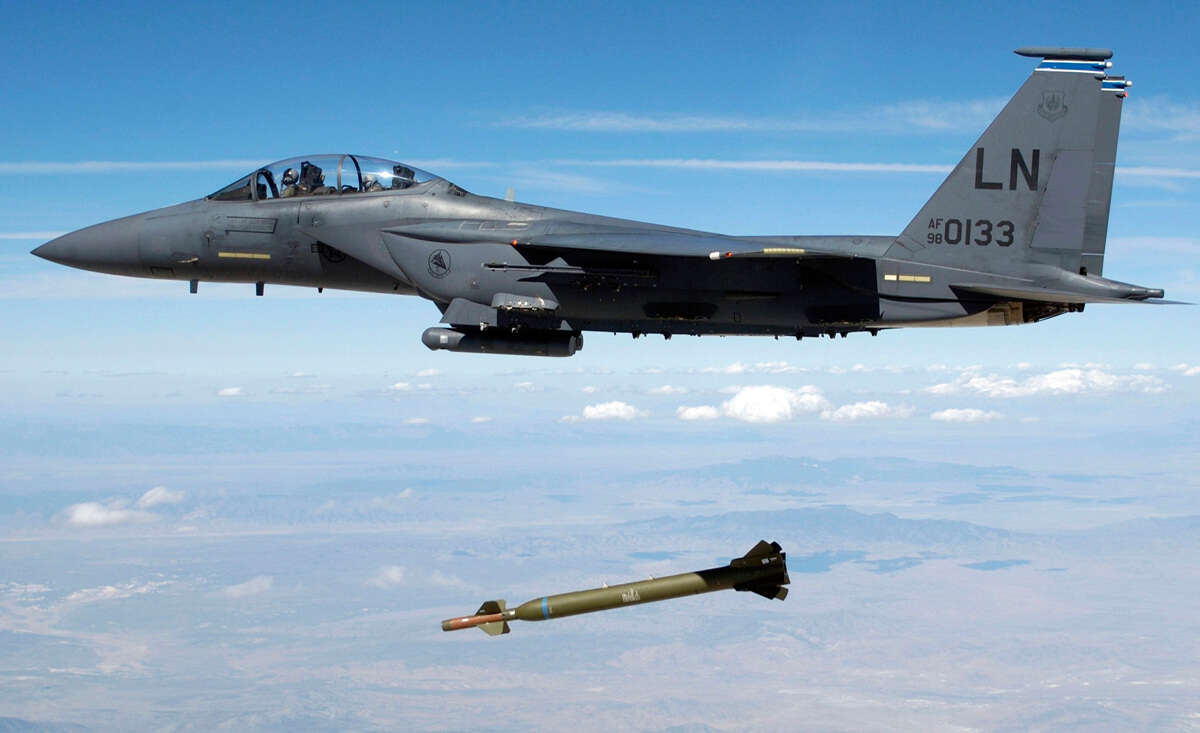
A US Air Force F-15E Strike Eagle aircraft releases a GBU-28 "Bunker Buster" 5,000-pound Laser-Guided Bomb during a weapons evaluation test hosted by the 86th Fighter Weapons Squadron (FWS) from Eglin Air ForceBase, Florida, in this August 5, 2003 (REUTERS/Technical Sgt. Michael Ammons/USAF/Handout) REUTERS/Technical Sgt. Michael Ammons/USAF/Handout

CNN was told by three sources familiar with the matter that the test plans were tied to the Iran war. The goal, they said, was to develop a way to target Iran's deepest-buried underground facilities and, likely, simulate US strikes on specific nuclear sites.

A contract to begin prototype work on a "next generation penetrator" bomb, meant to succeed the current MOP and reach deeper targets, was awarded in September 2025, before the Air Force solicited defense industry sources for the new weapon in June.

CNN identified excavation activity at a remote site at White Sands between February 16 and February 18. DTRA and US Strategic Command jointly operate the site to test how weapons affect deeply buried targets. Federal records show the timing lines up with an emergency contract: Pate Construction submitted its estimate on February 17 and received the deal the next day. Work at the site, known as the Alternate Seismic Hardrock in Situ Test Site, continued into mid-March as a pile of excavation dirt grew, before that activity appeared to halt, the imagery showed. CNN cited an environmental assessment that found the DTRA test site in White Sands is carved into granite. Like Pickaxe Mountain, the location shares that same underlying rock.
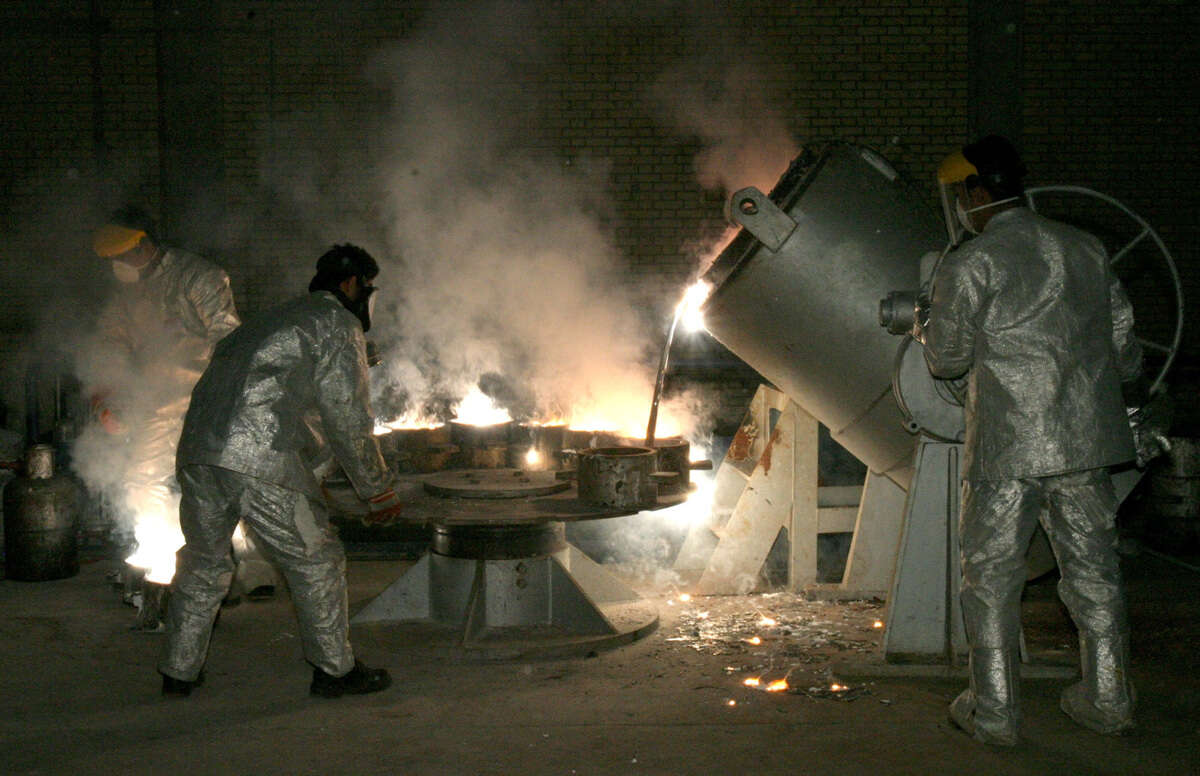
Technicians work at a uranium processing site in Isfahan 340 km (211 miles) south of the Iranian capital Tehran. Technicians work at a uranium processing site in Isfahan 340 km (211 miles) south of the Iranian capital Tehran March 30, 2005 (REUTERS)

A source familiar with the matter told CNN the US military maintains operational strike plans against Pickaxe, part of a target package under consideration this summer as Trump threatened to escalate the conflict with Iran, though it remains unclear whether the plan's use of some of the largest US bombs could penetrate deep enough to destroy whatever Iran may have relocated there.

The Fordo Fuel Enrichment Plant in central Iran on June 14, 2025 (Satellite image ©2025 Maxar Technologies / AFP)

A source familiar with the matter told CNN that elements within the War Department held a "planning sprint" on the topic. Efforts to develop plans for decisive strikes against underground facilities, the source said, continuing.

Tags: 09/09IranMiddle Eastnuclear programUnited States

Related Posts

Tehran boasts of underwater drone seizure at Hormuz chokepointX

Tehran boasts of underwater drone seizure at Hormuz chokepoint

by Erez Linn

Washington has not immediately confirmed the claim that a Dive-LD drone was in Iranian hands. The operation, according to a...

Yair Netanyahu assassination plot revealed: Iran targeted PM's son in MiamiREUTERS/Morteza Nikoubazl; Oren Ben Hakoon; Getty Images/Dee Liu;

Yair Netanyahu assassination plot revealed: Iran targeted PM's son in Miami

by Erez Linn

While living in Hallandale Beach, a plan was set in motion from Tehran to target him on US soil. US...

US restaffing diplomatic outposts in region in possible sign war's return unlikelyFayez NURELDINE / AFP; AP Photo/Tierney L. Cross

US restaffing diplomatic outposts in region in possible sign war's return unlikely

by Erez Linn

Diplomatic redeployments could begin as early as this week, internal State Department records obtained by The New York Times reveal....

Menu

Analysis 

Archaeology

Blogpost

Business & Finance

Culture

Exclusive

Explainer

Environment


Features

Health

In Brief

Jewish World

Judea and Samaria

Lifestyle

Cyber & Internet

Sports


Diplomacy 

Iran & The Gulf

Gaza Strip

Politics

Shopping

Terms of use

Privacy Policy

Submissions

Contact Us

About Us

The first issue of Israel Hayom appeared on July 30, 2007. Israel Hayom was founded on the belief that the Israeli public deserves better, more balanced and more accurate journalism. Journalism that speaks, not shouts. Journalism of a different kind. And free of charge.

All rights reserved to Israel Hayom

Hosted by sPD.co.il

  • Home
  • News
    • Israel at War
    • Israel
    • United States
    • Middle East
    • Sports
  • Opinions
  • Jewish World
    • Archaeology
    • Antisemitism
  • Lifestyle
    • Food
    • Travel
    • Fashion
    • Culture
  • Magazine
    • Feature
    • Analysis
    • Explainer
    • Environment & Wildlife
    • Health & Wellness
  • In Memoriam
  • Subscribe to Newsletter
  • Submit your opinion
  • Terms and conditions

All rights reserved to Israel Hayom

Hosted by sPD.co.il

Newsletter

[contact-form-7 id=”508379″ html_id=”isrh_form_Newsletter_en” title=”newsletter_subscribe”]

  • Home
  • News
    • Israel at War
    • Israel
    • United States
    • Middle East
    • Sports
  • Opinions
  • Jewish World
    • Archaeology
    • Antisemitism
  • Lifestyle
    • Food
    • Travel
    • Fashion
    • Culture
  • Magazine
    • Feature
    • Analysis
    • Explainer
    • Environment & Wildlife
    • Health & Wellness
  • In Memoriam
  • Subscribe to Newsletter
  • Submit your opinion
  • Terms and conditions

All rights reserved to Israel Hayom

Hosted by sPD.co.il