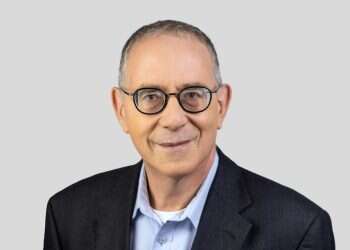
It says something about the state of Israeli society that a speech containing many platitudes and little in the way of practical suggestions not only went viral, but is also being lauded as a model for other politicians to follow. Yet for all of its vagueness, Tehila Friedman-Nachalon's words deserve to be heard and pondered for what they might mean for both Israelis and Americans.
Her appeal for a new coalition of zealous moderates who are determined to heal a society riven by political, religious, cultural and social divisions that appear too wide to be bridged struck a chord with many Israelis. That it did says a lot about the nastiness of Israeli politics and the way issues have become weaponized in a nonstop political civil war that she likened to the suicidal conflict that raged within the walls of besieged Jerusalem during the Roman siege that led to its destruction.
Follow Israel Hayom on Facebook and Twitter
Invoking the lesson of the sinat hinam – senseless or baseless hatred – that traditional Judaism teaches us was the cause of the fall of the city and the burning of the Holy Temple, Friedman-Nachalon aptly noted that the same spirit prevails in Israel today.
"In the middle of the corona days, in the heart of a health, economic and social crisis the likes of which we've never experienced before, in the middle of a crisis of our institutions, after a year-and-a-half of inactivity, without an approved budget, with a troubling deficit and an economic depression, we have again those voices that would like us to chop off our brother's head, that want to take every social wound and scar and scratch it until it bleeds, once again indifferent and scornful of the pain of others," she said in Hebrew.
Instead, she called on Israelis to stop trying to beat each other and, in effect, make their opponents disappear in a zero-sum conflict.
Friedman-Nachalon, who describes herself as "Jewish, religious, a religious Zionist, a nationalist, a feminist, a Jerusalemite," took a circuitous route to her maiden speech in the Knesset.
A lawyer who worked at a nonprofit that concentrated on education and policy in the religious Zionist community, she joined Yair Lapid's Yesh Atid Party that espouses a left-leaning centrism. Along with the rest of that faction, she became part of Benny Gantz's Blue and White coalition, but was ranked too low in the party's list in any of the three elections that were fought in the last 18 months to get into the Knesset.
After Gantz joined forces with Prime Minister Benjamin Netanyahu to form the current coalition government in April, Lapid's party pulled out of Blue and White to sit in the opposition. But Friedman-Nachalon switched to Gantz's party. At that point, due to Israel's adoption of the so-called "Norwegian law" – a lofty term for a shady patronage scheme that allows Knesset members who become cabinet ministers to resign their seats in order to allow lower-ranked colleagues to join the parliament and reap the not-insignificant benefits of being officeholders – Friedman-Nachalon got her moment in the sun.
But however she got there, the idealism of her maiden Knesset speech resonated among Israelis and throughout the Jewish world.
Israelis are still bitterly divided about Netanyahu's continued tenure in office, so much so that opponents have been regularly demonstrating outside his official residence demanding that he resign because of the legal charges, however dubious, that led to indictments against him. That's why her talk of unity is, at one and the same time, the last thing that most partisans are interested in, while also being exactly the tonic that a country that is suffering the ravages of the coronavirus pandemic and sick to death of unceasing political warfare needs.
Friedman-Nachalon struck a nerve among Israelis, as settlement movement leader Israel Harel noted in Haaretz, because it was "a speech reminiscent of the days when the spiritual and political leadership – and the entire people – knew to cherish the miracle of building the state, of the gathering of exiles. The days when the leaders knew they had to listen to each other and respect each other's opinion, and to remember the lessons of history."
That's not the stuff of contemporary Israeli politics, as Netanyahu's followers trash their opponents while those determined to see him locked up use similarly overheated rhetoric and over-the-top charges to discredit the prime minister.
The same is true in the United States, where Trump's foes are ready to accuse him of every imaginable crime while his supporters use similarly overheated rhetoric, even if there's no real comparison between the two men in terms of what they are accused of doing. Both sides see the upcoming election in apocalyptic terms. It would be one thing if their talk of the future of American democracy is at stake were cynical electioneering. But it's clear that both sides really do believe that their opponents are evil and their victory is the last straw that will destroy the country.
Zealous centrism would seem just the tonic for Americans, too. But the problem with Friedman-Nachalon's prescription is not in her lofty tone and appeal to the "better angels" of our natures. Rather, it is that the business of democracy is not unity and consensus, but in making choices.
Ironically, that kind of consensus right now seems more of a realistic possibility in Israel than in the United States. The once-bitter debate about security and territorial issues has largely faded as most believe that peace with the Palestinians is not possible. That ought to allow more attention to be paid to the country's many other problems. But instead of debating settlements and borders, Israelis are stuck in harsh arguments over Netanyahu himself.
Americans are also bitterly divided about Trump. Democrats hope the election will be a referendum about the president. But the protests and riots that have convulsed the nation after the death of George Floyd, the rise of the Black Lives Matter movement and a new focus on racism illustrate a deeper divide about basic issues that are fundamental to the future of democracy. In such an argument, there doesn't appear to be any room to split the difference in a culture war about liberty and free speech that transcends the battle between Republicans and Democrats.
Quoting Yehuda Amichai's poem about "Miracles," Friedman-Nachalon said that, "From far away everything looks like a miracle, but up close even a miracle doesn't look like one. Even a crosser of the divided Red Sea saw only the sweating back of the walker in front of him."
Subscribe to Israel Hayom's daily newsletter and never miss our top stories!
Like Israelis who seem to have lost their ability to appreciate the miracle of the birth of Israel, many Americans also seem, in their zeal to denounce the faults of the past, to be blind to the miracle of the constitutional republic the genius of the Founding Fathers created.
We can only hope that when the dust eventually settles in the arguments about Netanyahu and Trump that Israelis and Americans will both be capable of listening to calls for unity, rather than continuing to settle scores with each other in a fight to the death in which opponents must be destroyed rather than listened to and respected. If Friedman-Nachalon's message isn't heeded, the cost of the impulse to partisan warfare may be higher than most of us can imagine.
Reprinted with permission from JNS.org