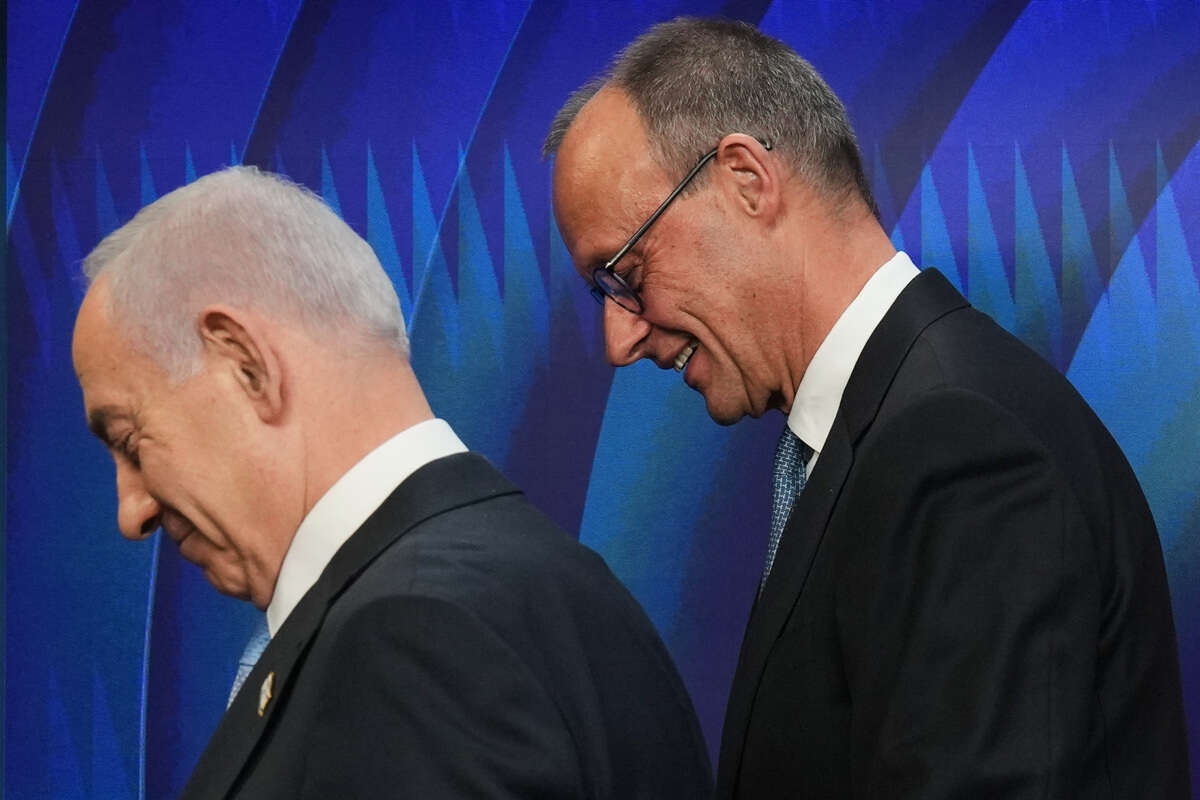
This is not the first time a German chancellor has visited Israel, but Friedrich Merz's trip to Jerusalem is significant given the Jewish state's isolation on the international stage, particularly in Europe. Unlike Emmanuel Macron, who recognizes the State of Palestine, boycotts Israel, and refuses to supply us with arms, Merz is strengthening military ties with the Jewish state. He arrived in Jerusalem just after the German military had acquired the Arrow 3 anti-missile defense system from the Israeli aerospace industry to bolster its own air security.
Who would have imagined that Holocaust survivors would one day supply weapons to Germany to protect it from the Russian threat? It's worth remembering that before the Six-Day War in 1967, Israel also provided Uzi submachine guns and artillery shells, and over the years, drones as well. Conversely, Germany is significantly strengthening its deterrent and regularly delivers submarines to us.
It has now been more than 60 years since we turned the page on the new Germany. In 1952, following arduous negotiations—and despite protests and demonstrations, and the profound grief and bitterness of the survivors of the terrible Holocaust—we signed a reparations agreement, and then 13 years later we established full and solid diplomatic relations. On August 24, 1965, the Director General of the Ministry of Defense, Asher Ben Nathan, was appointed the first Ambassador of the Jewish state to Bonn.
Today, German-Israeli relations are excellent. Germany is our closest ally and our most important trading partner in the world after the United States, and far ahead of France. We maintain numerous cultural, scientific, and academic ties with Germany.
Unlike in other European countries, boycotts against legitimization have not gained traction in Berlin. Campuses warmly welcomed Israeli professors, researchers, and students. More than 7,000 young Germans visit the Jewish state each year.
Germany fights anti-Semitism by all means; its policy is consistent, promises are kept, particularly regarding official visits.
In this context, Chancellor Merz's visit with his ministerial delegation is more important than ever to strengthen and consolidate our relations in all areas and on all levels.
Certainly, since October 7, 2023, differences have existed between us regarding the peace process with the Palestinians and the future of Gaza, but these reflect the common position of the entire European Union. However, the conversations are conducted respectfully, amicably, and frankly, and not through moralizing lectures as is the practice of French leaders.
In the fight against Islamist terrorism and the presence of Iranian terrorists in Europe, Germany collaborates closely with Israeli intelligence services; valuable information provided by Mossad has thwarted dozens of attacks on European soil.
The special and unique relationship between Jerusalem and Berlin must continue in the interest of both countries. Germany's strong voice in Europe and its economic power are guarantees for the Jewish state that it can avoid a systematic boycott by certain European Union member states, such as Spain. Madrid's harmful role was evident in Geneva recently during the debate on Israel's expulsion from the Eurovision Song Contest.
On the eve of the Christian holidays, it is vital that Israeli embassies in the 26 European capitals conduct effective diplomatic efforts and an information campaign in the media and on social networks to explain Israel's just cause. Unfortunately, this cause has been widely misinterpreted and misunderstood since October 7, 2023.
The sole aim of the Jewish state is to expel Islamist terrorist groups from the region and prevent their presence in Europe as well. Our wish is to ensure coexistence with our neighbors and all minorities, and to secure and defensible borders along the Syrian-Lebanese border, in the Jordan Valley, and in the Gaza Strip.