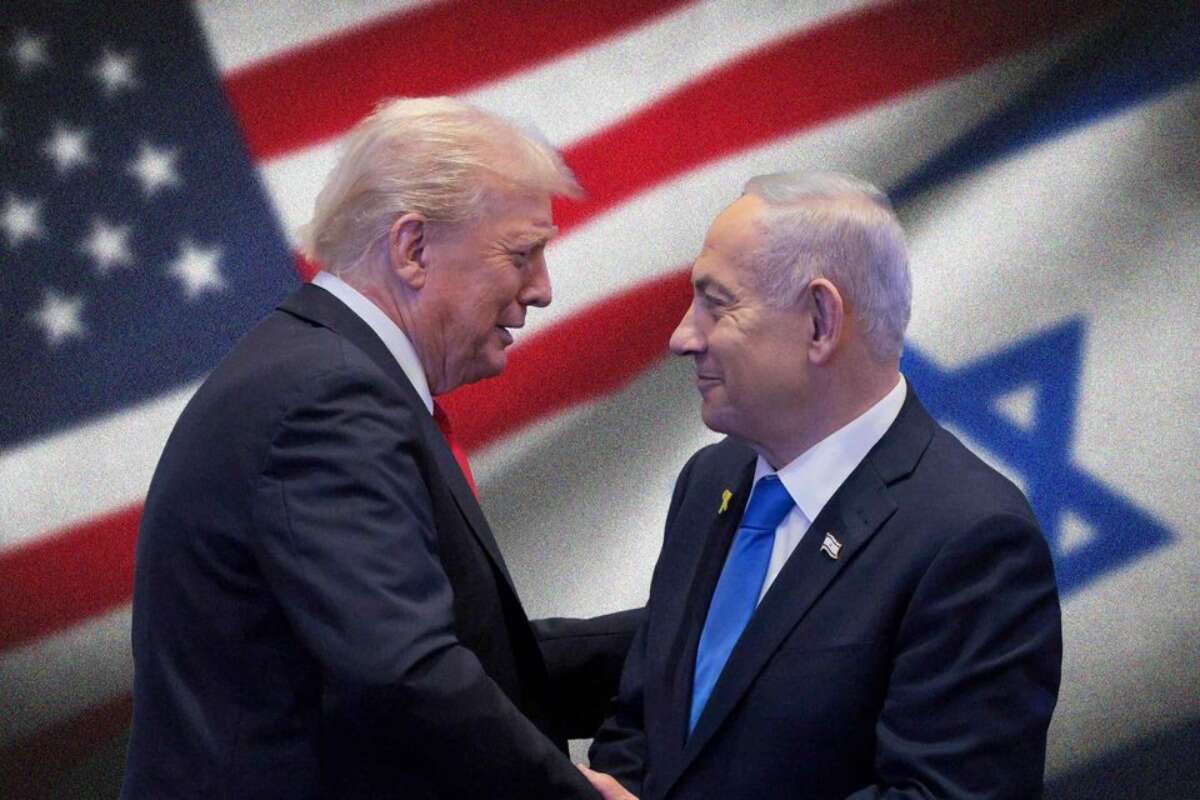
For decades, Israelis have grown accustomed to believing that the future of US-Israel relations is determined in the White House. Every American presidential election has been followed closely, as though the identity of the next president alone would determine the level of support for Israel.
But a new AP-NORC poll published in the United States this week suggests the picture is more complicated. The next presidential election is still about two years away. Yet the more important question may no longer be who will enter the White House, but what the American public that elects the president thinks about Israel.
For decades, the US-Israel alliance rested on two foundations. The first was the relationship between governments, forged by presidents, secretaries of state and national leaders. The second was broad public support for Israel among Americans. For many years, Israel benefited from an unusually broad consensus that crossed political affiliations, religious communities and social groups. Even when presidents changed, that widespread public backing gave the alliance stability and ensured that changes in government did not fundamentally undermine the relationship.
In recent years, however, and especially since Hamas' Oct. 7, 2023 attack on Israel and the war that followed, that foundation has steadily eroded.
The latest poll reflects more than criticism of the Israeli government's policies or disagreements over the war. It points to a deeper shift in the attitudes of a growing segment of the American public toward Israel itself. The generational divide is particularly striking. Support for Israel remains significant among older Americans, but it is declining among many younger people. This is not a passing trend. Presidents change every four or eight years. Public opinion shifts more slowly, but once it changes, it can shape political reality for decades.
Tomorrow's members of Congress, judges, journalists and decision-makers are today's young Americans, who are forming their worldview on university campuses, through social media and in the broader public sphere. If Israel loses their confidence now, it could pay the price for many years to come.
US-Israel relations have weathered periods of tension before. There have been presidents who opposed Israeli policies, and there have been difficult crises between the two countries. In most cases, however, those disputes unfolded against the backdrop of broad public support for Israel. That support gave leaders room to maneuver, provided Congress with political confidence and lent stability to the alliance as a whole. If that foundation continues to crack, even the diplomatic relationship will struggle to withstand the pressure.
That is why this week's poll matters, despite the fact that the next presidential election remains distant. Polls do not necessarily predict election results, but they do reveal trends. History shows that quiet, gradual shifts can shape reality more profoundly than dramatic events.
History also teaches that countries do not lose their allies in a single day. The change usually begins not in the halls of government, but in the public consciousness. Only afterward does it make its way into the voting booth, into legislatures and, ultimately, to the tables where national decisions are made.
That is why the most important question is not who will occupy the White House two years from now. The real question is what kind of America will choose the next presidents, members of Congress and decision-makers of the coming decades. The story is not the White House. It is the transformation taking place inside the American home.