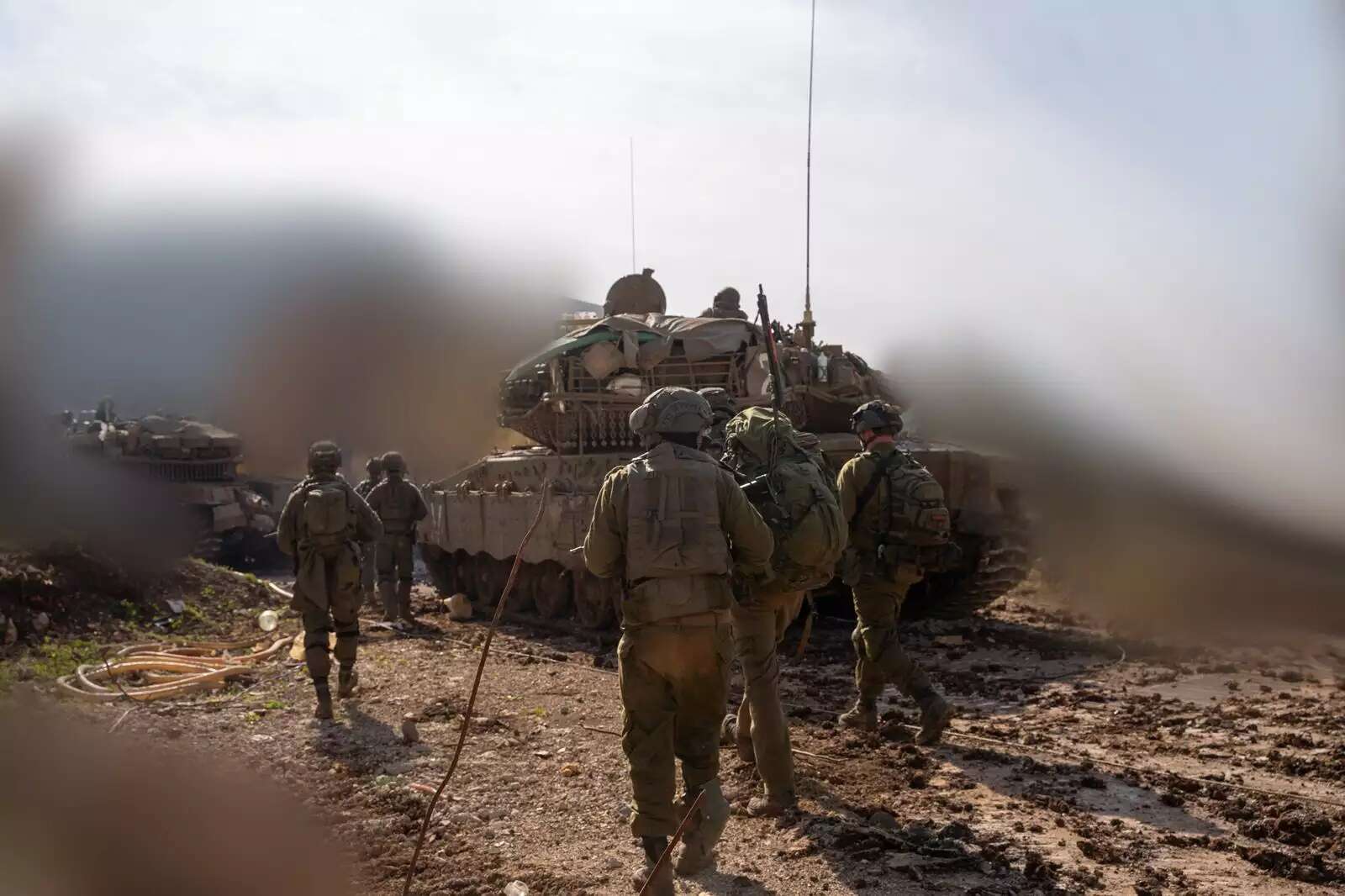
The ceasefire in Lebanon, imposed by President Trump without any serious consideration, is systematically violated by Hezbollah. Encouraged by Iran, the Shiite militia will continue its attacks against Israel until a comprehensive agreement is reached with all actors in the region.
This untenable situation cannot continue. It has been 26 years since the IDF withdrew all its troops from Lebanon and no agreement has been respected to this day. Forty-four years after the fiasco of the First War against the PLO and of the Second War against Hezbollah, the IDF finds itself mired in the Lebanese quagmire, unable to guarantee the complete safety of all the inhabitants of northern Israel. These courageous citizens endure a daily ordeal. More than ever, the home front has become a sensitive and critical priority. Unfortunately, all government promises to eradicate the Hezbollah threat have not been kept.
Certainly, Hezbollah bears primary responsibility for the lack of "peace in Galilee," but how can we not question the effectiveness of US policy in our region and its role in the endless negotiations with Iran? Why does President Trump ignore the plight of defenseless Israeli villagers? How can he tie the hands of his closest ally by imposing red lines and restricting the IDF's operational range? Is it possible to conduct talks in Washington aimed at normalization while simultaneously tolerating Hezbollah's deadly attacks?
Faced with the impotence of the Lebanese government, the indifference of Arab countries, the hypocrisy of European countries, particularly Macron's France, and intense American pressure, the IDF cannot launch targeted operations in Beirut and the Beqaa Valley, nor can it target strategic Lebanese state infrastructure. The vicious cycle of this war of attrition continues, with the inability to sideline Hezbollah and impose a peaceful settlement. How long will this continue?
Since October 7, 2023, and a few months before the Knesset elections, Benjamin Netanyahu has nonetheless maintained his belief in a "total victory" against all our enemies. He proudly declares that the capture of Beaufort Castle in South Lebanon and the expansion of Israeli control over areas north of the Litany River mark a "decisive turning point" against Hezbollah. He asserts confidently: "We will establish the security of the people of the North, just as we have done for the people of the South. It will take time, but we will accomplish the mission."
It seems Netanyahu is indulging in wishful thinking. The IDF's successes are significant but limited in time and scope. Furthermore, the military advantages are merely tactical and symbolic, lacking long-term strategic benefits.
The Israeli army is undoubtedly the strongest in the Middle East, but after more than 30 months of relentless fighting on multiple fronts, it is exhausted and under-equipped. As we often reiterate, we cannot, on our own, put an end to Hezbollah's attacks until its military arsenal is completely dismantled through draconian actions, primarily led by the United States.

We are making the same mistake with Hamas in Gaza. In a context without a solid settlement, President Trump will have to impose a clear and pragmatic policy. To date, he has been zigzagging and has failed to assert his authority. His military successes in Iran are quite limited, and his diplomatic efforts have failed. This is also a failure of French diplomacy. Macron demands that "all weapons fall silent, for good," convenes the Security Council, but does not directly condemn Hezbollah or Iran.
As far as we are concerned, and to finally extricate ourselves from the Lebanese quagmire, the Israeli government must first and foremost pursue a transparent policy, free from any partisan or electoral considerations. It must have a military, diplomatic, and media strategy, coordinated with Washington, but also capable of making independent decisions solely in the interest of the State of Israel. Only in this way can we definitively put an end to the threats and ensure stability, security, and peace with our neighbors.
Sunni, Druze, and Christian Lebanese are not our enemies, and we wish to coexist with them and sign a viable peace agreement. The major Arab and Muslim countries, including Egypt, Saudi Arabia, and Turkey, must support normalization efforts with Israel and back the Lebanese government while condemning Hezbollah's threats and terrorist activities.
The direct negotiations we are conducting in Washington are positive, but the United States must use all its political weight and exert strong economic pressure to sideline Iran and Hezbollah and, if necessary, fight them without difficulty and without mercy.
If President Trump wants to achieve a spectacular success and a real victory in reshaping the Middle East, he will have to profoundly revise his strategy and conduct a coherent, effective, and much more serious foreign policy.