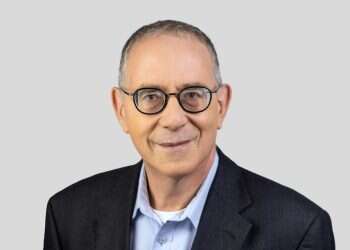
In a New York Times column on April 7, Thomas Friedman listed his preferred choices for various posts in a Joe Biden administration. Among those serving in his fantasy government would be Rep. Alexandria Ocasio-Cortez (D-NY), the pro-Palestinian leftist whose uninformed and invariably hostile comments about Israel have verged on anti-Semitism, as ambassador to the United Nations.
Ocasio-Cortez has insisted that "criticizing the occupation of Palestine doesn't make you anti-Israel." Indeed, Palestinians have no choice but to "riot" because they are "marginalized" by Israel. But to her credit, she has conceded: "I am not the expert on geopolitics on this issue. I am just repeating terms I think I saw on Facebook once. I have no idea what they mean."
Follow Israel Hayom on Facebook and Twitter
How could Friedman, a three-time Pulitzer Prize winner who served as Times Jerusalem Bureau Chief between 1984-88 and a columnist ever since, endorse Ocasio-Cortez for anything but a kindergarten class on Israel and the Middle East? A cursory glance at Friedman's biography might provide answers.
Growing up in "a rather typical middle-class American Jewish family," Friedman identified himself as a "three-day-a-year" Jew until the Six-Day War ignited "my Jewish identity." After three summers as a kibbutz volunteer, he conceded, his identification with Israel had become "insufferable."
But not for long. Smitten by Arab culture after a summer visit to Cairo, he resumed undergraduate study at Brandeis University as a member of the "Middle East Peace Group." It joined Breira ("alternative"), an organization comprising left-wing rabbis and Jewish intellectuals who endorsed Palestinian national aspirations.
Hired by The New York Times in 1981, Friedman covered the Israel-Lebanon war, which buried "every illusion I ever held about the Jewish state." Then, posted as Jerusalem Bureau Chief, he relied for guidance upon Peace Now advocate Yaron Ezrahi, peace activist Avraham Burg and Rabbi David Hartman, his mentor for explaining Israel's moral deficiencies.
As a Times columnist, Friedman blamed "feckless American Jewish leaders" and neo-conservatives for supporting "a colonial Israeli occupation." Friedman reminded readers: "One should never forget just how crazy some of Israel's Jewish settlers are. They assassinated Prime Minister Yitzhak Rabin when he tried to cede part of the West Bank for peace."
Rabin's assassin, Yigal Amir, lived in the Israeli city of Herzliya.
As a relentless chronicler of Israel's failings, he claimed that he was helping to preserve its moral integrity.
For Friedman, Israeli settlement building was "sheer madness." He predicted that without a two-state solution, "Israel will be stuck with an apartheid-like, democracy-sapping, permanent occupation of the West Bank." How Israel could "occupy" its biblical homeland was not explained. He seemed surprised that "Palestinian" and "terrorist" were "fused together in the minds of people the world over."
Enamored of former US President Barack Obama, whose hostility to Israel was palpable, Friedman preposterously claimed that the only question was whether he was "the most pro-Israel president in history or just one of the most." The answer, to be sure, was neither.
In fact, Obama was the least friendly towards the Jewish state. During his first official visit to Israel, the Times gushed a chorus of praise for his peace effort. Obama, Friedman wrote, "embraced Israelis with both understanding and honesty" by suggesting that Israel "collaborate with Palestinians to build a West Bank state that is modern, secular and Westernizing." Otherwise, "scary religious nationalist zealots" might lead Israel into the "dark corner" of a "South African future," or a binational state "controlled by Jewish extremists."
It long ago became evident that Friedman's "insufferable" boyhood identification with Israel had faded away. Indeed, unbeknown to him, his path closely followed that of Joseph Levy, hired by the Times in 1928 as its first "Palestine correspondent." A year later, when Arab riots erupted, Levy participated in covert discussions with H. St. John Philby, a former British civil servant who had denounced the Balfour Declaration as "an act of betrayal for whose parallel … we have to go back to the Garden of Gethsemane"; Judah Magnes, Hebrew University Chancellor who advocated a binational state in Palestine; and the Grand Mufti of Jerusalem Haj Amin al-Husseini, convicted of inciting the 1921 riots.
Levy funneled lengthy statements by Magnes and Philby into the Times. Guided by Levy, it became a welcoming platform for anti-Zionist critics.
If Joseph Levy sought to undermine the Zionist pursuit of Jewish statehood, Thomas Friedman has relentlessly lacerated its Israeli reality. Perhaps the only consolation is that he did not propose Ocasio-Cortez as ambassador to Israel.
Reprinted with permission from JNS.org.