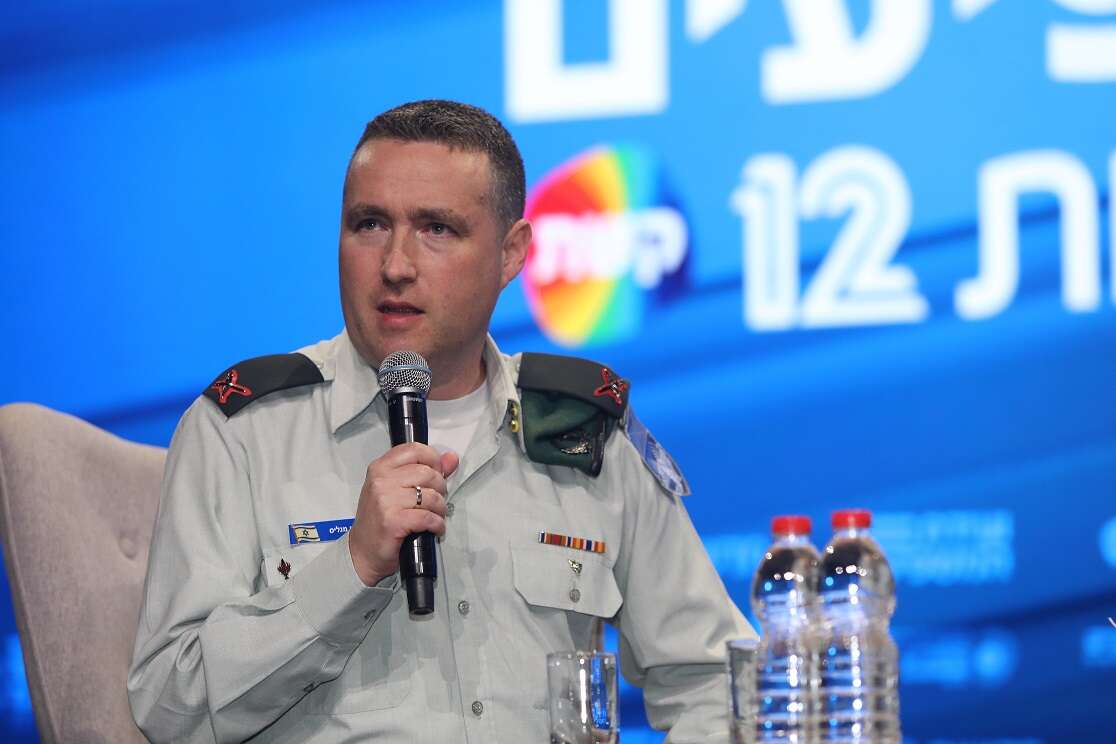
Even the detractors of former IDF Spokesman Brig. Gen. Ronen Manelis, and he has plenty, would find it difficult to argue about the key position the IDF Spokesperson's Unit has taken up under his command. Its activity is no longer restricted to keeping the public informed, initiating PR pieces, and improving the image of the military and the morale of the soldiers – it has become an operational tool.
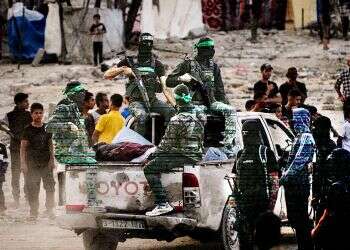
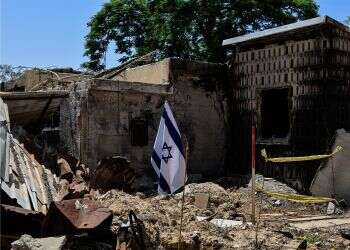
The events of recent weeks have allowed us to see that on a near-daily basis. From the details about the drone unit that was taken out on the Syrian Golan Heights to the exposure of Hezbollah's precision missile project, the IDF Spokesman has been a central player in the shadow war of the Middle East, one that helped the IDF score more than a few image points in a world in which public opinion and legitimacy are major factors.
Follow Israel Hayom on Facebook and Twitter
In the not-too-distant past, the IDF Spokesperson's Unit was mostly an onlooker. The spokesperson was in on all the developments, but the unit was sidelined. While the seeds of change were planted by some of his predecessors, Manelis – who came up in the Intelligence Corps and who as an aide to former Chief of Staff Lt. Gen. (res.) Gadi Eizenkot was present when some watershed decisions were taken – has put the unit in the midst of the action. His experts participate in high-level discussions that precede and follow operations.
This has created endless activity for the unit. It runs online campaigns to smear Hezbollah, Hamas (mostly in English and Arabic) and Iran (mainly in Farsi.) It works on the international stage to secure legitimacy for IDF actions. Here, too, some disagreed with Manelis' tactics, arguing that the IDF should be portrayed as an army that wins, and not portray itself or the Israeli homefront as vulnerable to win sympathy.
Manelis thought differently. His closeness to Eizenkot allowed him to lead nearly any campaign he wanted to. That closeness dates back to the days when Manelis was an intelligence officer in the Nablus Brigade and Eizenkot was commander of the Judea and Samaria Division. Later, Manelis was appointed as Eizenkot's chief of staff in the Operations Branch and in the Northern Command, and eventually his aide when Eizenkot was named chief of staff. This made Manelis the right-hand man to the top soldier in Israel's military, one of the most influential roles in the IDF.
Eizenkot, who saw the media as a vital operational tool and an integral part of modern warfare, made Manelis IDF spokesman with the goal of staying relevant in the world of the media; influencing it; and to some extent, changing it. Manelis kept those goals in sight, often in the face of harsh criticism from the military, the unit itself, and the Israeli public. Many thought he was veering away from his mandate, speculating in information, and even endangering national security. When he made public the conclusions from the botched intelligence raid in Khan Younis last fall; or an airstrike in Gaza that inadvertently killed Palestinian Islamic Jihad operatives, politicians attacked Manelis for "apologizing." Manelis stuck to his guns.
He was able to do so not only because of the backing from Eizenkot, but because he could show that his work was paying off. Information that was released, directly or indirectly, was in the headlines on a near-daily basis – from the "Golan File" that exposed Hezbollah's efforts to establish a new front against Israel to the publicity side of the exposure of Hezbollah's terror tunnels under the northern border. The IDF wasn't busy collecting "likes" – it was trying to influence public opinion, not only in Israel but internationally, and especially in the Arab world.
Manelis' extensive background in intelligence gave him an advantage when it came to understanding the material and its raw potential; his near-compulsive desire to know everything allowed him to stay up to date, both with the army and with the media. His professional courage allowed him to see things through, even in the face of serious criticism at home and abroad. Some of that criticism came from journalists, not all of whom liked his approach and the care he took to be fair in a world in which certain media outlets used to have a major advantage, or his investment in social media over traditional media. As Manelis would say, Facebook has more viewers than all the other Israeli media outlets put together.
Other criticism came from civil groups, some of which were politically biased. During his time as IDF Spokesman, the Office of the General Staff was flooded with complaints about how Manelis was presenting the New Israel Fund or "aiding the enemy." Manelis himself saw the complaints as part of an effort to cow to the military, but he frequently encountered objective difficulties. One example was in providing the IDF narrative for the events on the Gaza border this past year and a half, when he was frequently not only the only official representative of Israel who was speaking on the record (sometimes with government ministers speaking out against the policies they had agreed to), but also the person who had to explain the IDF's conduct, which ran counter to the public's desire to see an end to a policy of passivity toward Gaza.
Manelis explained that policy not only because it was his job to do so, but also because he believed in it. He truly thought that Israel had tools of influence that it should use before it got dragged into a war whose goals and end would be unclear. That was true for Gaza as well as for Lebanon and Syria. Under his command, the Spokesperson's Unit was often deployed in place of traditional force or at least curtailed the use of force. When it didn't, the unit worked both in the open and in secret to bolster the IDF's successes.
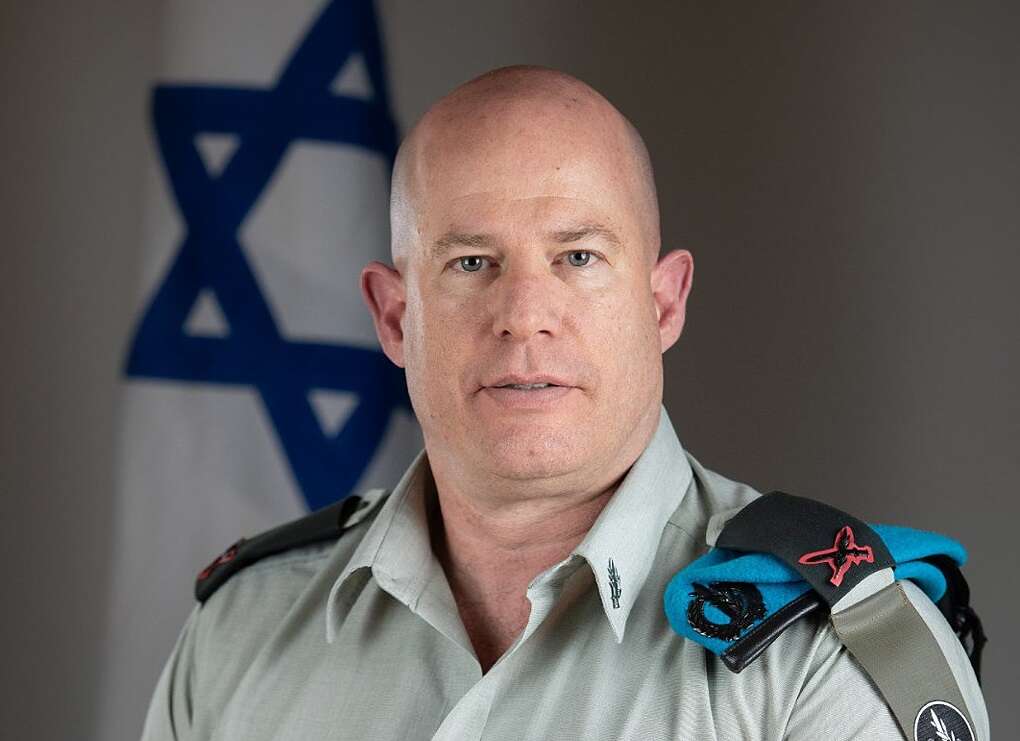
Manelis is seen as a forceful figure for whom it's his way or the highway. In the classic terms of spokesmanship, the unit was weakened under his command. Good officers left. His successor, Brig. Gen. Hidai Zilberman, who took up the position on Sept. 15, will need help to make it through his initial period at the helm. He will also need to convince young officers not to jump ship for civilian PR jobs and help steer the IDF Spokesperson's Unit into the modern media era.
Zilberman's challenge will be even tougher because of the character of IDF Chief of Staff Lt. Gen. Aviv Kochavi, who is very sensitive to the media and how he is portrayed in it. There are some advantages to this: Kochavi, if positioned correctly, could become influential in the public sphere. It's not certain that the government officials to whom he answers will like that, but in a time when the military is battling a slide in motivation as well as budgetary issues, the chief of staff will have to take to the media to help the IDF achieve its goals.
When it comes to operations, Zilberman should have an easier time. Manelis left him an infrastructure of deep involvement by the IDF Spokesperson's Unit in operational processes, with an emphasis on ones that are expected to affect public opinion. The IDF Spokesperson's Unit being attached to the Operations Branch allows Zilberman not only to be present when decisions are made but to be part of them.
Manelis proved that quality intelligence can be turned into heavy influence on different audiences – hostile, objective, and friendly. If that trend is continued, the IDF Spokesperson's Unit will be transformed from a role of combat support to a real combat tool, just like missiles or fighter jets.