Israel Hayom is a media organization founded on the belief that the Israeli public deserves better journalism—more balanced, more accurate, and more reliable. Journalism that speaks rather than shouts. Journalism that is trustworthy, objective, and matter-of-fact. A different kind of journalism, offered free of charge. The first print edition was published on July 30, 2007, and in 2010 Israel Hayom became the Israeli newspaper with the highest weekday readership. The newspaper’s publisher is Dr. Miriam Adelson. Its Editor-in-Chief is Omar Lachmanovitch, and its founding editor is Amos Regev. Israel Hayom’s Hebrew and English websites, as well as its Android and iOS applications, provide around-the-clock news coverage, exclusive content, breaking news and updates, analysis and commentary, video, podcasts, and live broadcasts. The digital platforms of Israel Hayom include news and opinion channels covering culture and entertainment, lifestyle, technology, sports, business and consumer affairs, health, military affairs, food, Judaism, tourism, and automobiles. In 2021, a new Hebrew-language website and mobile application were launched to provide users with a fast, up-to-date, secure, and convenient experience. The content of the newspaper’s print edition is also available online through a daily digital edition and can be received via newsletter. “The Israel Hayom Clique,” the publication’s exclusive benefits club, offers website users discounts and special promotions on products and services. Israel Hayom welcomes feedback, criticism, and suggestions for improvement from its readers. You can contact the organization by email at hayom@israelhayom.co.il

Thursday Jun 25, 2026
NEWSLETTER
www.israelhayom.com
  • Home
  • News
    • Israel
    • Israel at War
    • Middle East
    • United States
  • Opinions
  • Jewish World
    • Archaeology
    • Antisemitism
  • Lifestyle
    • Food
    • Travel
    • Fashion
    • Culture
  • Magazine
    • Feature
    • Analysis
    • Explainer
  • In Memoriam
www.israelhayom.com
  • Home
  • News
    • Israel
    • Israel at War
    • Middle East
    • United States
  • Opinions
  • Jewish World
    • Archaeology
    • Antisemitism
  • Lifestyle
    • Food
    • Travel
    • Fashion
    • Culture
  • Magazine
    • Feature
    • Analysis
    • Explainer
  • In Memoriam
www.israelhayom.com
Home News

Former IAEA official: Israeli airstrike in Iran can buy time, not eliminate the problem

"Technically, such an attack is feasible, even though several of the [nuclear] sites would be more difficult to attack than others," Dr. Olli Heinonen, former deputy director at the International Atomic Energy Agency, explains.

by  Damian Pachter
Published on  02-11-2021 12:21
Last modified: 02-11-2021 19:25
Former IAEA official: Israeli airstrike in Iran can buy time, not eliminate the problemEPA/Hamid Forutan

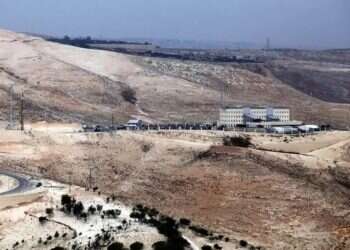
Iran's heavy water reactor facility in Arak | File photo: EPA/Hamid Forutan

Share on FacebookShare on Twitter

EXCLUSIVE – An Israeli airstrike against Iranian nuclear facilities is technically feasible and can help Israel buy some time, but it cannot completely resolve the problem, Dr. Olli Heinonen, former deputy director-general at the International Atomic Energy Agency and a senior research fellow at the Stimson Center think tank, told Israel Hayom on Wednesday. 

Follow Israel Hayom on Facebook and Twitter

Heinonen, 75, is intimately familiar with the Islamic republic's nuclear program. After all, he spent entire days in underground Iranian nuclear sites when the nuclear program was in its infancy, and later on after it had expanded and developed. He served in numerous capacities at the IAEA, climbing the ladder to become the organization's second most senior official, during which he was charged with monitoring nuclear programs across the globe.
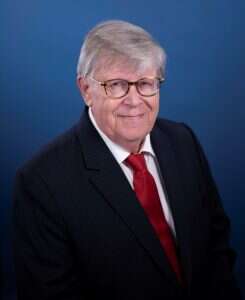
Dr. Olli Heinonen

The interview with him was conducted via Zoom. When he was asked how many times exactly he had visited Iran, he says: "Quite a lot, over 25 years. I was there for years, sometimes five or six times a year, but I never counted." 

The time aspect is critical here because it helps us understand the scope of technological development the regime in Tehran has presided over and its sprint toward a nuclear bomb. Heinonen has monitored this process from the very beginning, in the 1980s, during the Iran-Iraq War. 

"From the outset, I felt great discomfort over several aspects of the program," Heinonen, a Finnish national, admits. "I was at all the nuclear sites except for the one Fordo, but we had already known about it for a few years before my departure. We had good times and more difficult times, ups and downs," he says.

To illustrate the last sentence, Heinonen shares an anecdote from one visit to the Arak nuclear facility, an industrial heavy water complex in central Iran.

"We knew about Arak in 2002, and it was unordinary for several reasons," he says.

In another visit, he found himself asking the Iranians about 1,600 new centrifuges at the Natanz site, which were "brand new."

"But we've never used them!" one of the Iranian experts answered him – just one example of the confusing and often contradictory discourse between the Islamic republic and the West over the years.

"There were thousands of [centrifuges] in Natanz," Heinonen continued. "It just wasn't logical."

The interview with Heinonen took an interesting turn when he was asked about the possibility of an Israeli military strike in Iran, for the purpose of destroying its nuclear program.
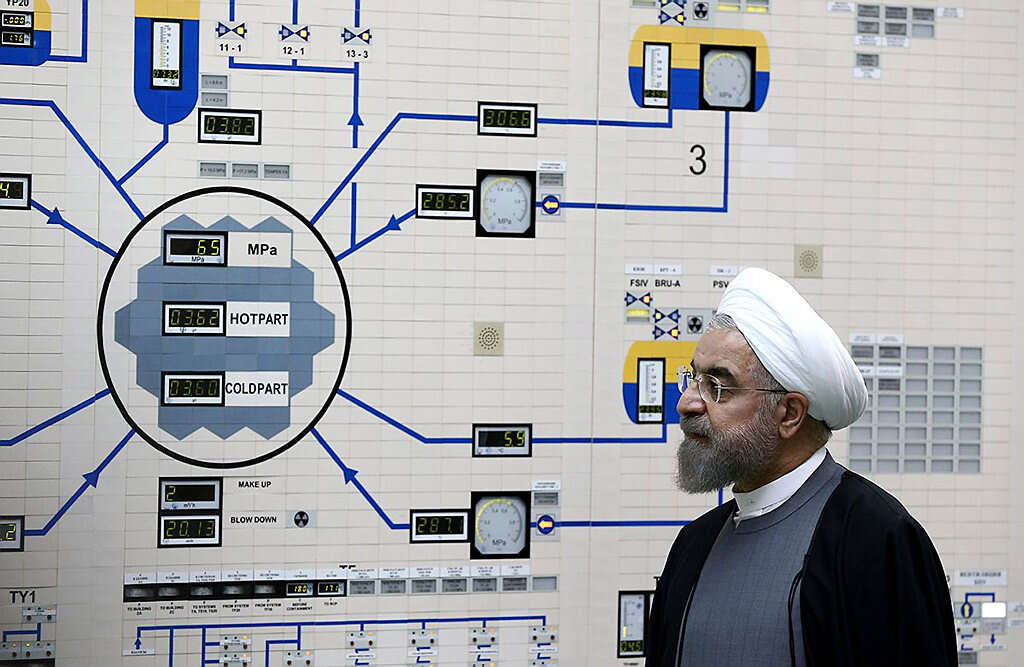
Iranian President Hassan Rouhani visits the Bushehr nuclear facility (AP/File) AP/Iranian Presidency Office, Mohammad Berno

"Technically, such an attack is feasible, even though several of the [nuclear] sites would be more difficult to attack than others," he explains. "But the entire matter starts with one thing: You need to know what you are bombing because if you don't know, you have a serious problem on your hands. It's easy to say, 'We need to bomb Natanz, Fordo.' Maybe there are other [uranium] enrichment sites. You need to know the status of these facilities. Are they still there? Are we familiar with them?"

According to Heinonen, "An airstrike can help buy time, but it doesn't eliminate the problem. It's important to bear in mind that Iran is not Syria or Iraq: It always has a backup plan. The Iranians don't put all their eggs in one basket, and I'm positive they have taken steps to ensure that parts of their nuclear program will continue functioning even in the case of an attack."

Heinonen chooses to conclude the interview with a piece of advice for the new administration in Washington, specifically for newly elected President Joe Biden, regarding a new nuclear deal with Iran. "Don't be hasty," says Heinonen. "Build a regional and international coalition."

Subscribe to Israel Hayom's daily newsletter and never miss our top stories! 

Related Posts

'In an instant, the whole country was shut down'

'In an instant, the whole country was shut down'

by Dudi Kogan

The US said it would send search and rescue teams, medical equipment and humanitarian aid to Venezuela after a powerful...

Iran's Revolutionary Guards threaten ships over new strait of Hormuz route

Iran's Revolutionary Guards threaten ships over new strait of Hormuz route

by ILH Staff

Tehran insists that only shipping lanes it has approved are legitimate for passage through the Strait of Hormuz. The Islamic...

Report: Trump administration open to PA rule in GazaArab media

Report: Trump administration open to PA rule in Gaza

by Shachar Kleiman and Adi Nirman

According to the report, as Prime Minister Benjamin Netanyahu moves to block the reported diplomatic initiative, regional dynamics suggest a...

Menu

Analysis 

Archaeology

Blogpost

Business & Finance

Culture

Exclusive

Explainer

Environment


Features

Health

In Brief

Jewish World

Judea and Samaria

Lifestyle

Cyber & Internet

Sports


Diplomacy 

Iran & The Gulf

Gaza Strip

Politics

Shopping

Terms of use

Privacy Policy

Submissions

Contact Us

About Us

The first issue of Israel Hayom appeared on July 30, 2007. Israel Hayom was founded on the belief that the Israeli public deserves better, more balanced and more accurate journalism. Journalism that speaks, not shouts. Journalism of a different kind. And free of charge.

All rights reserved to Israel Hayom

Hosted by sPD.co.il

  • Home
  • News
    • Israel at War
    • Israel
    • United States
    • Middle East
    • Sports
  • Opinions
  • Jewish World
    • Archaeology
    • Antisemitism
  • Lifestyle
    • Food
    • Travel
    • Fashion
    • Culture
  • Magazine
    • Feature
    • Analysis
    • Explainer
    • Environment & Wildlife
    • Health & Wellness
  • In Memoriam
  • Subscribe to Newsletter
  • Submit your opinion
  • Terms and conditions

All rights reserved to Israel Hayom

Hosted by sPD.co.il

Newsletter

[contact-form-7 id=”508379″ html_id=”isrh_form_Newsletter_en” title=”newsletter_subscribe”]

  • Home
  • News
    • Israel at War
    • Israel
    • United States
    • Middle East
    • Sports
  • Opinions
  • Jewish World
    • Archaeology
    • Antisemitism
  • Lifestyle
    • Food
    • Travel
    • Fashion
    • Culture
  • Magazine
    • Feature
    • Analysis
    • Explainer
    • Environment & Wildlife
    • Health & Wellness
  • In Memoriam
  • Subscribe to Newsletter
  • Submit your opinion
  • Terms and conditions

All rights reserved to Israel Hayom

Hosted by sPD.co.il