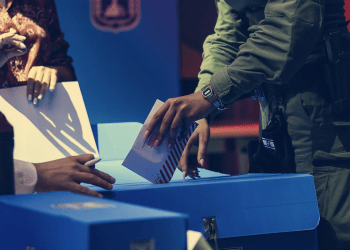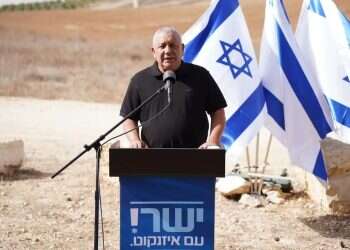
Israelis woke up Wednesday morning to an extremely complicated political situation in light of the emerging election results.
Kan 11 and Channel 13 exit polls projected a 51-51 tie for the blocs, while Channel 12 expects Prime Minister Benjamin Netanyahu's Likud-led bloc to squeak out a 52-49 victory – but neither bloc is likely to cross the 61 seats threshold needed for a majority in the 120-seat Knesset. Although a minority could theoretically swear-in a government, neither bloc is likely to do that, as this would rely on the Arab parties essentially giving their de facto support, even if technically abstaining.
With actual votes trickling in, none left either side with the 61 seats needed for a majority in the 120-seat Knesset. As of 7 a.m., a partial count of about 40% of ballots gave Netanyahu's bloc 57 seats; Gadi Eisenkot's at 47, and then at around 8 a.m. this changed to 55-50, but projections have remained consistent: Neither bloc will have enough to form a government without relying on the Arab parties.
The impasse may benefit Netanyahu, allowing him to stay on as acting prime minister during extended coalition talks or potentially until a new election takes place.
Arab parties not aligned with the two major blocs could be the key to forming a government. However, Eisenkot, head of the Yashar party and a former military chief, has largely dismissed the possibility of governing with them, making his route to power more difficult.
Video: Celebrations at the Democrats Party after exit polls were shown / Credit: Avi Cohen
Early tallies of roughly 40% of the vote reveal a stronger showing for Netanyahu bloc than television exit polls initially predicted, placing it at 57 mandates. The rival Change Bloc has secured 47 mandates. Neither faction has managed to capture the critical 61 mandates required to assemble the next governing coalition.
The Likud maintains its position as the largest faction with 28 mandates. Gadi Eisenkot's Yashar! (Straight!) party follows closely with 21 mandates – a solid performance that aligns with initial exit poll projections throughout the night.
Arab factions have demonstrated substantial growth compared to their presence in the outgoing 25th Knesset, securing 16 mandates in the preliminary count. The Joint List commands 12 mandates, while Ra'am (the United Arab List) currently holds 4.
Avigdor Lieberman's Yisrael Beytenu and the United Torah Judaism party have claimed 8 mandates each. The Democrats, Otzma Yehudit, Shas, and the Religious Zionism-Zehut alliance follow with 7 mandates apiece. Preliminary figures indicate that Ofer Winter's Amcha Yisrael (Your People Israel), the Reservists-Economic faction headed by Yoaz Hendel, and The Haredi Public led by Moti Leitner will fail to enter the next Knesset.
Eisenkot's "victory" speech
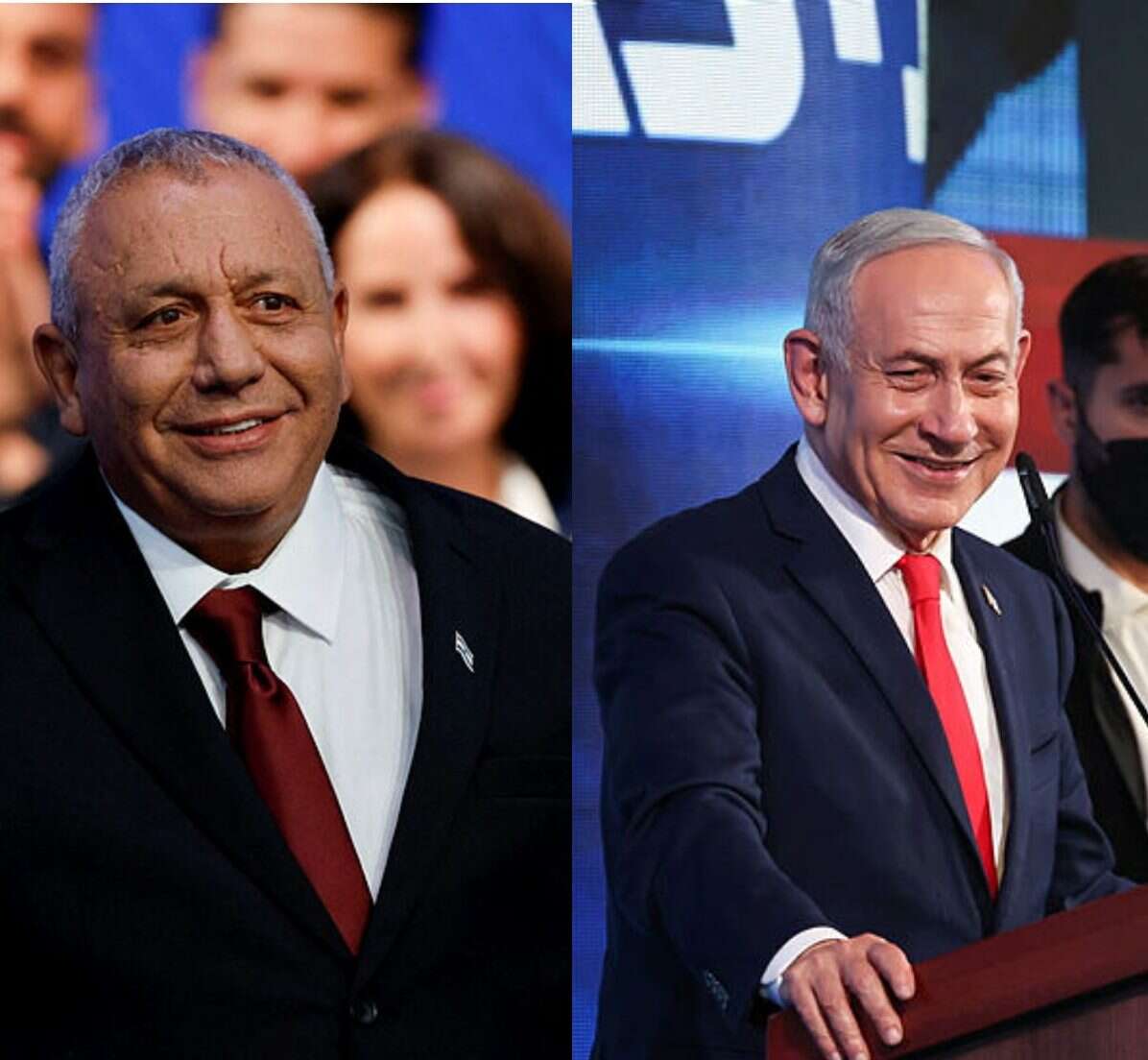
Of the two representatives of the major parties, the first to take the stage and react to the exit poll results was Yashar! leader Gadi Eisenkot, the de-facto leader of the anti-Netanyahu camp and his main challenger.
Eisenkot said in his speech, "We made history. Overnight, we received an answer – the public has decided in favor of change." According to him, Netanyahu now faces a Zionist majority among the serving and working public (those who serve in the military), and he therefore argued, "A worthy leader would announce he is stepping down now." He pledged not to drag Israel into another election campaign and explained that, given the high voter turnout, such a move would be a mistake.
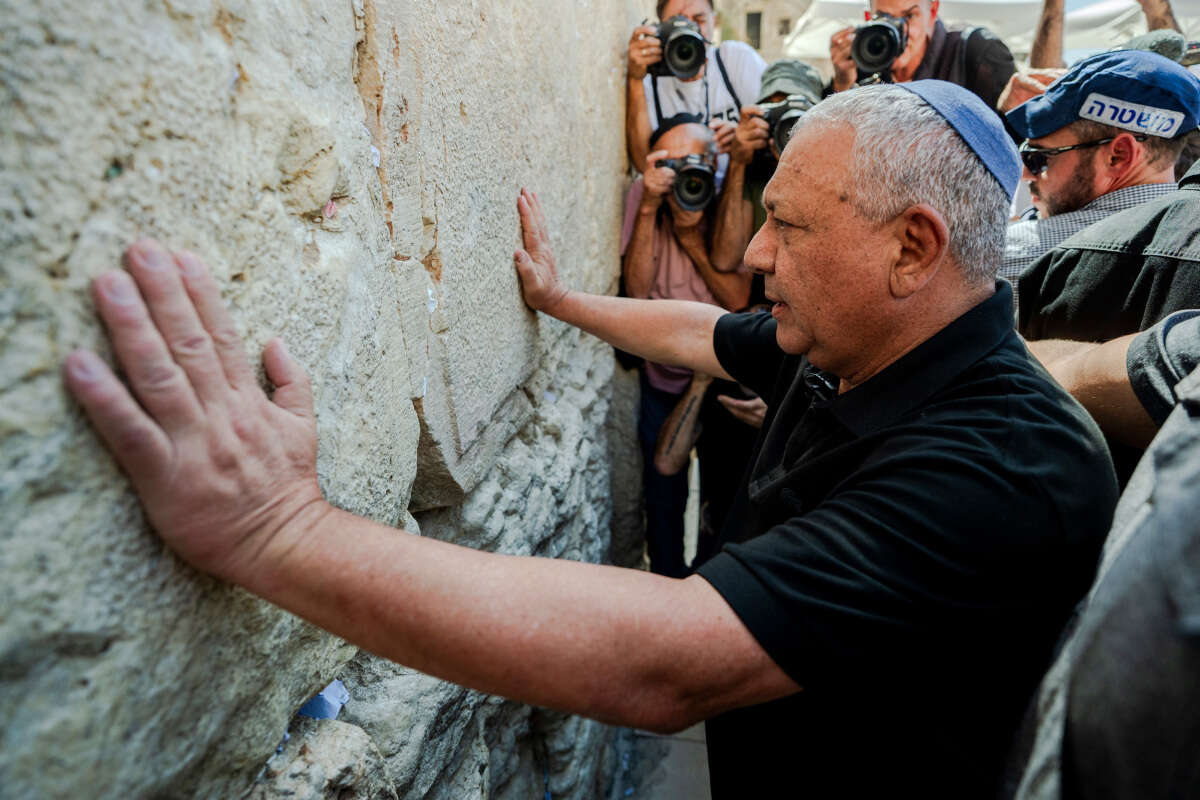
People in the Yashar! leader's orbit assessed that, despite the apparent disappointment, President Isaac Herzog will grant him the mandate (the official right to try to swear in a government through a Knesset confidence vote) in the coming days – partly because the party of Naftali Bennett also understands that, given its relatively poor showing, this is an unavoidable reality. In addition to the votes of the Arab parties, Eisenkot could secure significantly more recommendations than Netanyahu and receive the mandate to form the government for at least a month.
Another option is talks on a unity government. Netanyahu has managed, against all expectations, to keep Likud as the largest party in Israel by a significant margin, and he enters such negotiations from a position of strength. As long as no new government is formed, he will remain in office and may also demand to go first in a rotation (a shared-premiership arrangement). If he commits to ending his rule after an additional two-year term, after which he would retire from political life and receive a pardon, Eisenkot may be willing to consider the deal.
The third option, and perhaps the most problematic, is going to repeat elections. Eisenkot could swear in a government ahead of the elections solely to remove Netanyahu from office. But the fear is that if this were done with the support of the Arab parties, the blow at the ballot box would be severe. On the other hand, none of the partners wants to be tied to another six months of Benjamin Netanyahu, a wounded lion, in power.
Netanyahu's "loyalty pledge" to his partners
Netanyahu took the stage only around 3 a.m., after the exit polls showed his position improving dramatically.
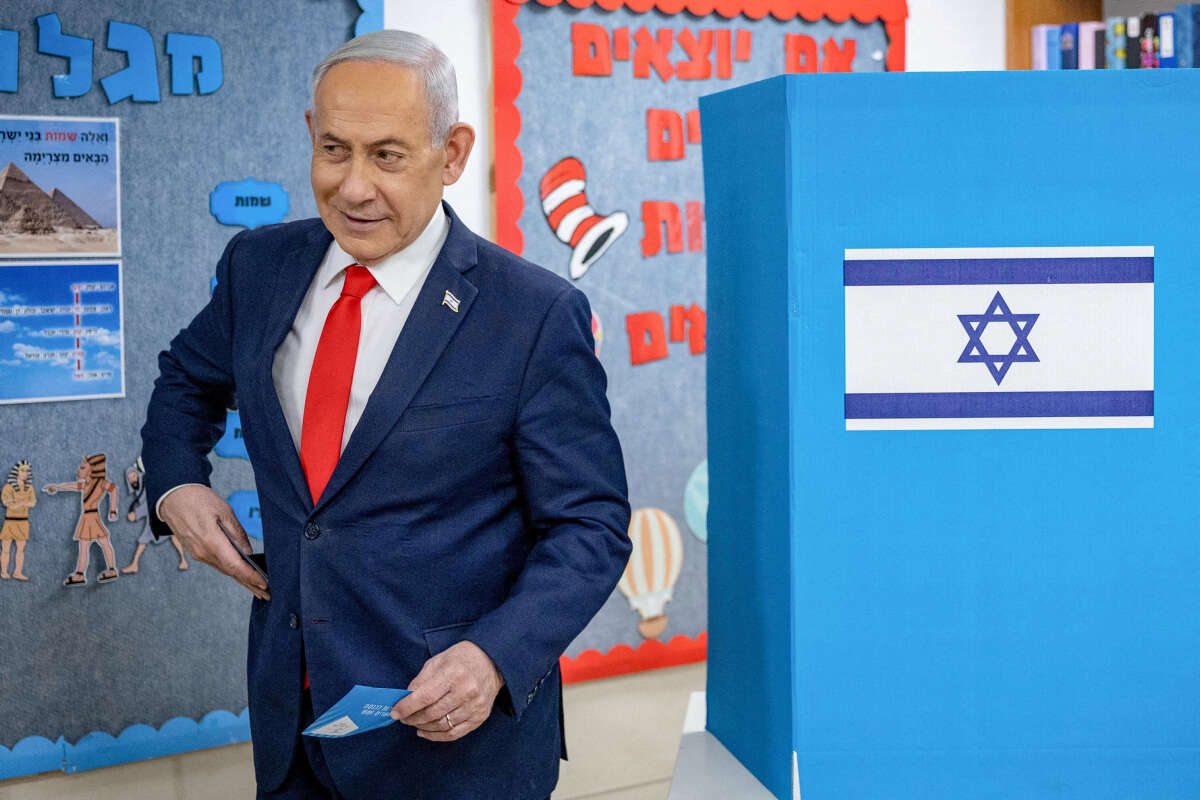
Netanyahu devoted much of his speech to his government's security achievements during the war. "We worked so hard in the election campaign," he said, as he thanked the members of the Likud slate and the members of the government. Together with the public and IDF soldiers, he said, "We worked wonders that changed the face of the Middle East." He also said he would not leave his coalition partners on the right and the haredi bloc and added, "Anyone who wants is welcome to join – without a rotation."
What are Netanyahu's options? Under the Israeli system, being the largest party guarantees nothing. The right-wing and Haredi (ultra-Orthodox) bloc, which won 64 seats in the previous election, appears set to win far fewer this time. In Likud, hopes are still pinned on the actual results (the official ballot count) and the double-envelope ballots (ballots cast outside home precincts), but even in the optimistic scenario the gap looks too large to close.
The implication is simple, even if hard to swallow in Likud. If the results settle around the exit polls, Netanyahu has only one realistic option left to remain prime minister – a national unity government with Eisenkot's bloc. On paper, such a combination reaches a majority of nearly 70 seats. In practice, it will exact a price from Netanyahu, and the only question is how high.
This is also where the source of Netanyahu's power in the upcoming negotiations lies. Eisenkot faces two uncomfortable alternatives, a government that would rely on the Arab parties or another round of elections. Netanyahu, as leader of the largest party, will be able to present himself as the one offering the only path to a stable Zionist government – provided he is willing to pay.