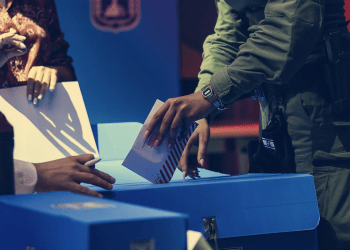
The Arab town of Majd al-Krum in the Galilee is a stronghold of the Arab parties, and exclusively so. Other parties receive only a handful of votes there. At around 8 p.m., three major polling stations in the town reported 100% voter turnout and closed their doors.
A 100% turnout rate. Even the late Syrian dictator Hafez Assad and North Korean leader Kim Jong Un, watching from his sickbed, would be green with envy. Turnout across the town climbed to nearly 75%, almost 10 percentage points higher than in the previous election.
As I do every Election Day, I went for a haircut at Hazem's barbershop in Abu Ghosh, another Arab town where, until about a decade ago, a considerable number of residents voted for non-Arab parties. Traffic jams along the town's main road signaled an unusually high level of election activity.
On my way out of the barbershop, I asked three Abu Ghosh residents what was different this time. Ali, 55, a father of four, said that, as elsewhere in Israel, something had changed in Arab society in recent years, raising political awareness.
Hamoudi, 27, who had not voted in previous elections, said this time it appeared the Arab parties could wield real influence if the coalition depended on their support. "I just hope they use that influence to benefit Arab Israeli society and not for other purposes," he said, alluding to Arab politicians' tendency to focus more on the Palestinian issue.
The third resident, Firas, 40, a hospital nurse, voted for a Jewish-led party. "We need to express the fact that we are part of Israeli society through our votes as well, just as we do at Hadassah, where that is taken for granted," he said, referring to the Jerusalem medical center.
He made his choice based on the party's positions on the civil and social issues that mattered to him: education, the economy and combating crime.
The prospect of political influence is what drove Israel's Arab citizens to the polls.
In the 2019 election, just seven years ago, Ayman Odeh, then leader of the predominantly Arab Hadash party, told me in the strictest confidence that he would be prepared to support Benny Gantz for prime minister, an unprecedented move for Hadash.
Mansour Abbas, leader of the Islamist Ra'am party, went further, first by holding talks with Prime Minister Benjamin Netanyahu and later by joining the coalition government led by Naftali Bennett and Yair Lapid. That is what Arab voters want to see: influence.
In a surprising move during this election, Ra'am brought in a Jewish candidate, Yoav Segalovitz, a step intended to give the party at least a partial opening into a governing coalition.
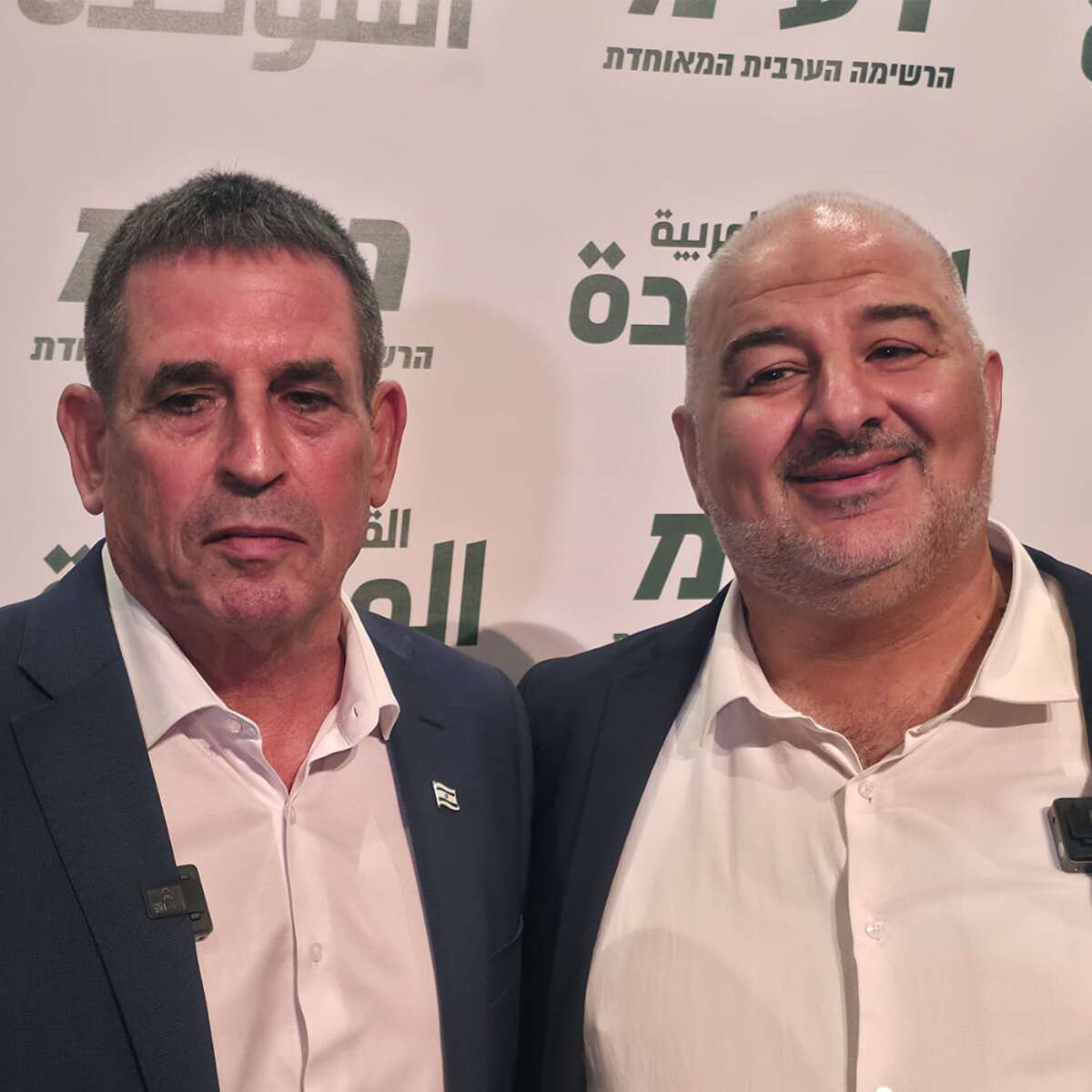
Leaders of the Joint List have already announced that they would support efforts to prevent Netanyahu from forming a government and to establish a coalition led by the opposing bloc.
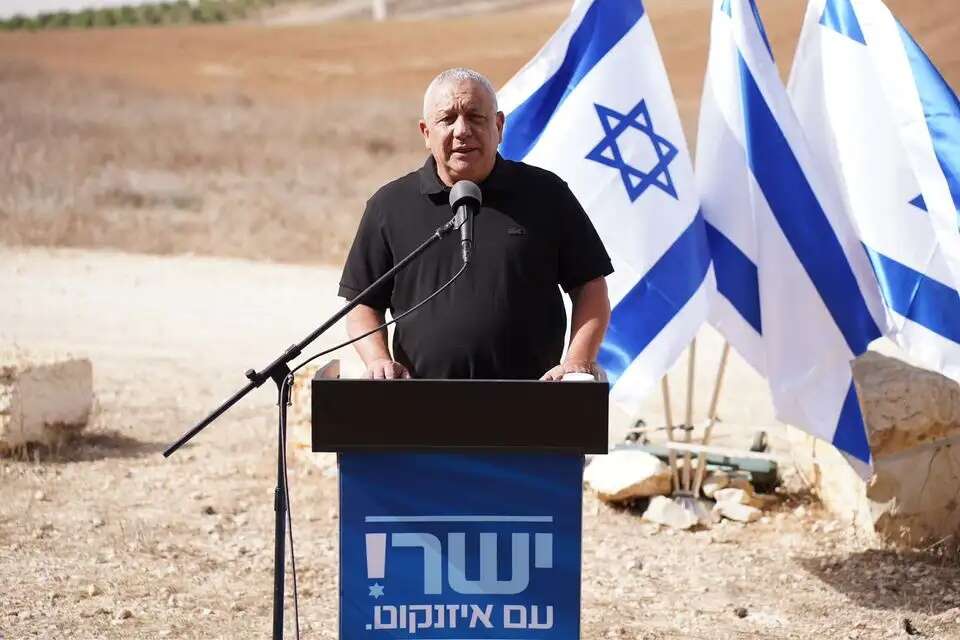
But therein lies the catch, at least for former IDF Chief of Staff Gadi Eisenkot.
The Arab parties' electoral success has reduced the size of his bloc and weakened his ability to form a coalition, while increasing his dependence on those very parties. And that dependence extends beyond Ra'am, as initially expected, to the Joint List, whose participation or support would be considerably harder for Eisenkot and his prospective partners to accept.
In other words, Eisenkot does not have the 61 Knesset seats needed for a majority even with Ra'am's support, leaving little room for a narrow government under his leadership.
One further point is worth noting: Soldiers' votes are not included in the initial count or election-night exit polls, and they generally reduce the number of seats ultimately won by the Arab parties.
Israel, however, does not have the luxury of waiting for a new government to be formed before addressing the wars and crises unfolding across the Middle East and beyond.
The central issue is Iran, which has spent the months since the ceasefire was announced in May steadily rebuilding its military capabilities. That includes restoring its missile arsenal, accelerating efforts to obtain a nuclear bomb and developing other weapons capable of fundamentally altering the strategic balance.
Several options for an attack against the Iranian regime are on the table. The immediate objective would be to halt its military recovery, particularly its progress toward a nuclear weapon, but the broader strategic goal would also include the complete overthrow of the regime.
The current government, and whichever government succeeds it, must also deal immediately with the other fronts: Gaza, Lebanon and Hezbollah, Syria, and Judea and Samaria.
The administration in Washington, Israel's senior strategic partner, favors a broad Israeli government without extremist elements that could obstruct US President Donald Trump's military and diplomatic plans, as Israel Hayom previously reported.
Netanyahu, as the incumbent prime minister, will have to make immediate decisions regardless of whether he is tasked with forming the next government.
Eisenkot, should he receive that mandate, will have to decide what kind of government he wants in order to advance his diplomatic and security vision.
From that perspective, at least, relying on the Arab parties will be far from straightforward for Eisenkot or for significant portions of his prospective coalition.