
Although Tuesday night's exit polls suggest that neither political camp will secure the 61 seats needed to form a new government for Israel, the anti-Netanyahu change bloc still has another option: taking control of the Knesset.
Together with the Arab parties, the bloc is projected to hold around 70 of the Knesset's 120 seats, according to most exit polls.
The plan was drawn up before the election, and leaders of the bloc have already begun discussing it. Their first priority would be to replace incumbent Knesset Speaker Amir Ohana, who will remain in office until a new speaker is elected following the election.
To accomplish this, the change bloc parties would rely on votes from the Arab parties. They would justify the move to the public by arguing that the cooperation would be limited to a parliamentary vote and would not amount to relying on the Arab parties to form a government.
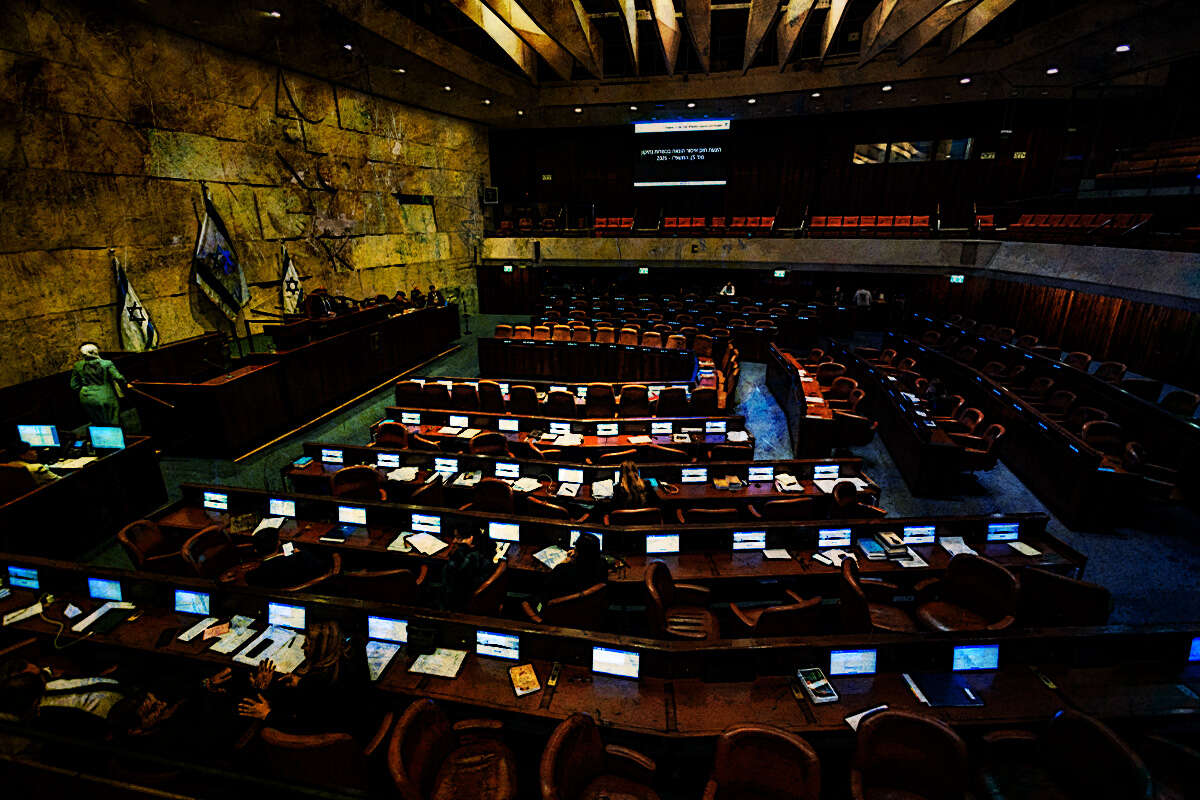
Several figures within the change bloc have made clear that they favor such a move. Among them is Yisrael Beytenu Chairman Avigdor Liberman, who declared, "Immediately upon the swearing-in of the 26th Knesset, we will work to replace Knesset Speaker Amir Ohana and elect a new speaker."
Liberman has also expressed willingness to pass legislation known as the "Defendant Law," which would bar Prime Minister Benjamin Netanyahu from continuing to serve while facing criminal charges.
However, Yashar! Chairman Gadi Eisenkot and B'Yachad Chairman Naftali Bennett have publicly expressed doubts about such a move. Their message to their fellow bloc leader was that there would be no alternative to forming a minority government, a scenario that Liberman vehemently opposes.